
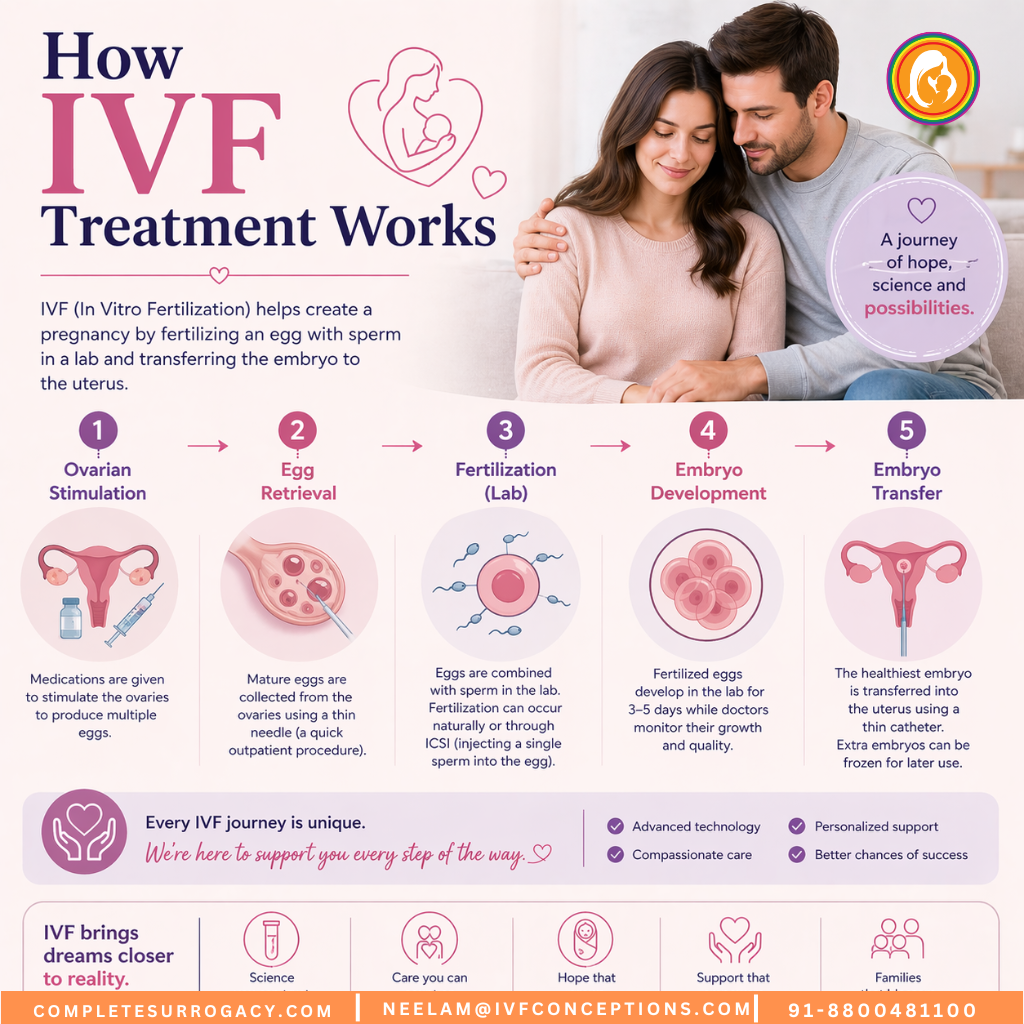
Imagine the dream of parenthood becoming a reality through a method that has helped nearly 10 million babies enter the world. The in vitro fertilization process has revolutionized reproductive medicine over the past four decades. It offers hope to countless individuals and couples facing infertility challenges.
Infertility affects more lives than you might think. The World Health Organization states that about 1 in 6 adults worldwide experience infertility during their lifetime. In the United States, around 9% of women and 9% of men of childbearing age face fertility struggles. This affects up to 12.5% of heterosexual couples. You are not alone in this journey.
📞 Get in Touch for a Free Surrogacy Consultation
📱 +91-8800481100 (WhatsApp | LINE | Viber)
📧 neelam@ivfconceptions.com
The first test-tube baby was born in England in 1978, marking a significant medical breakthrough. Just three years later, the first IVF baby was born in the United States. Today, in vitro fertilization accounts for about 1 to 3% of all annual births in the U.S. and Europe. Success rates have dramatically improved from just 10 to 15% in 1985 to over 55% for women under 35.
Assisted reproductive technology has made parenthood possible for same-sex couples, single parents by choice, and those with various fertility conditions. This guide will walk you through every stage of the IVF treatment process. You will learn about your initial consultation, how medications stimulate egg production, and what to expect during egg retrieval and embryo transfer. Understanding how IVF treatment works empowers you to make informed decisions about your fertility care.
Planning surrogacy abroad?
Read our complete Guide to International Surrogacy to understand the process, costs, legal rules, and timeline for international intended parents.
Additional Resources to Read:
Surrogacy Services in Georgia Country
Surrogacy Services in Colombia
Surrogacy Services in Kazakhstan

Key Takeaways
- Infertility affects 1 in 6 adults worldwide, with approximately 9% of women and men of childbearing age in the United States experiencing fertility challenges.
- In vitro fertilization has helped nearly 10 million babies be born, with success rates improving from 10-15% to over 55% for women under 35.
- IVF accounts for 1 to 3% of all annual births in the U.S. and Europe, making it a widely used assisted reproductive technology.
- The in vitro fertilization process involves multiple stages, from initial consultation and ovarian stimulation to egg retrieval, fertilization, and embryo transfer.
- Understanding how IVF treatment works helps you make informed decisions and prepares you for each phase of your fertility journey.
- IVF has made parenthood accessible to diverse groups, including same-sex couples, single parents, and individuals with various fertility conditions.

Understanding In Vitro Fertilization and Who Can Benefit
In vitro fertilization offers hope to millions of people struggling with infertility. This assisted reproductive technology, explained in simple terms, means creating embryos outside your body in a laboratory setting. Understanding what IVF is and whether it’s right for you helps you make informed decisions about your fertility journey. Let’s explore this fertility treatment procedure in detail and discover if you’re a good candidate.
What Is In Vitro Fertilization (IVF)?
IVF is an assisted reproductive technology process that brings together eggs and sperm in a laboratory environment. Your fertility specialist stimulates your ovaries with medications to produce multiple eggs. After retrieval, doctors combine your eggs with sperm in a dish. The fertilized eggs develop into embryos over several days. Your doctor then transfers a high-quality embryo into your uterus, where it can implant and grow.
This fertility treatment procedure bypasses many obstacles to natural conception. Blocked fallopian tubes, low sperm counts, and unexplained infertility all become manageable through IVF treatment stages.
Good Candidates for IVF Treatment
You might be an excellent candidate for IVF if you have:
- Blocked, scarred, or damaged fallopian tubes
- Polycystic ovary syndrome (PCOS) or ovulation problems
- Endometriosis or uterine fibroids
- Premature ovarian failure or age-related infertility
- Low sperm count, poor motility, or abnormal shape
- Unexplained infertility lasting one year or more
- Known genetic disorders you want to avoid passing to children
- Same-sex partnerships or single status with donor needs
| Fertility Condition | How IVF Helps |
|---|---|
| Blocked Fallopian Tubes | Bypasses tubes entirely by fertilizing eggs in the laboratory |
| Male Factor Infertility | Uses sperm directly with eggs or through specialized fertilization techniques |
| Ovulation Disorders | Controlled hormonal stimulation produces multiple mature eggs reliably |
| Endometriosis | Removes eggs from affected areas, improving fertilization chances |
| Unexplained Infertility | Optimizes fertilization conditions in a controlled environment |
When IVF May Not Be the Most Effective Option
IVF isn’t ideal for everyone. Women over 40 may need to discuss realistic success rates with their fertility specialist. If you have serious medical conditions that make pregnancy risky, your doctor might recommend alternatives. Untreated mental health issues deserve attention before beginning this intensive process.
Unrealistic expectations about success rates can lead to disappointment. You should feel emotionally prepared and financially stable before starting an assisted reproductive technology explained fertility treatment procedure. Your fertility specialist will help you determine whether IVF timing is right for your unique situation.
How does IVF Treatment work
Understanding the IVF process step by step is key to mentally and physically preparing for your fertility journey. The IVF procedure steps are divided into seven distinct phases. Each phase is vital for the success of your treatment.
Your journey begins with an initial consultation and diagnostic testing. Your fertility specialist will conduct a baseline ultrasound, blood work, and semen analysis if applicable. These tests provide a detailed understanding of your fertility health, guiding your personalized treatment plan.
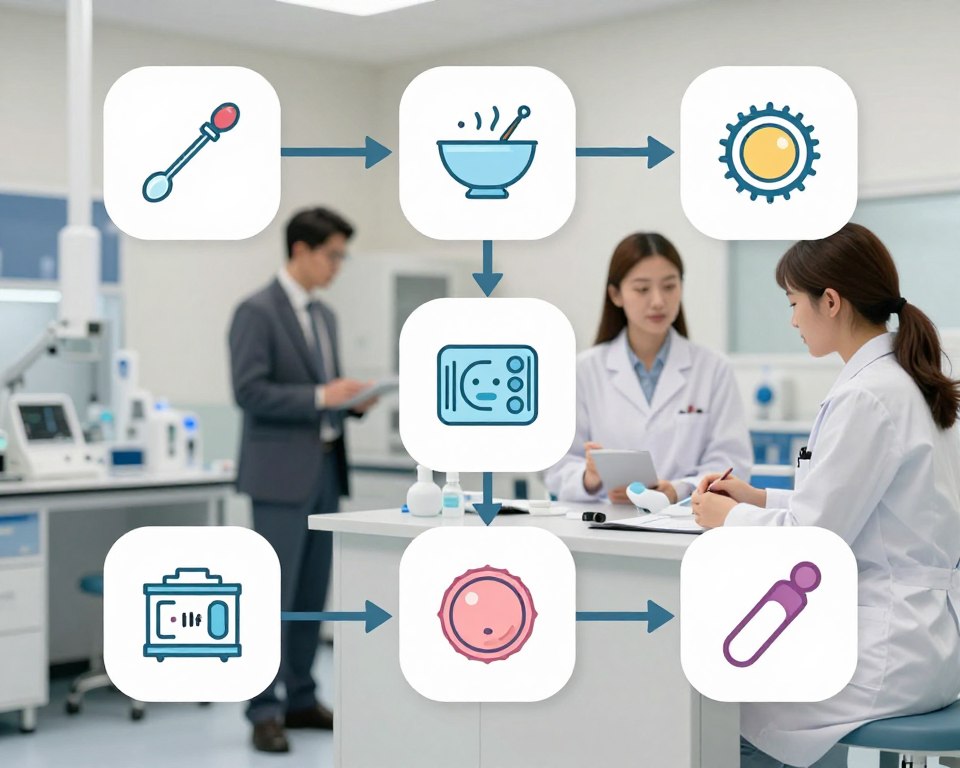
The ovarian stimulation phase follows next. You’ll receive injectable fertility medications for 7 to 14 days. These medications stimulate your ovaries to produce multiple mature eggs. Regular ultrasounds monitor the development of these eggs.
Here’s how IVF works step by step through the remaining phases:
- Egg Retrieval — Your doctor uses ultrasound guidance to collect eggs from your ovaries while you’re under general anesthesia
- Fertilization — Eggs combine with sperm in the laboratory using conventional insemination or ICSI injection
- Embryo Development — Embryos grow in the laboratory for 5 to 7 days, reaching the blastocyst stage
- Embryo Transfer — Your specialist places the best-quality embryo into your uterus using a thin catheter
- Pregnancy Testing — A blood test two weeks after transfer measures hCG levels to confirm pregnancy
The complete IVF procedure steps from start to finish typically take about three weeks when performed consecutively. Some patients choose to freeze embryos and split the timeline across different treatment cycles based on their personal circumstances and medical recommendations.
Preparing for Your IVF Journey: Consultations, Testing, and Financial Planning
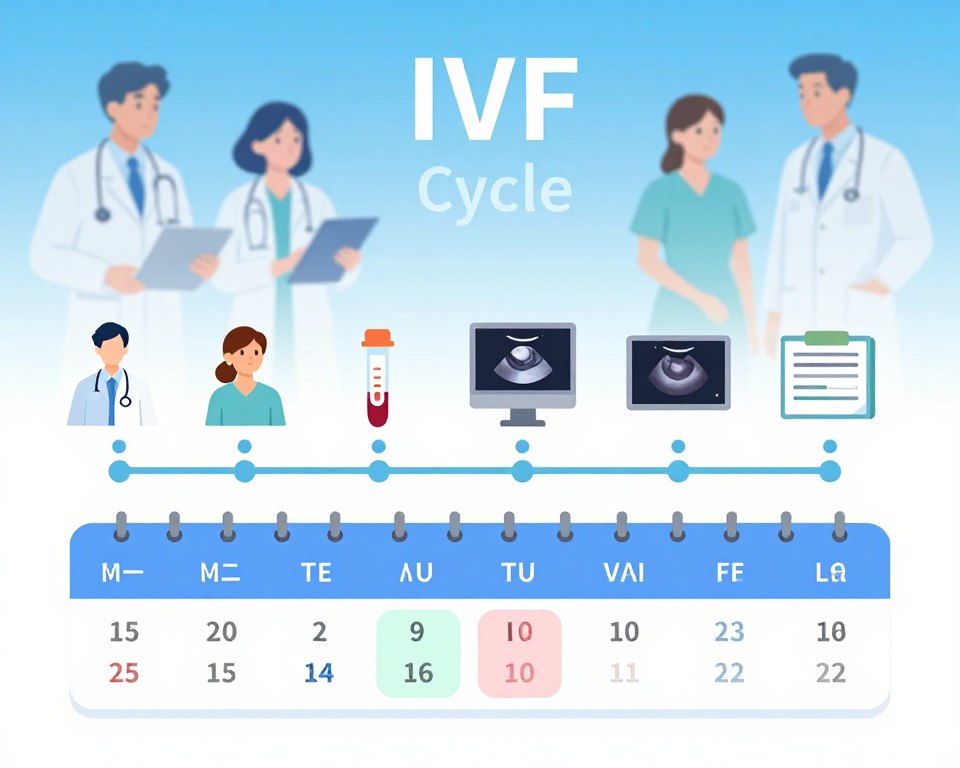
Embarking on an in vitro fertilization (IVF) journey requires meticulous planning and preparation. Understanding the IVF cycle timeline begins with the pre-process phase. Your fertility team will lead you through essential steps, laying the groundwork for success. This preparatory phase encompasses medical evaluations, diagnostic testing, and financial planning, ensuring you’re fully prepared for your journey.
Initial Consultation and Complete Fertility Evaluation
Your first meeting with a reproductive endocrinologist signals the start of your IVF cycle. During this consultation, your doctor will meticulously review your medical history. You’ll discuss your menstrual cycles, past pregnancy attempts, sexual health, and any medical conditions affecting your fertility.
The physical exam includes a pelvic check to assess your reproductive organs. For male partners, a semen analysis evaluates sperm count, movement, and shape. Your doctor will also inquire about your lifestyle, including diet, exercise, stress levels, and tobacco or alcohol use. This detailed evaluation helps your fertility team grasp your unique situation.
Essential Diagnostic Tests Before Starting IVF
Several critical tests are necessary to determine your readiness for IVF. These tests provide vital information about your ovarian reserve and egg quality.
- Transvaginal ultrasound – visualizes your uterus, ovaries, and fallopian tubes while measuring follicle development
- Antral follicle count (AFC) – counts small follicles to assess how many eggs you might produce
- Anti-müllerian hormone (AMH) test – measures your egg supply through blood work
- Hormone tests – FSH, LH, and estradiol levels reveal ovarian reserve and egg quality
- Mock embryo transfer – practice procedure to ensure smooth transfer during your cycle
- Blood testing – screens for infectious diseases and blood type compatibility
These diagnostic tests guide what to expect during your IVF cycle and predict your body’s response to medications.
Understanding the Cost of IVF and Available Financing Options
IVF costs vary by location and clinic. The average cost is between $12,000 and $15,000 per cycle. This includes consultation, egg retrieval, fertilization, embryo culture, and transfer. Extra costs apply for medications, genetic testing, and embryo freezing.
| Financing Option | How It Works | Best For |
|---|---|---|
| Clinic Payment Plans | Monthly installment payments directly through your fertility clinic | Spreading costs over time |
| Medical Credit Cards | Cards like CareCredit offer promotional interest-free periods | Immediate treatment needs |
| Fertility Grants and Scholarships | Non-profit organizations award funds for qualified applicants | Reducing out-of-pocket expenses |
| Insurance Coverage or FSAs | Some plans cover IVF; Flexible Spending Accounts allow tax-free savings | Those with existing benefits |
| Employer Fertility Benefits | Companies like Carrot offer extensive fertility coverage | Employees with supportive employers |
Explore all available options to make your IVF cycle timeline more affordable. Many families combine multiple resources to manage expenses effectively.
The Ovarian Stimulation Phase: Medications and Monitoring
Ovarian stimulation for IVF is a critical stage in your fertility treatment process. During this phase, your reproductive system receives carefully timed medications. These medications encourage your ovaries to produce multiple mature eggs in a single cycle. This approach dramatically increases your chances of success compared to natural conception, where typically only one egg matures each month.
Your journey begins with a preparation phase lasting one to three weeks. You may take estrogen supplements through pills or patches, or your doctor might prescribe oral contraceptive pills starting with your period. This priming stage prepares your ovaries for the next step.
After a baseline ultrasound and blood tests confirm your uterus is ready, your medical team starts your daily gonadotropin injections. These synthetic hormones stimulate multiple follicles to develop simultaneously within your ovaries over eight to twelve days.
Understanding Your IVF Medication Protocol
Your IVF medication protocol includes several types of medications working together:
- Follicle-Stimulating Hormone (FSH) directly stimulates follicle growth
- Human Menopausal Gonadotropin (hMG) combines FSH and LH for complete stimulation
- GnRH agonists and antagonists prevent your body from releasing eggs prematurely
- Human Chorionic Gonadotropin (hCG) triggers final egg maturation
- Clomiphene (Clomid/Serophene) blocks estrogen to trigger hormone release
Monitoring Your Progress
Your fertility treatment process requires close monitoring throughout ovarian stimulation. You’ll visit your clinic four to six times over eight to twelve days. During these visits, transvaginal ultrasounds measure follicle size and uterine lining thickness. Blood tests check your hormone levels, allowing your medical team to adjust medication doses based on your individual response.
| Monitoring Component | Purpose | Frequency | What It Measures |
|---|---|---|---|
| Transvaginal Ultrasound | Track follicle development | Every 2-3 days | Follicle size and count, uterine lining thickness |
| Blood Tests | Monitor hormone levels | Every 2-3 days | Estrogen, progesterone, LH levels |
| Baseline Assessment | Confirm readiness for stimulation | Day 1 of cycle | Ovarian cysts, uterine lining thickness |
| Trigger Shot Planning | Determine optimal retrieval timing | When follicles reach 18-22mm | Follicle maturity and LH surge prediction |
The Trigger Shot and Timing
When your lead follicles reach 18-22 millimeters, your doctor administers the trigger shot. This critical injection contains human chorionic gonadotropin and causes your eggs to complete their final maturation stage. Egg retrieval occurs exactly 35-36 hours after this injection, allowing your eggs to reach optimal maturity for fertilization.
Managing Side Effects
Most patients experience some side effects during ovarian stimulation. Common symptoms include bloating, lower abdominal cramping, mild nausea, fatigue, breast tenderness, constipation, headaches, mood swings, and hot flashes. These effects typically subside after egg retrieval.
Contact your fertility clinic immediately if you experience severe abdominal pain, persistent vomiting, rapid weight gain, shortness of breath, or dizziness. These symptoms may indicate ovarian hyperstimulation syndrome, requiring medical attention.
Following your ivf medication protocol precisely maximizes your chances of developing multiple quality eggs. Your fertility team personalizes every aspect of your treatment based on your body’s response. This makes consistent monitoring and open communication essential throughout this critical phase of your fertility treatment process.
Egg Retrieval, Fertilization, and Embryo Culture in the Laboratory
After your ovarian stimulation phase, your fertility treatment process enters a critical stage. The egg retrieval process marks the point where your eggs are collected and prepared for fertilization in the laboratory. This section guides you through what happens during egg retrieval, how fertilization occurs, and the remarkable development of your embryos over the following days.
The Egg Retrieval Procedure and What to Expect
Your egg retrieval procedure happens 35 to 36 hours after your trigger shot injection. You’ll arrive at the surgical center early in the morning and receive an intravenous line for sedation or general anesthesia. Your physician and anesthesiologist will meet with you to discuss the procedure and answer your questions.
The procedure itself takes less than 20 minutes. Your doctor uses a transvaginal ultrasound to guide a thin needle through your vaginal wall into each fluid-filled ovarian follicle. The needle carefully aspirates the fluid containing your eggs. The embryology laboratory examines this fluid under a microscope to identify and count the retrieved eggs.
Recovery takes about 60 to 90 minutes in the post-anesthesia care unit. You’ll experience some common side effects:
- Mild cramping and bloating
- Fatigue and grogginess from anesthesia
- Light vaginal spotting
For the next 24 hours, avoid driving, strenuous work, and exercise. Refrain from vigorous exercise and intercourse for two weeks following your procedure.
Fertilization Methods: Conventional Insemination and ICSI
Fertilization occurs 2 to 4 hours after your eggs are retrieved. Your fertility team uses one of two methods depending on your specific situation:
| Fertilization Method | Process Description | Best Used For | Fertilization Rate |
|---|---|---|---|
| Conventional Insemination | 25,000 to 50,000 sperm are combined with each egg in a culture dish, allowing natural fertilization | Normal sperm count and motility | 70-90% success rate |
| ICSI (Intracytoplasmic Sperm Injection) | A single selected sperm is injected directly into each mature egg using micromanipulation equipment | Low sperm count, poor motility, or previous fertilization failure | 70-90% success rate |
Your fertility team selects the appropriate method based on your sperm analysis results and medical history. Approximately 70 to 90 percent of mature eggs successfully fertilize with either approach.
Embryo Development and Culture Timeline
Your embryos develop rapidly in the laboratory during the days following how ivf fertilization happens. Specialized incubators maintain precise temperature, oxygen, and humidity levels that simulate your fallopian tube and uterus environment.
Here’s what occurs during each stage:
- Day 1: Your fertilized egg becomes a single-cell zygote
- Day 2: The zygote divides into 2 to 4 cells
- Day 3: Your embryo contains 6 to 8 cells
- Day 5: The embryo develops into a blastocyst with hundreds of cells
Your embryologists monitor development daily, grading embryos based on their appearance and quality. They photograph your embryos and document their progression. The highest-quality embryos become candidates for transfer to your uterus or freezing for future use.
Understanding the egg retrieval process and how ivf fertilization happens empowers you throughout your fertility treatment process. Your medical team keeps you informed at every step, ensuring you know what’s happening with your eggs and developing embryos.
Embryo Transfer Process and Pregnancy Testing
The embryo transfer procedure is a key step in your IVF journey. It moves your embryo from the lab to your uterus, where it can implant and grow. Knowing what happens during this process helps you prepare mentally and physically for what’s next.
Your ivf embryo transfer process starts with preparation. You’ll need a full bladder, drinking 32 to 48 ounces of water beforehand. This ensures a clear view of your uterine cavity during the ultrasound, helping your doctor place the embryo correctly.
The actual procedure takes 5 to 10 minutes. You’ll be awake, and most find it similar to a Pap smear. Your doctor will first practice the transfer with an empty catheter to map the path. Then, they’ll load your embryo into a soft catheter with fluid.
Using ultrasound guidance, your doctor will then insert the catheter into your uterus. The embryo is placed about 1 to 1.5 centimeters from the top of your uterine cavity. This is where the lining is thickest and most receptive. Your doctor will then check the catheter to confirm the embryo was transferred successfully.
After the transfer, you’ll rest for about 10 minutes before resuming your day. Light exercise and regular movement are encouraged. You may need hormonal support with progesterone, estrogen, or both. This support continues through at least 10 to 12 weeks if you become pregnant.
The wait for pregnancy testing can be tough. Your blood test for hCG happens 9 to 14 days after transfer. A positive result leads to a second test 48 hours later to confirm rising hCG levels.
Understanding IVF success factors is important. Your age, embryo quality, uterine receptivity, and health all impact outcomes. Success rates and timelines vary based on these factors.
| Age Group | Success Rate Per Cycle | Live Birth Outcome | Timeline to Results |
|---|---|---|---|
| Under 35 years | 55% or higher | 1 in 2 pregnancies | 2-3 weeks |
| 35-37 years | 40-50% | 1 in 2.5 pregnancies | 2-3 weeks |
| 38-40 years | 25-35% | 1 in 3-4 pregnancies | 2-3 weeks |
| Over 40 years | 10-20% | 1 in 5-10 pregnancies | 2-3 weeks |
Fertility treatment has seen significant progress. The CDC reported 413,776 fertility treatment cycles in 2021, with 99 percent using IVF. Of 186,157 cycles with embryo transfer, 97,128 resulted in live births, a 33 percent increase from 2015.
Once your pregnancy test is positive, your clinic will schedule an ultrasound in 1 to 2 weeks. This ultrasound confirms the pregnancy and checks the growth. Your care then transitions to your primary OB-GYN for prenatal management.
Choosing an accredited fertility clinic with transparent reporting is key. Ask about their success rates by age group and diagnosis. A skilled team will tailor your protocol for your unique situation, increasing your chances of a successful pregnancy.
Additional Resources to Read:
Mental Health Support During IVF and Surrogacy.
Exploring the Differences Between IVF, IUI, and Surrogacy
Conclusion
You’ve learned about seven key stages of IVF treatment. Your journey begins with an initial consultation and testing. Then, you move through ovarian stimulation and egg retrieval. Your eggs get fertilized in the laboratory. Embryos grow and develop. An embryo transfer happens next. A pregnancy test confirms whether the cycle worked. Understanding each step helps you feel ready and in control of your treatment plan.
The IVF process can feel complex and overwhelming at first. Your knowledge of how the treatment works empowers you to make smart choices about your care. Success rates for IVF have climbed dramatically. In 1985, success rates were only 10 to 15 percent. Today, women under 35 experience success rates of 55 percent or higher. The CDC reported 97,128 live births from 186,157 IVF cycles in 2021. These numbers show that building your family through IVF has never been more possible or successful.
Your IVF journey involves physical, emotional, and financial challenges. Support exists at every stage. Fertility specialists can answer your questions. Counselors and support groups provide guidance. Many employers offer fertility benefits to help with costs. A board-certified reproductive endocrinologist can evaluate your unique situation and create a personalized plan just for you. They can set realistic expectations about your success chances based on your specific circumstances.
Whether you face infertility, plan single parenthood, are part of a same-sex couple, or need fertility preservation before medical treatment, IVF offers a real path to parenthood. Age matters when it comes to egg quality and success rates. If you’re over 35, waiting can lower your chances of success. Take action now. Contact a fertility center to start your IVF journey. You have the knowledge and confidence this guide has given you. Your dream of becoming a parent can become real.
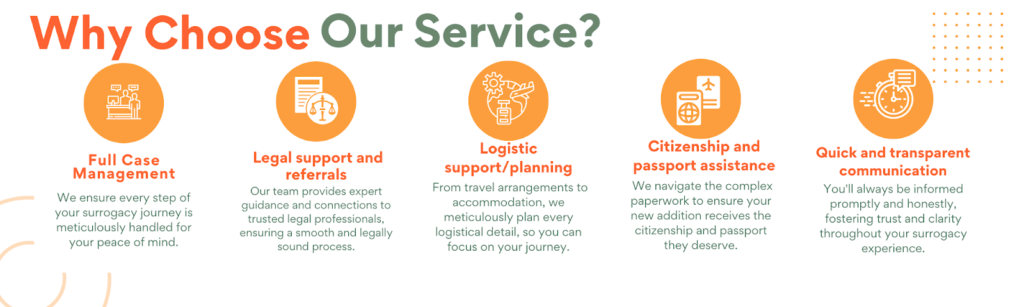
💫 Why Intended Parents Choose Complete Surrogacy for a Safe, Smooth & Successful Surrogacy Journey:
🌍 Access to multiple surrogacy destinations with 15+ years of international experience
🏥 Partnerships with top-tier fertility clinics and agencies, backed by references from past clients
👩🦱 Diverse egg donor options: Asian, Caucasian, African, Oriental, and more
💸 Transparent and affordable pricing—direct payments with no extra agency fees
🔒 No hidden costs—all charges are agreed upon upfront
🤝 Dedicated case manager for personalized support
📲 Fast, honest, and clear communication throughout
📑 Full legal support for visas, documentation, and baby exit processes
🚚 Assistance with frozen sperm/embryo shipment logistics
FAQ for How IVF Treatment Works
What is in vitro fertilization (IVF), and how does it differ from natural conception?
What are the current IVF success rates, and how have they improved over time?
Am I a good candidate for IVF treatment?
How many steps are involved in the IVF process?
What happens during the initial consultation for IVF?
What diagnostic tests will I need before starting IVF?
How much does IVF treatment cost, and what financing options are available?
What is the IVF medication protocol, and how long does ovarian stimulation take?
What is the trigger shot, and why is it so important?
What side effects should I expect during ovarian stimulation?
How is the egg retrieval procedure performed?
What should I expect during recovery after egg retrieval?
What is conventional insemination in IVF?
What is intracytoplasmic sperm injection (ICSI), and when is it recommended?
How do embryos develop in the laboratory after fertilization?
How are embryos graded, and what makes a high-quality embryo?
What exactly happens during the embryo transfer procedure?
Why does age significantly impact IVF success rates?
What is preimplantation genetic testing (PGT), and should I consider it for my cycle?
What lifestyle modifications should I make to optimize my IVF success?

Author Bio: Neelam Chhagani is an International Surrogacy Expert with 15 years of experience in the fertility and surrogacy domain. As the founder of IVF Conceptions and Complete Surrogacy, she has guided over 4,000 intended parents worldwide on their surrogacy journey to parenthood. Recognized as a trusted authority, she specializes in holistic infertility solutions and third-party reproduction consulting.
Holding an MA in Counselling Psychology and a PGD in Mental Health, Neelam is a proud member of the European Fertility Society (EFS) and the European Society of Human Reproduction and Embryology (ESHRE). She is also a leading surrogacy blogger, providing valuable insights into ethical and practical surrogacy solutions.
Since 2010, committed to supporting ALL family types, Neelam has been passionate about helping intended parents grow their families with compassion, integrity, and a focus on secure and affordable surrogacy options Globally.
Learn more about Neelam:
https://www.ivfconceptions.com/neelam-chhagani-surrogacy-consultant/
https://www.linkedin.com/in/neelam-chhagani-92892229/















I was introduced to Neelam by a friend who worked with Neelam for surrogacy. Neelam is absolutely wonderful. I am a single male and the journey to fatherhood is not that easy. Neelam connected me to a program ideal for my circumstances. She was with me throughout the pregnancy providing advice and guidance along the way. I am so grateful I found her and am thrilled today that I have a beautiful daughter. I highly recommend Neelam to anyone who is on a journey to become a parent. Having a child has changed my world for the better. I wish others success with their own journey and recommend you connect with Neelam to find a path that is best for you.
SA (USA)