
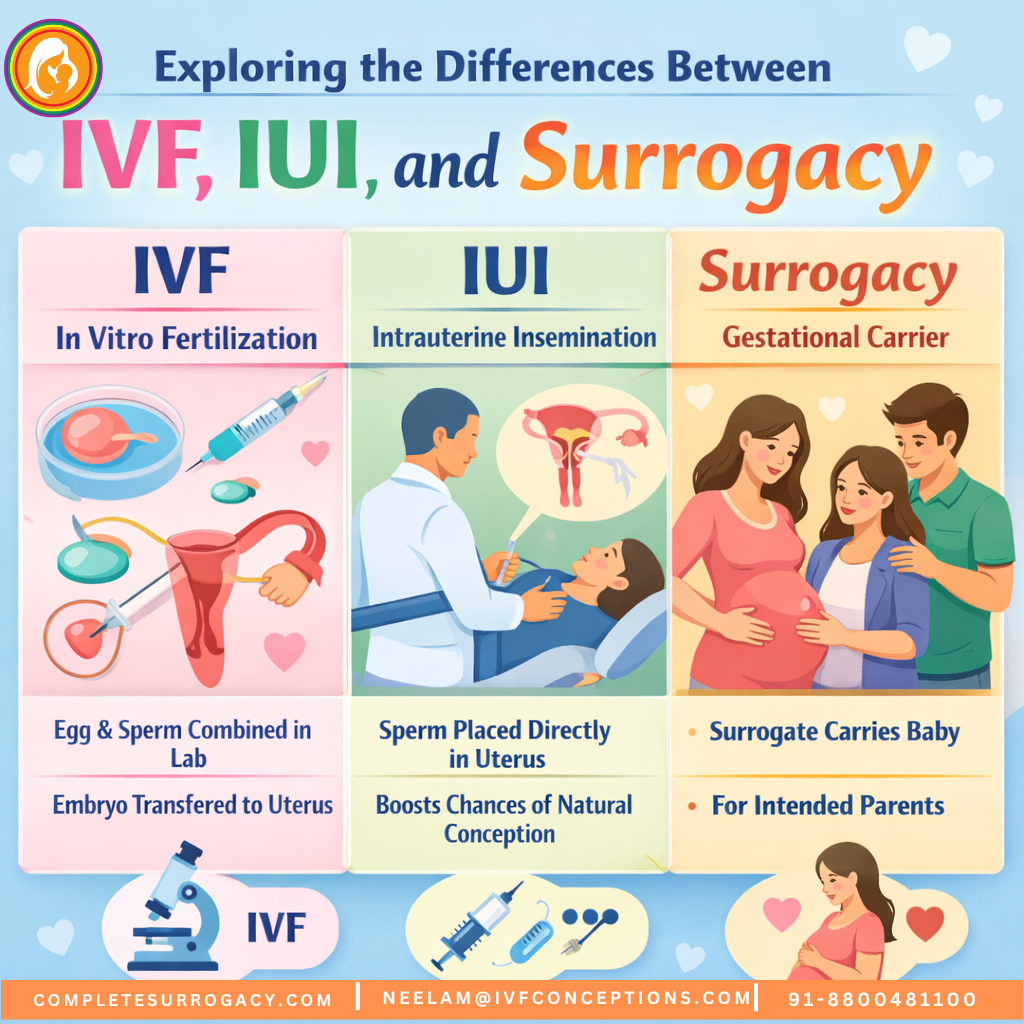
Exploring the Differences Between IVF, IUI, and Surrogacy is essential for anyone navigating the complex journey of fertility treatments. Choosing the right option can feel overwhelming, especially when faced with solutions like IVF (In Vitro Fertilization), IUI (Intrauterine Insemination), and Surrogacy. Understanding the key differences between these reproductive methods helps intended parents identify the most effective and suitable path to parenthood. While IUI is often considered a simple and cost-effective first step, IVF offers higher success rates for more complex fertility challenges. Meanwhile, Surrogacy provides a hopeful solution for individuals and couples who are unable to carry a pregnancy themselves. In this guide on Exploring the Differences Between IVF, IUI, and Surrogacy, we will cover the processes, costs, success rates, and ideal candidates for each—helping you make an informed and confident decision.
Key Takeaways
- IVF involves fertilizing eggs outside of the body, while IUI places sperm directly in the uterus.
- Surrogacy entails a third party carrying a pregnancy for intended parents.
- Success rates for each method vary significantly, influenced by several factors.
- The emotional and psychological impacts can differ dramatically among the three options.
- Understanding the costs associated with each method is essential for budgeting.
📞 Get in Touch for a Free Surrogacy Consultation
📱 +91-8800481100 (WhatsApp | LINE | Viber)
📧 neelam@ivfconceptions.com
Planning surrogacy abroad?
Read our complete Guide to International Surrogacy to understand the process, costs, legal rules, and timeline for international intended parents.
Additional Resources to Read:
Differences between IVF and IUI
Understanding the Basics of IVF, IUI, and Surrogacy
Exploring the world of reproductive options requires grasping the fundamentals of IVF, IUI, and surrogacy. Each method caters to different needs, with unique approaches and outcomes. The comparison between IVF and IUI is critical for prospective parents. Here’s a detailed look at each method.
What is IVF?
In Vitro Fertilization (IVF) is a complex medical procedure aimed at helping couples with infertility. It involves several key steps:
- Ovarian stimulation to produce multiple eggs.
- Egg retrieval through a minimally invasive surgical procedure.
- Fertilization of eggs using sperm in a laboratory setting.
- Embryo transfer to the uterus.
This process boosts the chances of a successful pregnancy. The comparison with IUI and surrogacy shows IVF’s more invasive nature. This is due to the surgical elements in egg retrieval and embryo transfer.
What is IUI?
Intrauterine Insemination (IUI) is a less invasive option for couples trying to conceive. It consists of straightforward steps:
- Collection of sperm, which is then processed and prepared.
- Timing the insemination to coincide with ovulation.
- Direct placement of the prepared sperm into the uterine cavity.
IUI is often the first treatment for mild male factor infertility or unexplained infertility. It stands out for its simplicity and lower costs compared to IVF.
What is Surrogacy?
Surrogacy offers another path for intended parents, allowing a surrogate to carry their child. It comes in two forms:
- Traditional Surrogacy: The surrogate is the genetic mother, using her eggs inseminated by the intended father or donor.
- Gestational Surrogacy: The surrogate has no genetic link to the child; IVF creates embryos using the intended parents’ eggs and sperm, which are then implanted into the surrogate.
This method gives hope to couples facing medical conditions or other challenges. It highlights the diverse options available, as seen in the IVF, IUI, and surrogacy comparison.
| Method | Invasiveness | Genetic Link to Child | Average Cost |
|---|---|---|---|
| IVF | High | Yes | $12,000 – $15,000 per cycle |
| IUI | Low | No | $300 – $1,500 per cycle |
| Surrogacy | Very High | Depends on Type | $100,000 – $150,000+ |
Difference Between IVF, IUI, and Surrogacy
Understanding the differences between IVF, IUI, and surrogacy is key to making informed reproductive choices. Each method involves unique medical procedures and has distinct success rates. These rates are critical in fertility treatments.
Medical Procedures Involved
IVF, or In Vitro Fertilization, involves a series of precise steps. These include:
- Ovarian stimulation to produce multiple eggs.
- Egg retrieval through a minor surgical procedure.
- Fertilization of the eggs in a lab environment.
- Embryo transfer back into the uterus.
IUI, or Intrauterine Insemination, directly places sperm into a woman’s uterus around ovulation time. It’s less invasive than IVF.
Surrogacy, mainly gestational surrogacy, requires IVF to create embryos. These are then transferred into the surrogate’s uterus. Understanding the intricacies of IVF, IUI, and surrogacy reveals the complexities of each method.
Success Rates Comparison
Success rates vary significantly among these fertility methods. IVF generally has higher success rates due to its advanced approach and embryo monitoring. IUI success rates can vary based on age and existing fertility issues, often lower than IVF.
In surrogacy, success rates are similar to IVF. Factors like embryo quality and the surrogate’s health impact these rates. Analyzing IVF vs. surrogacy costs helps clarify their financial implications, given their success probabilities.
Costs of IVF, IUI, and Surrogacy
For those considering assisted reproductive technologies, understanding the financial aspects is key. Each method has its own cost structure, affecting decision-making. Here’s a detailed look at the expenses involved.
Financial Implications of IVF
IVF costs can be high, with prices in the U.S. ranging from $15,000 to $25,000 per cycle. Additional expenses, like embryo cryopreservation and genetic testing, can increase costs by $5,000 to $15,000. It’s important to weigh the IVF benefits and risks, as the financial investment may lead to success, though not guaranteed.
Costs Associated with IUI
IUI is more affordable than IVF, making it attractive for those facing fertility issues. Costs for IUI typically fall in the few thousand dollars per cycle. Its lower cost makes it a popular choice when comparing surrogacy versus IVF and IUI.
Overall Expense in Surrogacy
Gestational surrogacy is the most expensive option, with costs ranging from $100,000 to $180,000. This includes agency fees, legal costs, surrogate compensation, and IVF clinical fees. The complexity and multiple steps in surrogacy make it a significant financial investment in assisted reproduction.

Emotional and Psychological Considerations
The path through assisted reproductive technologies, like IVF and IUI, and surrogacy, is filled with emotional and psychological layers. This part delves into the emotional impacts of each method, aiming to offer insights for those navigating these paths.
IVF Emotional Impact
The IVF journey stirs deep emotions. Many start with hope, but anxiety and frustration soon follow. The uncertainty of each cycle’s success can cause significant psychological strain, more so with repeated attempts. It’s vital to acknowledge and discuss these feelings openly to manage the emotional aspects of IVF.
IUI and Emotional Factors
IUI, being less invasive than IVF, might seem more accessible. Yet, it brings its own emotional challenges. Couples face stress as they deal with high hopes and the fear of disappointment if pregnancy doesn’t happen. It’s key to understand the emotional load of IUI to support each other through it.
Surrogacy Emotional Dynamics
Surrogacy brings complex emotional dynamics for everyone involved. Intended parents often feel anxious about their child being carried by someone else. Surrogates, on the other hand, must come to terms with carrying a baby not genetically theirs, raising questions about bonding and relinquishment after birth. Open communication between intended parents and surrogates is critical in addressing these emotional aspects of surrogacy.

| Assisted Reproductive Method | Emotional Considerations |
|---|---|
| IVF | Hope, anxiety, frustration, stress over multiple cycles |
| IUI | Accessibility, expectations, fear of disappointment |
| Surrogacy | Anxiety over external carrying, bonding issues, need for communication |
Additional Resources to Read:
Find Affordable Surrogacy Packages in India
Conclusion
Understanding the differences between IVF, IUI, and surrogacy is critical for those exploring fertility options. Each method has its own benefits and drawbacks. It’s vital to consider personal circumstances when choosing the best approach.
When it comes to surrogacy, the decision between gestational and traditional surrogacy adds complexity. Gestational surrogacy uses the intended parents’ genetic material, while traditional surrogacy involves the surrogate’s eggs. This distinction has significant legal and emotional implications that must be fully grasped.
Thorough research and medical guidance are key to navigating these complex paths. Informed choices help individuals and couples align their family-building goals with the most suitable methods. This ensures the best outcomes in their fertility journeys.
💫 Why Intended Parents Choose Complete Surrogacy for a Safe, Smooth & Successful Surrogacy Journey:
🌍 Access to multiple surrogacy destinations with 15+ years of international experience
🏥 Partnerships with top-tier fertility clinics and agencies, backed by references from past clients
👩🦱 Diverse egg donor options: Asian, Caucasian, African, Oriental, and more
💸 Transparent and affordable pricing—direct payments with no extra agency fees
🔒 No hidden costs—all charges are agreed upon upfront
🤝 Dedicated case manager for personalized support
📲 Fast, honest, and clear communication throughout
📑 Full legal support for visas, documentation, and baby exit processes
🚚 Assistance with frozen sperm/embryo shipment logistics

FAQ for Differences Between IVF, IUI, and Surrogacy
What is the difference between IVF, IUI, and surrogacy?
IVF involves fertilizing eggs in a lab and then transferring the embryos to the uterus. In contrast, IUI places sperm directly into the uterus. Surrogacy, on the other hand, involves another person carrying the pregnancy. This can be with the intended parents’ or donor eggs and sperm.
What are the success rates for each method?
IVF generally boasts higher success rates than IUI. IUI success rates can fluctuate based on age and fertility issues, often being lower than IVF. Surrogacy success rates mirror IVF, heavily influenced by embryo quality and surrogate health.
How much do IVF, IUI, and surrogacy cost?
IVF can range from $15,000 to $25,000 per cycle, with additional costs for services. IUI is more budget-friendly, costing a few thousand dollars per cycle. Surrogacy, mainly gestational, can cost between $100,000 to $180,000 due to various expenses.
What are the emotional impacts of IVF?
The IVF process can stir a mix of emotions, including hope, anxiety, and frustration. The need for multiple cycles can add to the psychological strain, making the journey uncertain and emotionally taxing for couples.
How does IUI affect emotional well-being?
IUI, though less invasive, can also weigh heavily on couples. The stress or disappointment from unsuccessful cycles can be significant.
What emotional dynamics are involved in surrogacy?
Surrogacy brings complex emotions to the table for both intended parents and surrogates. Open communication is key to managing feelings about bonding and relinquishment. Intended parents may grapple with anxiety about their child being carried by another person.
How do I choose the right option for me?
Choosing the right option hinges on personal circumstances, including medical needs, financial situation, and emotional readiness. Consulting with fertility specialists can offer tailored advice based on your unique situation and family-building goals.

Author Bio: Neelam Chhagani is an International Surrogacy Expert with 15 years of experience in the fertility and surrogacy domain. As the founder of IVF Conceptions and Complete Surrogacy, she has guided over 4,000 intended parents worldwide on their surrogacy journey to parenthood. Recognized as a trusted authority, she specializes in holistic infertility solutions and third-party reproduction consulting.
Holding an MA in Counselling Psychology and a PGD in Mental Health, Neelam is a proud member of the European Fertility Society (EFS) and the European Society of Human Reproduction and Embryology (ESHRE). She is also a leading surrogacy blogger, providing valuable insights into ethical and practical surrogacy solutions.
Since 2010, committed to supporting ALL family types, Neelam has been passionate about helping intended parents grow their families with compassion, integrity, and a focus on secure and affordable surrogacy options Globally.
Learn more about Neelam:
https://www.ivfconceptions.com/neelam-chhagani-surrogacy-consultant/
https://www.linkedin.com/in/neelam-chhagani-92892229/















I was introduced to Neelam by a friend who worked with Neelam for surrogacy. Neelam is absolutely wonderful. I am a single male and the journey to fatherhood is not that easy. Neelam connected me to a program ideal for my circumstances. She was with me throughout the pregnancy providing advice and guidance along the way. I am so grateful I found her and am thrilled today that I have a beautiful daughter. I highly recommend Neelam to anyone who is on a journey to become a parent. Having a child has changed my world for the better. I wish others success with their own journey and recommend you connect with Neelam to find a path that is best for you.
SA (USA)