
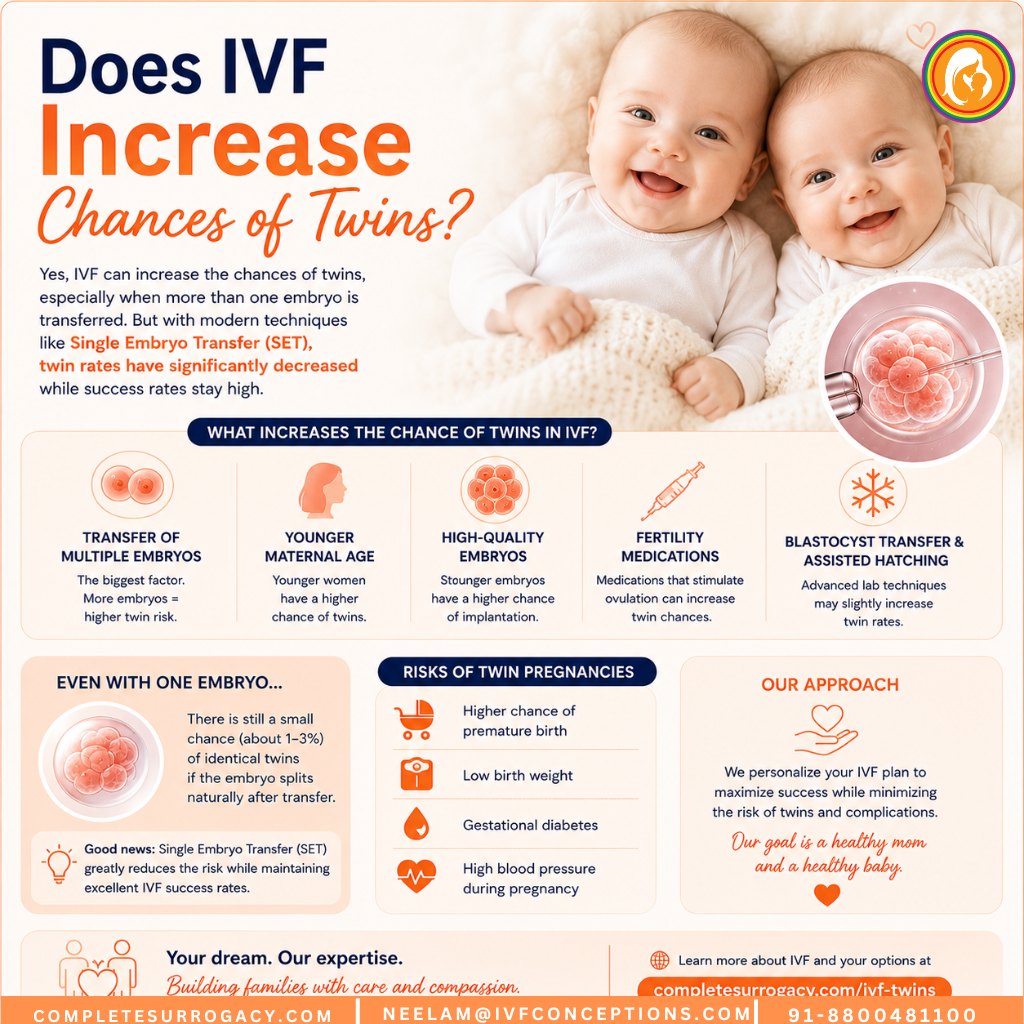
Does IVF Increase Chances of Twins? Yes, IVF can increase the chances of twins compared to natural pregnancy. In traditional IVF treatments, more than one embryo may be transferred into the uterus to improve pregnancy success rates, which can lead to twin or multiple pregnancies. However, with modern fertility practices, many clinics now recommend single embryo transfer (SET) to reduce the risks associated with multiple births. Still, the keyword Does IVF Increase Chances of Twins remains one of the most searched topics among couples considering fertility treatment because twin pregnancies through IVF are more common than in natural conception.
| Factor | Natural Pregnancy | IVF Pregnancy |
|---|---|---|
| Chance of Twins | Around 1–2% | Higher, depending on embryos transferred |
| Main Reason for Twins | Natural ovulation | Multiple embryo transfer |
| Type of Twins | Mostly fraternal | Fraternal or identical |
| Risk Level | Lower | Higher pregnancy risks with multiples |
| Modern IVF Trend | Not applicable | Single embryo transfer preferred |
| Doctor’s Recommendation | Natural conception | Safer single embryo transfer in many cases |
📞 Get in Touch for a Free Surrogacy Consultation
📱 +91-8800481100 (WhatsApp | LINE | Viber)
📧 neelam@ivfconceptions.com
How IVF Treatment Increases Your Chances of Having Twins
IVF twin pregnancies occur through specific mechanisms during the fertility treatment process. The primary factor involves the number of embryos your doctor transfers into your uterus. When fertility specialists transfer multiple embryos, each one has the potential to implant and develop into a baby.
Planning surrogacy abroad?
Read our complete Guide to International Surrogacy to understand the process, costs, legal rules, and timeline for international intended parents.
Multiple Embryo Transfer: The Main Factor Behind IVF Twins
Transferring two or more embryos significantly increases twin pregnancy chances. Each embryo transferred during your IVF cycle carries approximately 30-40% implantation potential. When doctors transfer two embryos, both might successfully implant. This creates a twin pregnancy scenario that differs from natural conception patterns.
The practice of multiple embryo transfer developed to improve overall IVF success rates. Years ago, fertility doctors commonly transferred three or four embryos per cycle. Patients wanted the highest possible chances of achieving pregnancy. This approach did increase pregnancy rates but also led to higher rates of twins and triplets.
Modern embryo transfer protocols have shifted significantly. Many fertility clinics now recommend single embryo transfer, especially for younger patients with good-quality embryos. This change reflects improved embryo selection technology and growing awareness of multiple pregnancy risks. The goal remains achieving a healthy pregnancy while minimizing complications.
Single Embryo Transfer and Identical Twins Formation
Even with single embryo transfer, twin pregnancies can occur. These cases involve identical twins, which develop when one embryo spontaneously splits into two separate embryos. This natural splitting process happens in approximately 1-2% of IVF pregnancies. The rate appears slightly higher than in natural conception.
Scientists continue researching why IVF might increase identical twin rates. Some theories suggest that embryo manipulation during the IVF process could affect the likelihood. The blastocyst stage embryos used in many IVF cycles might have different splitting characteristics. Laboratory conditions and freezing processes could also play roles in this phenomenon.
Understanding these mechanisms helps you set realistic expectations. Your fertility doctor can explain how embryo quality, stage of development, and transfer protocols affect your specific twin pregnancy chances. Each patient’s situation requires individualized assessment and treatment planning.
Schedule Your Personalized IVF Consultation
Every fertility journey is unique. Our specialists provide comprehensive assessments to help you understand your options, success rates, and personalized treatment protocols. Get expert guidance tailored to your specific circumstances.
Single Embryo Transfer vs Multiple Embryo Transfer: Making the Right Choice
The decision between transferring one embryo or multiple embryos represents a critical choice in your IVF treatment. This decision affects both your pregnancy success rates and your chances of having twins. Medical guidelines continue evolving as fertility medicine advances and research provides new insights.
Benefits of Single Embryo Transfer for Patient Safety
Single embryo transfer offers significant advantages for maternal and fetal health. Women who transfer one embryo face lower risks of pregnancy complications. These complications include gestational diabetes, preeclampsia, and premature birth. The risk profile resembles natural singleton pregnancies more closely than multiple pregnancies.
Your body handles one baby more easily than two during pregnancy. Single pregnancies require less intensive monitoring and fewer medical interventions. The duration of pregnancy tends to be longer with one baby. This gives your child more time to develop fully before birth.
Modern embryo selection techniques make single embryo transfer increasingly successful. Genetic testing and advanced imaging help doctors identify the healthiest embryos. These technologies allow fertility specialists to choose embryos with the highest implantation potential. Success rates for single embryo transfer now approach those of multiple embryo transfer in many patient groups.
When Multiple Embryo Transfer Makes Medical Sense
Some patients may still benefit from transferring two embryos. Women over 35 often face lower per-embryo implantation rates. Previous failed IVF cycles might also influence this decision. Embryo quality concerns sometimes make multiple embryo transfer a reasonable option.
Your fertility doctor considers multiple factors when recommending embryo numbers. These factors include your age, previous pregnancy history, embryo quality, and overall health status. The number of IVF cycles you can afford also plays a practical role in treatment decisions.
Open communication with your fertility team helps you understand these trade-offs. You deserve clear information about success rates, twin pregnancy chances, and health risks. This knowledge empowers you to make decisions aligned with your family planning goals and comfort level with various outcomes.
Single Embryo Transfer Advantages
- Lower risk of premature birth complications
- Reduced the chance of gestational diabetes and preeclampsia
- Longer pregnancy duration with better fetal development
- Fewer NICU admissions and associated costs
- Easier pregnancy management and monitoring
- Similar success rates with high-quality embryos
Multiple Embryo Transfer Considerations
- May increase overall pregnancy chances in older patients
- Can be beneficial after multiple failed cycles
- Appropriate when embryo quality is uncertain
- Cost-effective for patients with limited cycles
- Requires careful patient selection and counseling
- Demands a thorough discussion of twin pregnancy risks
IVF Twin Pregnancy Statistics and Success Rates
Understanding the numbers behind IVF twins helps you set realistic expectations. Statistical data from fertility clinics worldwide reveal important patterns about multiple pregnancies. These statistics vary based on patient age, embryo quality, and treatment protocols used during IVF cycles.
Current Twin Rates in IVF Compared to Natural Conception
Natural conception results in twin pregnancies approximately 1-2% of the time. IVF treatment historically increased this rate significantly. When doctors transferred two embryos, twin pregnancy rates reached 25-30% in optimal patient populations. This represents a dramatic increase compared to natural conception patterns.
Recent years have seen declining IVF twin rates in developed countries. This trend reflects the growing adoption of single embryo transfer protocols. Countries with strong single embryo transfer guidelines report twin rates dropping to 5-10% of IVF pregnancies. The United States shows twin rates around 12-15% as practices continue shifting toward single embryo transfer.
Your individual twin pregnancy chances depend on your specific treatment protocol. Patients who transfer one embryo have approximately 1-2% chance of identical twins. When you transfer two embryos, your chances of twins increase to 25-35% if both embryos implant successfully. These rates vary based on embryo quality and patient factors.
Success Rates by Age and Embryo Quality
Age significantly impacts both pregnancy success and twin pregnancy likelihood. Women under 35 with high-quality embryos achieve pregnancy rates of 50-60% per embryo transfer. Their twin rates with two embryo transfer reach 30-35%. As age increases, both overall success rates and twin rates tend to decrease.
Patients between 35-40 years experience lower per-embryo implantation rates. This age group typically sees pregnancy success rates of 35-45% per transfer. Twin pregnancy rates with two embryo transfer drop to 20-25%. The decline reflects natural fertility changes affecting embryo quality and uterine receptivity.
Women over 40 face additional challenges with IVF treatment. Pregnancy rates per transfer cycle range from 15-25% in this age group. Twin pregnancy chances decrease further to 10-15% with two embryo transfer. These statistics highlight why older patients sometimes receive recommendations for multiple embryo transfer despite associated risks.
| Age Group | Pregnancy Rate (Single Embryo) | Pregnancy Rate (Two Embryos) | Twin Rate (Two Embryos) |
| Under 35 | 50-60% | 60-70% | 30-35% |
| 35-37 | 40-50% | 50-60% | 25-30% |
| 38-40 | 30-40% | 40-50% | 20-25% |
| Over 40 | 15-25% | 25-35% | 10-15% |
Frozen Embryo Transfer Statistics for Twin Pregnancies
Frozen embryo transfer has become increasingly common in modern IVF practice. This approach offers several advantages including better cycle timing and reduced ovarian hyperstimulation risks. Twin pregnancy rates with frozen embryo transfer mirror those of fresh embryo transfer when similar numbers of embryos are transferred.
Single frozen embryo transfer maintains high success rates while minimizing twin pregnancy risks. Studies show pregnancy rates of 45-55% per transfer for high-quality frozen blastocysts in younger patients. The twin rate remains around 1-2% with single frozen embryo transfer, representing only identical twin occurrences.
Advances in embryo freezing technology have improved outcomes significantly. Modern vitrification methods preserve embryo quality extremely well. Patients often achieve better pregnancy rates with frozen embryos than fresh embryos. This success allows more confident use of single embryo transfer protocols without compromising overall treatment effectiveness.
Understanding Your Personal Success Rates: Statistical averages provide general guidance, but your individual chances depend on many factors. Embryo quality, uterine health, previous pregnancy history, and specific fertility diagnoses all influence outcomes. Email neelam@ivfconceptions.com for a personalized assessment of your success rates and twin pregnancy likelihood based on your unique circumstances.
Key Factors That Influence Twin Pregnancy Chances in IVF
Multiple factors interact to determine your likelihood of having twins through IVF treatment. Understanding these variables helps you and your fertility doctor make informed decisions about embryo transfer strategies. Each factor carries a different weight depending on your individual circumstances and medical history.
Maternal Age and Its Impact on Twin Likelihood
Your age represents one of the most significant factors affecting twin pregnancy chances. Younger women typically have better quality eggs and embryos. This higher quality leads to better implantation rates per embryo transferred. When doctors transfer two embryos to younger patients, both embryos more frequently implant successfully.
Women under 35 face the highest twin pregnancy risk with multiple embryo transfer. Their embryos demonstrate stronger developmental potential and implantation capability. The probability of both embryos resulting in ongoing pregnancies reaches peak levels in this age group. This reality drives recommendations for single embryo transfer in younger patients with excellent embryo quality.
As women age beyond 35, embryo quality gradually declines. Lower quality embryos have reduced implantation potential. This decrease affects overall pregnancy chances but also reduces twin pregnancy likelihood when multiple embryos are transferred. Fewer embryos successfully implant even when doctors transfer two or more during the IVF cycle.
Embryo Quality and Development Stage
The quality of your embryos dramatically influences both pregnancy success and twin pregnancy chances. High-quality embryos show optimal cell division patterns and minimal fragmentation. These embryos possess greater potential to implant and develop into healthy pregnancies. When you transfer two high-quality embryos, the risk of a twin pregnancy increases substantially.
Blastocyst stage embryos demonstrate different implantation characteristics than earlier stage embryos. Blastocysts have developed for five to six days after fertilization. This extended development allows better embryo selection. Doctors can identify embryos with the strongest developmental potential. Transferring high-quality blastocysts increases both pregnancy success and twin likelihood.
Embryo grading systems help fertility specialists assess quality objectively. Factors include cell number, fragmentation level, and symmetry of cell division. Grade A embryos show excellent quality with high implantation potential. Grade B embryos demonstrate good quality with moderate implantation chances. Lower-grade embryos face reduced success rates, affecting both overall pregnancy and twin pregnancy probabilities.
Previous IVF Cycles and Pregnancy History
Your history with previous IVF cycles provides valuable information for future treatment planning. Patients who experienced successful implantation in earlier cycles demonstrate proven embryo implantation capability. This history suggests a higher likelihood of success with future embryo transfers. It also indicates increased twin pregnancy risk if multiple embryos are transferred.
Women who previously delivered twins through IVF may have characteristics favoring multiple implantation. Their uterine environment might be particularly receptive to embryo implantation. Some patients possess hormonal or immunological factors that enhance implantation rates. These characteristics increase twin pregnancy chances in subsequent IVF cycles.
Failed IVF cycles offer different lessons for treatment planning. Multiple unsuccessful transfers might indicate implantation challenges. Doctors sometimes recommend transferring two embryos for patients with several failed single embryo transfer attempts. This strategy aims to improve overall pregnancy chances while accepting increased twin pregnancy risk as a trade-off.
Additional Resources to Read:
Surrogacy Services in Georgia Country
Surrogacy Services in Colombia
Surrogacy Services in Kazakhstan
Assisted Hatching and Laboratory Techniques
Various laboratory techniques can influence embryo implantation rates. Assisted hatching involves creating a small opening in the embryo’s outer shell. This technique may help embryos implant more easily in the uterine lining. Some research suggests assisted hatching could slightly increase twin pregnancy rates by improving overall implantation success.
Extended embryo culture to the blastocyst stage affects twin pregnancy dynamics. This approach allows natural selection of the strongest embryos. Blastocyst transfer typically involves fewer embryos than earlier-stage transfers. Despite transferring fewer embryos, blastocyst transfer maintains high success rates. This enables single embryo transfer with confidence while reducing twin pregnancy risk.
Genetic testing technologies provide additional embryo selection tools. Preimplantation genetic testing identifies embryos with normal chromosome numbers. These tested embryos show higher implantation rates than untested embryos. The improved success rates make single embryo transfer more appealing. This reduces twin pregnancy chances while maintaining excellent overall pregnancy rates.
Patient-Related Factors
- Maternal age and ovarian reserve
- Body mass index and overall health
- Previous pregnancy and birth history
- Specific fertility diagnosis
- Hormone levels and uterine health
- Genetic factors affecting implantation
Treatment-Related Factors
- Number of embryos transferred
- Embryo quality and grading
- Blastocyst versus early stage transfer
- Fresh versus frozen embryo transfer
- Use of assisted hatching techniques
- Preimplantation genetic testing
- Endometrial preparation protocol
- Timing of embryo transfer
Health Risks and Medical Considerations of Twin Pregnancies
Twin pregnancies carry higher health risks than singleton pregnancies for both mothers and babies. Understanding these risks helps you make informed decisions about embryo transfer numbers. Medical professionals emphasize these considerations when counseling patients about multiple embryo transfer options.
Maternal Health Risks with Twin Pregnancies
Women carrying twins face significantly increased risks of pregnancy complications. Gestational diabetes occurs 2-3 times more frequently in twin pregnancies compared to single pregnancies. This condition requires careful monitoring and may need insulin treatment. The risk affects both mother’s health during pregnancy and long-term diabetes risk after delivery.
Preeclampsia represents another serious concern with twin pregnancies. This condition involves high blood pressure and protein in the urine. Twin pregnancies increase preeclampsia risk by approximately 2-3 times. Severe preeclampsia can lead to serious complications affecting liver, kidneys, and blood clotting. Some women require early delivery to protect maternal health.
Twin pregnancies demand more intensive prenatal care. You will need more frequent doctor visits and monitoring throughout your pregnancy. Blood pressure checks, urine tests, and ultrasound examinations occur more often. The increased medical care comes with higher healthcare costs and more time commitment for appointments and testing.
Postpartum complications also increase with twin deliveries. Women who deliver twins face higher risks of postpartum hemorrhage. Recovery time after delivery tends to be longer. Physical demands of caring for two newborns simultaneously add stress during the recovery period.
Fetal and Neonatal Risks in Twin Pregnancies
Premature birth represents the most significant risk for twins. Over 60% of twin pregnancies result in preterm delivery before 37 weeks. Many twins arrive even earlier, before 32 weeks of gestation. Premature babies face numerous health challenges, including breathing difficulties, feeding problems, and developmental delays.
Low birth weight affects most twins even when born near term. The average twin weighs approximately 5.5 pounds at birth compared to 7.5 pounds for singletons. Lower birth weight increases the risk of health problems in the newborn period. Babies may require longer hospital stays and specialized care in neonatal intensive care units.
Twin-to-twin transfusion syndrome affects some identical twin pregnancies. This serious condition occurs when twins share a placenta. Blood flow becomes unbalanced between the two babies. One twin receives too much blood while the other receives too little. This condition requires specialized monitoring and may need medical intervention during pregnancy.
Long-term developmental outcomes show differences between twins and singletons. The higher rates of prematurity in twins contribute to increased risks of cerebral palsy and learning difficulties. While most twins develop normally, the statistical risks remain higher than for singleton pregnancies. These risks continue through childhood and may affect educational needs.
Financial and Practical Considerations
The financial impact of a twin pregnancy extends beyond medical costs. NICU stays for premature twins can cost hundreds of thousands of dollars. Even with insurance coverage, families face significant out-of-pocket expenses. These costs include deductibles, copayments, and services not covered by insurance plans.
Caring for two babies simultaneously presents major practical challenges. Families need double the baby equipment including cribs, car seats, and strollers. Feeding two babies requires more time and often more hands. Many families find they need additional childcare help or must reduce work hours to manage care demands.
The emotional stress of managing twin infants affects family dynamics. Parents of twins report higher rates of exhaustion and stress. Marriage relationships face additional pressure. Families with other children must balance the intensive needs of twins with existing family obligations and relationships.
Important Medical Advisory: Every pregnancy carries unique risks and considerations. Twin pregnancies require specialized care and monitoring throughout gestation and delivery. Concerned about the risks? Speak with our fertility specialists at +91-8800481100 to discuss your individual risk profile and how to optimize your pregnancy outcomes while considering your family planning goals.
Potential Advantages of Twin Pregnancy
- Complete family in one pregnancy for some couples
- Single pregnancy and recovery period
- Built-in playmate and companion for children
- May reduce need for additional IVF cycles
- Special twin bond and relationship
Significant Disadvantages and Risks
- High risk of premature delivery and NICU stay
- Increased maternal complications including preeclampsia
- Greater financial burden and childcare demands
- Higher rates of pregnancy bed rest and complications
- Elevated risk of long-term developmental problems
- More intensive medical monitoring throughout pregnancy
Understanding Identical Twins Versus Fraternal Twins in IVF
The type of twins you conceive through IVF depends on how the embryos develop and implant. Both identical and fraternal twins can occur during IVF treatment. Understanding the difference helps you grasp the biological processes behind twin formation and associated risks.
How Identical Twins Form During IVF Treatment
Identical twins develop from a single embryo that spontaneously divides into two separate embryos. This splitting process occurs naturally and cannot be predicted or controlled. The resulting babies share 100% of their genetic material. They will be the same sex and have very similar physical appearances.
IVF appears to slightly increase identical twin rates compared to natural conception. Research suggests rates of 1-2% for identical twins with single embryo transfer. This compares to approximately 0.3-0.4% in natural conception. Scientists continue investigating why IVF might increase embryo splitting likelihood.
Several theories attempt to explain higher identical twin rates in IVF. The embryo culture environment may influence splitting probability. Manipulation of embryos during the IVF process could affect cell division patterns. The hardening of the embryo’s outer shell might make it more difficult for the embryo to fully emerge, potentially leading to splitting.
Fraternal Twins Formation Through Multiple Embryo Transfer
Fraternal twins result from two separate embryos implanting and developing simultaneously. These twins share approximately 50% of their genetic material, similar to regular siblings. They may be the same sex or different sexes. Their physical appearances vary just as between any siblings in a family.
Multiple embryo transfer is the primary cause of fraternal twins in IVF. When doctors transfer two embryos and both implant successfully, fraternal twins result. This occurs in approximately 25-35% of cases when two high-quality embryos are transferred to younger patients. The percentage varies based on embryo quality and patient age factors.
Fraternal twins from IVF face the same pregnancy and health risks as fraternal twins from natural conception. The complications relate to carrying two babies rather than the genetic relationship between the twins. Premature birth, low birth weight, and maternal complications occur at similar rates regardless of whether twins are identical or fraternal.
Medical Implications of Twin Type
The type of twins affects certain pregnancy monitoring requirements. Identical twins sharing a placenta need more intensive ultrasound surveillance. Doctors watch for twin-to-twin transfusion syndrome and other placenta-related complications. These twins require specialized care from maternal-fetal medicine specialists.
Fraternal twins typically each have their own placenta and amniotic sac. This arrangement reduces certain pregnancy risks. However, these twins still face elevated risks of prematurity and other twin pregnancy complications. The medical care requirements remain more intensive than singleton pregnancies.
Determining twin type occurs early in pregnancy through ultrasound examination. Doctors assess whether twins share a placenta or have separate placentas. This information guides monitoring protocols throughout your pregnancy. Knowing twin type helps your medical team provide appropriate specialized care based on specific risk factors.
Strategies to Reduce Twin Pregnancy Risk While Maximizing IVF Success
Modern fertility medicine focuses on achieving healthy singleton pregnancies while maintaining high overall success rates. Various strategies help minimize twin pregnancy risks without significantly compromising your chances of getting pregnant. These approaches represent the current best practices in reproductive medicine.
Elective Single Embryo Transfer Programs
Elective single embryo transfer represents the most effective strategy for eliminating fraternal twin risk. This approach involves deliberately choosing to transfer only one embryo despite having multiple high-quality embryos available. The practice has become standard care for many patient groups in leading fertility clinics worldwide.
Success rates with elective single embryo transfer now rival those of multiple embryo transfer for optimal patients. Women under 35 with high-quality blastocysts achieve pregnancy rates of 50-60% per single embryo transfer. This success comes without the 25-35% twin pregnancy risk associated with two embryo transfer.
The key to successful single embryo transfer lies in excellent embryo selection. Advanced imaging technologies help identify embryos with the highest developmental potential. Time-lapse photography tracks embryo development patterns. Computer algorithms analyze these patterns to predict implantation success. These tools enable confident selection of the single best embryo for transfer.
Embryo Banking and Sequential Transfer Approach
Embryo banking involves creating and freezing multiple embryos before beginning transfers. This strategy allows you to transfer one embryo at a time while having additional embryos available for future attempts. The approach maximizes your cumulative pregnancy chances while minimizing twin pregnancy risk in each individual cycle.
Sequential single embryo transfers provide excellent cumulative pregnancy rates. Studies show that two sequential single embryo transfers achieve similar overall pregnancy rates to one double embryo transfer. The crucial difference is the elimination of twin pregnancy risk. You have two chances at pregnancy with each attempt carrying singleton pregnancy probabilities.
Modern embryo freezing technology makes this approach highly practical. Frozen embryos maintain excellent survival and implantation rates. Many patients now achieve better outcomes with frozen embryo transfer than fresh transfer. This success gives you flexibility in timing and allows optimal preparation of your uterine lining for implantation.
Preimplantation Genetic Testing for Embryo Selection
Preimplantation genetic testing analyzes embryo chromosomes before transfer. This technology identifies embryos with normal chromosome numbers. Chromosomally normal embryos demonstrate significantly higher implantation rates than untested embryos. The improved success enables confident single embryo transfer decisions.
Genetic testing particularly benefits patients with multiple embryos to choose from. The technology helps identify the single embryo most likely to result in a successful pregnancy. This reduces the temptation to transfer multiple embryos to improve success chances. One genetically normal embryo often provides better pregnancy probability than two untested embryos.
The cost of genetic testing must be weighed against potential benefits. Testing adds several thousand dollars to IVF cycle costs. However, this investment may reduce the number of transfer cycles needed to achieve pregnancy. It also provides genetic information about embryos that helps avoid certain pregnancy complications and losses.
Get Expert Guidance on Your IVF Embryo Transfer Strategy
Deciding on single or multiple embryo transfer requires careful consideration of your unique circumstances. Our fertility specialists analyze your age, embryo quality, previous cycle results, and personal preferences to recommend the optimal approach. We balance success rates with health risks to help you achieve your family building goals safely.
Important Patient Considerations When Deciding on Embryo Transfer Numbers
Your personal values and circumstances should guide embryo transfer decisions alongside medical recommendations. Every patient brings unique perspectives about family size, pregnancy risks, and treatment goals. Open discussion with your fertility team ensures your treatment plan aligns with your priorities.

Family Planning Goals and Preferences
Some couples desire twins and view multiple pregnancy as a positive outcome. The appeal of completing your family in one pregnancy makes sense for many patients. Having two children simultaneously eliminates the need for additional IVF cycles later. This preference deserves consideration in treatment planning discussions.
Other patients specifically want to avoid twin pregnancy. Concerns about health risks or practical childcare challenges drive this preference. Some families already have children and want to focus attention on one new baby. These preferences are equally valid and should influence treatment recommendations.
Your total desired family size affects embryo transfer strategy. Patients wanting only one or two children total might approach transfers differently than those desiring larger families. The number of embryos you have available also influences decisions. Having many high-quality embryos provides more flexibility for sequential single embryo transfers.
Financial and Insurance Considerations
The cost of IVF treatment significantly impacts decision-making for most patients. Insurance coverage varies dramatically between different plans and states. Patients with limited IVF cycle coverage may feel pressure to maximize pregnancy chances with each transfer attempt. This pressure can lead toward multiple embryo transfer despite associated risks.
However, twin pregnancy costs often exceed single pregnancy costs substantially. NICU care for premature twins creates enormous financial burden. Medical complications during twin pregnancy increase healthcare expenses. The cost of caring for two babies simultaneously affects family finances long-term. These factors deserve consideration when evaluating embryo transfer numbers.
Some insurance plans specifically encourage single embryo transfer through coverage policies. These plans may cover more IVF cycles if patients agree to transfer one embryo at a time. This coverage approach aligns financial incentives with medical best practices. Discussing insurance benefits with your fertility clinic financial counselor helps clarify your options.
Physical and Emotional Readiness
Your physical health status influences the safety of twin pregnancy. Women with certain medical conditions face particularly high risks with multiple pregnancy. Diabetes, high blood pressure, and obesity all increase twin pregnancy complications. Your fertility doctor should assess your individual risk profile when making transfer recommendations.
Emotional readiness for potential twin pregnancy deserves honest reflection. Caring for twins presents major challenges that affect all aspects of life. Sleep deprivation, relationship stress, and career impacts are intensified with twins. Consider whether you have adequate support systems in place to manage twin infant care successfully.
Previous pregnancy experiences inform your comfort level with different scenarios. Women who previously had complicated pregnancies may wish to minimize risks. Those with positive pregnancy experiences might feel more confident about twin pregnancy. Your personal history and feelings matter in these decisions.
Questions to Discuss With Your Doctor
- What are my specific chances of pregnancy with one versus two embryos?
- How does my age affect success rates and twin pregnancy risk?
- What is the quality of my available embryos?
- What are my personal risk factors for twin pregnancy complications?
- How many embryo transfers does my insurance cover?
- What is your clinic’s twin pregnancy rate?
- How would genetic testing affect my embryo selection?
- What happens to unused embryos if I get pregnant?
Medical Monitoring and Care Requirements for IVF Twin Pregnancies
Twin pregnancies require substantially more medical attention than singleton pregnancies. Understanding these increased care requirements helps you prepare for the pregnancy journey ahead. The monitoring begins immediately after positive pregnancy test confirmation and continues throughout gestation.
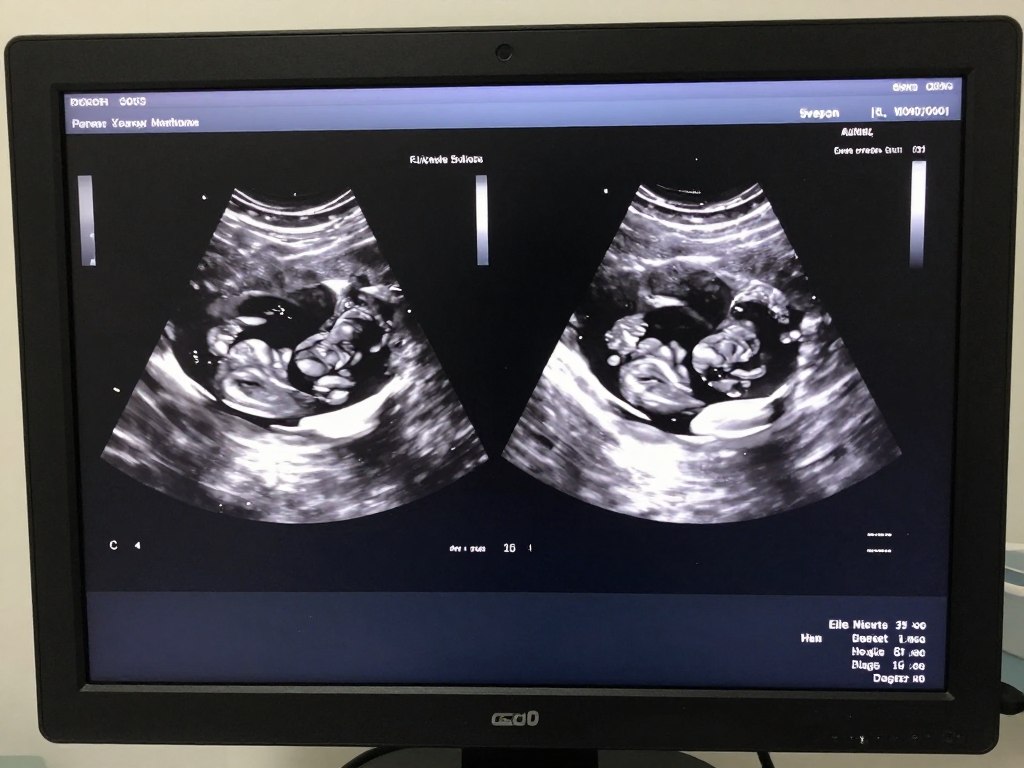
Early Pregnancy Monitoring in the First Trimester
Your fertility clinic provides close monitoring during early twin pregnancy weeks. Ultrasound examinations begin around six to seven weeks to confirm twin pregnancy. Doctors determine whether twins share a placenta or have separate placentas. This information establishes your monitoring protocol for the remainder of pregnancy.
Blood tests track hormone levels more frequently in twin pregnancies. Human chorionic gonadotropin (hCG) levels rise faster with twins than singletons. Your doctor monitors progesterone levels to ensure adequate support for both babies. These hormone checks continue through the first trimester transition period.
Ultrasound frequency increases significantly with twin pregnancies. You may have scans every two to three weeks in the first trimester. These examinations verify continued development of both babies. Doctors measure growth rates and check for early signs of complications. The increased monitoring provides reassurance but also requires more time for medical appointments.
Second and Third Trimester Care Protocols
The second trimester brings additional specialized care requirements. Cervical length measurements begin around 16-20 weeks gestation. A shortened cervix indicates increased preterm birth risk. Your doctor may recommend more frequent monitoring or interventions if cervical changes occur. Some women require cervical cerclage placement or progesterone supplementation.
Growth scans become routine in twin pregnancies during the second and third trimesters. Doctors measure each baby individually to track growth patterns. Significant growth differences between twins raise concerns about placental function. Doppler studies assess blood flow through umbilical cords. These specialized ultrasounds require expertise in maternal-fetal medicine.
Your appointment schedule intensifies as pregnancy progresses. By the third trimester, you may see your doctor every one to two weeks. Many women begin twice-weekly monitoring by 32-34 weeks. This includes non-stress tests to assess baby heart rates and movements. The intensive monitoring aims to identify problems early and prevent pregnancy loss.
Planning for Delivery of Twins
Delivery planning starts early in twin pregnancies. Most doctors recommend delivery by 38 weeks gestation for twins. Many twins arrive earlier either spontaneously or through planned early delivery. Your medical team discusses delivery location and mode of delivery based on baby positions and pregnancy course.
Hospital selection matters significantly for twin deliveries. Facilities with level III or IV neonatal intensive care units provide optimal care if babies need extra support. Some hospitals require twin deliveries occur in operating rooms regardless of planned vaginal delivery. This precaution ensures immediate access to cesarean section if complications arise.
The delivery mode depends on multiple factors including baby positions and your obstetric history. If the first twin is head-down, vaginal delivery may be possible. Breech positioning of the first twin usually necessitates cesarean delivery. Some women end up with vaginal delivery of one twin followed by cesarean for the second twin.
International Guidelines and Regulations on Embryo Transfer
Different countries take varying approaches to regulating embryo transfer numbers in IVF treatment. These policies reflect cultural values, healthcare systems, and medical evidence interpretation. Understanding international perspectives provides context for embryo transfer recommendations you receive.

European Approaches to Single Embryo Transfer
Many European countries have implemented strict single embryo transfer policies. Sweden, Finland, Belgium, and the Netherlands strongly promote or require single embryo transfer for most patients. These policies emerged from national healthcare systems bearing costs of twin pregnancy complications. The financial burden of premature twin care motivated regulatory action.
Countries with mandatory single embryo transfer policies report dramatic reductions in IVF twin rates. Sweden’s twin rate from IVF dropped from over 25% to under 5% after implementing guidelines. Pregnancy success rates remained stable while maternal and infant outcomes improved. These results demonstrate the effectiveness of single embryo transfer policies.
European countries often couple single embryo transfer mandates with generous IVF funding. Patients receive coverage for multiple IVF cycles. This reduces financial pressure to transfer multiple embryos. The combination of funding and regulation creates optimal conditions for single embryo transfer acceptance.
North American Practice Patterns
The United States takes a less regulatory approach to embryo transfer decisions. Professional guidelines from the American Society for Reproductive Medicine provide recommendations rather than mandates. These guidelines suggest single embryo transfer for good prognosis patients. However, doctors and patients ultimately make individual decisions based on circumstances.
American IVF twin rates have declined but remain higher than most European countries. Approximately 12-15% of IVF births result in twins currently. This compares to 5-8% in countries with strong single embryo transfer policies. The higher rate reflects more flexible embryo transfer practices and varied insurance coverage situations.
Insurance coverage variation in the United States affects embryo transfer decisions significantly. States with mandated IVF coverage show higher single embryo transfer rates. Patients with limited cycle coverage often feel compelled to transfer multiple embryos. This dynamic creates disparities in twin rates between different patient populations.
Emerging Practices in Other Regions
Australia and New Zealand have successfully promoted single embryo transfer through guidelines and education. Their twin rates from IVF have decreased substantially. These countries demonstrate that strong professional society recommendations can change practice patterns even without government mandates.
Asian countries show varied approaches to embryo transfer regulation. Japan maintains strict single embryo transfer policies. Other Asian nations allow more flexible practices based on patient age and circumstances. Cultural attitudes toward family size and twin pregnancies influence these regional differences.
Developing countries often lack specific regulations on embryo transfer numbers. Practice patterns vary widely based on clinic philosophy and doctor training. Access to IVF treatment itself remains limited in many regions. As fertility services expand globally, questions about optimal embryo transfer practices gain importance.
Frequently Asked Questions About IVF and Twin Pregnancies
Does IVF always result in twins?
No, IVF does not always result in twins. Twin pregnancy occurs only when doctors transfer multiple embryos and more than one successfully implants, or when a single transferred embryo spontaneously splits into identical twins. With single embryo transfer, your chance of twins is only 1-2%, representing identical twin occurrences. The practice of transferring one high-quality embryo has become increasingly common, significantly reducing IVF twin rates in recent years.
What percentage of IVF pregnancies result in twins?
Currently, approximately 12-15% of IVF pregnancies in the United States result in twins. This rate has declined from historical levels of 25-30% as more clinics adopt single embryo transfer protocols. Countries with strong single embryo transfer guidelines report twin rates of 5-10%. Your individual twin pregnancy chances depend primarily on how many embryos your doctor transfers. Single embryo transfer carries only 1-2% twin risk, while two embryo transfer increases this to 25-35% in optimal patient populations.
Can I request twins during IVF treatment?
While you can express preference for twins, responsible fertility doctors prioritize your health and safety over this preference. Medical guidelines recommend single embryo transfer for most patients, especially younger women with high-quality embryos. Doctors consider multiple factors including your age, health status, embryo quality, and previous cycle results when making transfer recommendations. Some patients with specific circumstances may be candidates for two embryo transfer. Have an open discussion with your fertility team about your family planning goals while understanding the significant health risks associated with twin pregnancy. Discuss your specific situation at +91-8800481100.
Are IVF twins more likely to be identical or fraternal?
IVF twins are much more likely to be fraternal (non-identical) than identical. Fraternal twins result from transferring two separate embryos that both successfully implant and develop. This occurs in the vast majority of IVF twin pregnancies. Identical twins form when a single embryo spontaneously splits into two embryos. This happens in only 1-2% of IVF pregnancies with single embryo transfer. The identical twin rate appears slightly higher with IVF compared to natural conception, though scientists continue researching why this occurs.
What are the main risks of having IVF twins?
Twin pregnancies carry substantially increased health risks for both mother and babies. Maternal risks include 2-3 times higher rates of gestational diabetes, preeclampsia, and postpartum complications. Over 60% of twins are born prematurely, often before 32 weeks gestation. Premature babies face breathing difficulties, feeding problems, developmental delays, and extended NICU stays. Low birth weight affects most twins, increasing immediate health challenges. Long-term risks include higher rates of cerebral palsy and learning difficulties. Financial costs are significantly higher, including medical expenses and childcare demands. These substantial risks drive medical recommendations for single embryo transfer whenever feasible.
How does single embryo transfer affect IVF success rates?
Single embryo transfer maintains excellent success rates for optimal patient populations. Women under 35 with high-quality blastocyst embryos achieve pregnancy rates of 50-60% per single embryo transfer. This compares favorably to historical rates with multiple embryo transfer. Advanced embryo selection technologies including preimplantation genetic testing help identify embryos with the highest implantation potential. Two sequential single embryo transfers provide similar cumulative pregnancy rates to one double embryo transfer, without the twin pregnancy risks. Success rates vary based on age, embryo quality, and individual patient factors.
Does freezing embryos affect twin pregnancy chances?
Frozen embryo transfer twin pregnancy rates mirror fresh embryo transfer rates when similar numbers of embryos are transferred. Modern vitrification freezing methods preserve embryo quality exceptionally well. Single frozen embryo transfer carries 1-2% twin risk representing identical twins only. Transferring two frozen embryos increases twin probability to 25-35% if both successfully implant. Many patients now achieve better pregnancy outcomes with frozen embryo transfer than fresh transfer. This success enables confident single embryo transfer decisions while maintaining excellent pregnancy rates.
How does my age affect twin pregnancy chances with IVF?
Your age significantly influences twin pregnancy likelihood through effects on embryo implantation rates. Women under 35 face highest twin risk with multiple embryo transfer because their high-quality embryos have stronger implantation potential. When doctors transfer two embryos to younger patients, both frequently implant successfully, creating twins in 30-35% of cases. As women age beyond 35, declining embryo quality reduces per-embryo implantation rates. This decreases both overall pregnancy success and twin pregnancy probability with multiple embryo transfer. Women over 40 experience twin rates of only 10-15% with two embryo transfer due to lower implantation potential.
What should I consider when deciding on embryo transfer numbers?
Several factors deserve careful consideration in embryo transfer decisions. Your age and embryo quality significantly impact success rates with single versus multiple embryo transfer. Medical history including previous pregnancies and health conditions affects twin pregnancy safety. Consider your family size goals and whether twins align with your plans. Financial factors including IVF cycle coverage and ability to manage twin pregnancy costs matter. Evaluate your support systems for managing potential twin infant care. Discuss your risk tolerance for pregnancy complications versus desire to maximize per-cycle success chances. Your fertility doctor weighs these factors alongside medical guidelines to recommend an optimal approach for your circumstances.
Direct Contact Options
- Phone: +91-8800481100
- Email: neelam@ivfconceptions.com
- Response Time: Within 24 hours
- Consultation Type: In-person or virtual available
What to Expect
- Comprehensive fertility assessment
- Personalized treatment recommendations
- Clear explanation of success rates
- Discussion of embryo transfer options
- Transparent cost breakdown
- No-pressure environment
Making Informed Decisions About IVF and Twin Pregnancies

Understanding how IVF influences twin pregnancy chances empowers you to make decisions aligned with your values and circumstances. The relationship between embryo transfer numbers and twin probability is clear and direct. Transferring one embryo dramatically reduces twin risk while maintaining strong pregnancy success rates for many patients.
Medical evidence increasingly supports single embryo transfer as the optimal approach for most IVF patients. The significant health risks associated with twin pregnancies justify this recommendation. Premature birth, low birth weight, and maternal complications affect the majority of twin pregnancies. These risks extend beyond pregnancy, influencing long-term health outcomes for mothers and children.
Begin Your Fertility Journey with Expert Support
Take the next step toward building your family with comprehensive fertility care tailored to your unique needs. Our team combines medical expertise with compassionate support to guide you through every decision. From initial consultation through successful pregnancy, we’re here to help you achieve your family planning goals safely and effectively.

Author Bio: Neelam Chhagani is an International Surrogacy Expert with 15 years of experience in the fertility and surrogacy domain. As the founder of IVF Conceptions and Complete Surrogacy, she has guided over 4,000 intended parents worldwide on their surrogacy journey to parenthood. Recognized as a trusted authority, she specializes in holistic infertility solutions and third-party reproduction consulting.
Holding an MA in Counselling Psychology and a PGD in Mental Health, Neelam is a proud member of the European Fertility Society (EFS) and the European Society of Human Reproduction and Embryology (ESHRE). She is also a leading surrogacy blogger, providing valuable insights into ethical and practical surrogacy solutions.
Since 2010, committed to supporting ALL family types, Neelam has been passionate about helping intended parents grow their families with compassion, integrity, and a focus on secure and affordable surrogacy options Globally.
Learn more about Neelam:
https://www.ivfconceptions.com/neelam-chhagani-surrogacy-consultant/
https://www.linkedin.com/in/neelam-chhagani-92892229/















I was introduced to Neelam by a friend who worked with Neelam for surrogacy. Neelam is absolutely wonderful. I am a single male and the journey to fatherhood is not that easy. Neelam connected me to a program ideal for my circumstances. She was with me throughout the pregnancy providing advice and guidance along the way. I am so grateful I found her and am thrilled today that I have a beautiful daughter. I highly recommend Neelam to anyone who is on a journey to become a parent. Having a child has changed my world for the better. I wish others success with their own journey and recommend you connect with Neelam to find a path that is best for you.
SA (USA)