
What if the most important decision about your family’s future has already been made by your body before you even realized it was happening?
Your fertility follows a biological timeline that doesn’t pause for your career goals or personal plans. Understanding how age affects fertility and success rate is critical for making informed decisions about your reproductive future. Every woman is born with a set number of eggs, and that number only decreases throughout her lifetime.
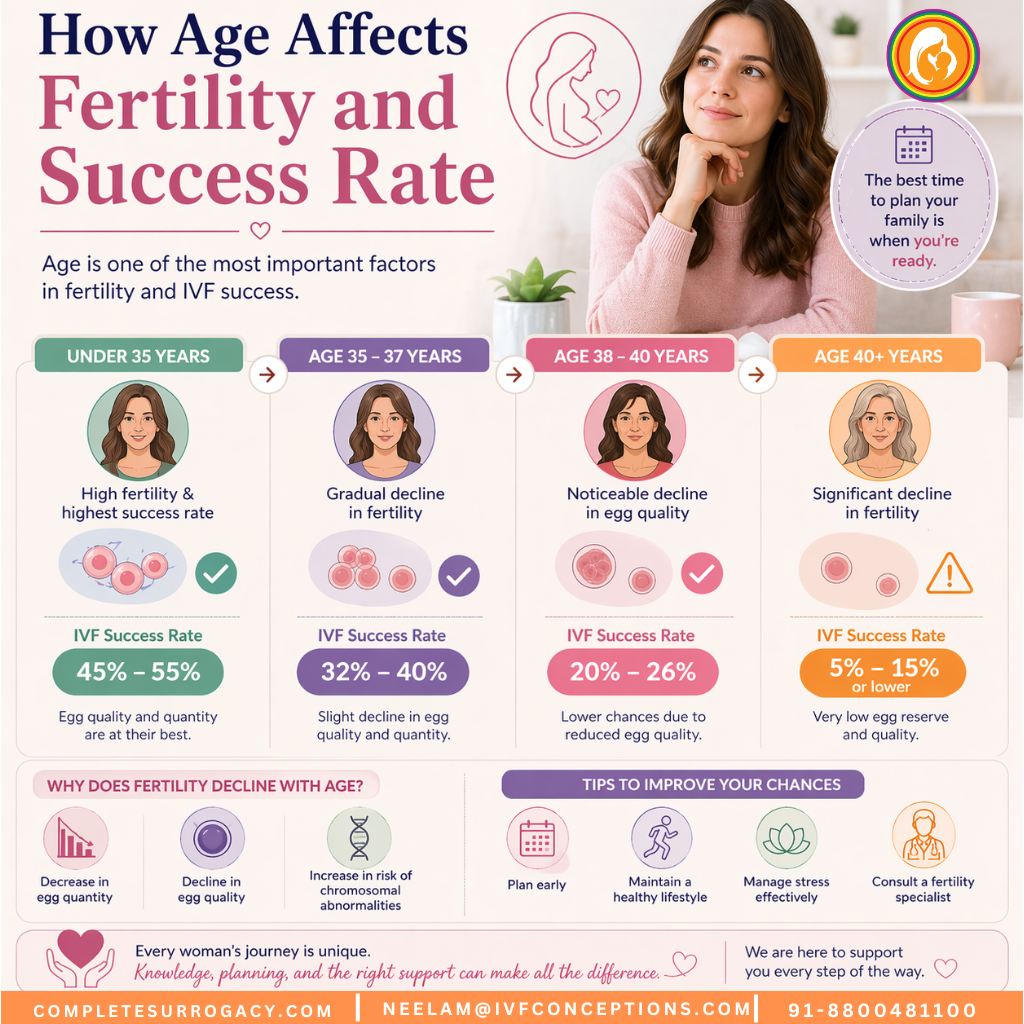
The reality of age and fertility decline hits differently when you understand the numbers. Medical research shows that women have approximately 1 to 2 million eggs at birth. By puberty, that number drops to between 300,000 and 500,000. At age 37, you have roughly 25,000 eggs left. By age 51, you’re down to about 1,000. This predetermined countdown affects not just how many eggs you have available but also their quality.
📞 Get in Touch for a Free Surrogacy Consultation
📱 +91-8800481100 (WhatsApp | LINE | Viber)
📧 neelam@ivfconceptions.com
Modern life has changed when women attempt to have children. More American women are focusing on careers and personal goals before starting families. Between 1970 and 2002, the rate of first-time mothers over 30 increased sixfold. From 2000 to 2014, the number of women aged 30 to 34 having their first child rose by 28 percent. The number of women aged 35 and older having their first child increased by 23 percent during that same period.
Age-related infertility isn’t just about the number of eggs remaining in your ovaries. It involves the quality of those eggs, changes in your menstrual cycle, and increased risks of pregnancy complications as you get older. The average age at menopause in the United States is 51, marking the end of your reproductive years.
Planning surrogacy abroad?
Read our complete Guide to International Surrogacy to understand the process, costs, legal rules, and timeline for international intended parents.
Additional Resources to Read:
Surrogacy Services in Georgia Country
Surrogacy Services in Colombia
Surrogacy Services in Kazakhstan
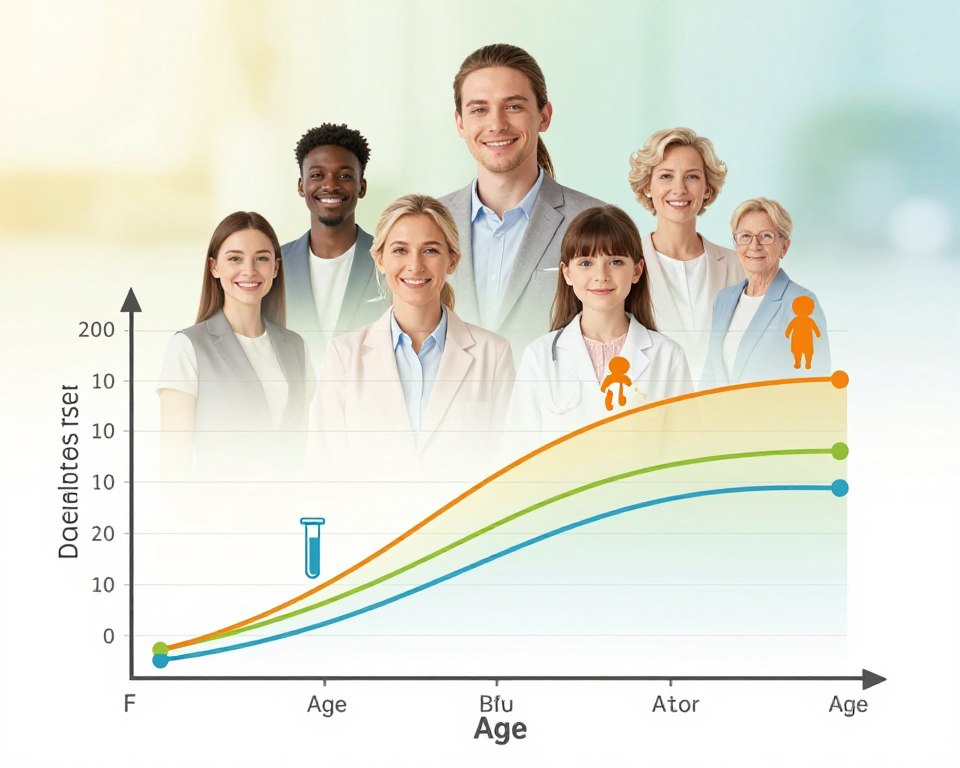
This article provides evidence-based information to help you understand your reproductive timeline. Whether you’re currently trying to conceive or planning for future family building, knowing how age affects fertility and success rate empowers you to make choices that align with your personal and medical situation.
Key Takeaways
- Women are born with a finite number of eggs that continuously decrease throughout their lifetime.
- Age and fertility decline are inevitable biological processes affecting all women.
- Egg quantity drops from 6 to 7 million in utero to approximately 1,000 by age 51.
- Modern women are delaying childbearing due to career advancement and personal goals, shifting when conception attempts occur.
- Age-related infertility involves egg quality, ovulatory changes, and increased pregnancy complications beyond just egg quantity.
- Understanding your reproductive timeline helps with informed family planning decisions.
- The average age of menopause in the United States is 51 years old.
Understanding the Biological Clock and Conception
Your biological clock and conception are intricately connected to your reproductive timeline. Unlike men, who produce sperm throughout their lives, you were born with a finite number of eggs. This fundamental truth shapes your fertility across your adult years. Grasping how your biological clock operates is key to making informed decisions about family planning and reproductive health.
The window for biological clock fertility narrows with age. Your peak reproductive years, when both quantity and quality of eggs are optimal, typically fall in your 20s and early 30s. After 32, egg loss accelerates, significantly altering your fertility landscape. Currently, no medical method can halt or reverse this natural process.
The Female Reproductive System and Age
Your ovaries are remarkable organs with dual functions. They store and release eggs for pregnancy and produce essential hormones like estrogen, progesterone, and testosterone. These hormones control your menstrual cycle and maintain reproductive health.
Female fertility by age heavily relies on ovarian function. As you age, hormonal levels change, affecting your ability to conceive and carry a pregnancy.
Oocyte Development and Depletion Over Time
Your egg supply undergoes a dramatic timeline from birth to menopause:
- Around 20 weeks of gestation: 6 to 7 million eggs
- At birth: 1 to 2 million eggs
- At puberty: 300,000 to 500,000 eggs
- At age 37: 25,000 eggs
- At age 51: approximately 1,000 eggs
This depletion is due to atresia, a natural process. Your ovarian reserve and aging are linked through continuous egg loss. The exact mechanism is not fully understood, but hormonal changes are believed to play a significant role. Rising follicle-stimulating hormone levels and declining anti-müllerian and inhibin B hormones trigger this process.
The decline in ovarian reserve speeds up after 35. This acceleration significantly impacts both fertility and egg quality, making age a critical factor in reproductive planning.
How Age Affects Fertility and Success Rate
Your age significantly impacts your ability to conceive and carry a pregnancy to term. It’s vital to understand how maternal age affects the decline in fertility rates. The link between age and fertility is complex, influenced by various biological changes that affect success rates.
The main reason for declining fertility is the decrease in both the quantity and quality of your eggs. Your ovaries hold a limited number of eggs, which decreases over time. The quality of your remaining eggs also deteriorates, making successful fertilization less likely. This decline in egg quality is the primary reason why maternal age fertility rates drop noticeably after your mid-thirties.
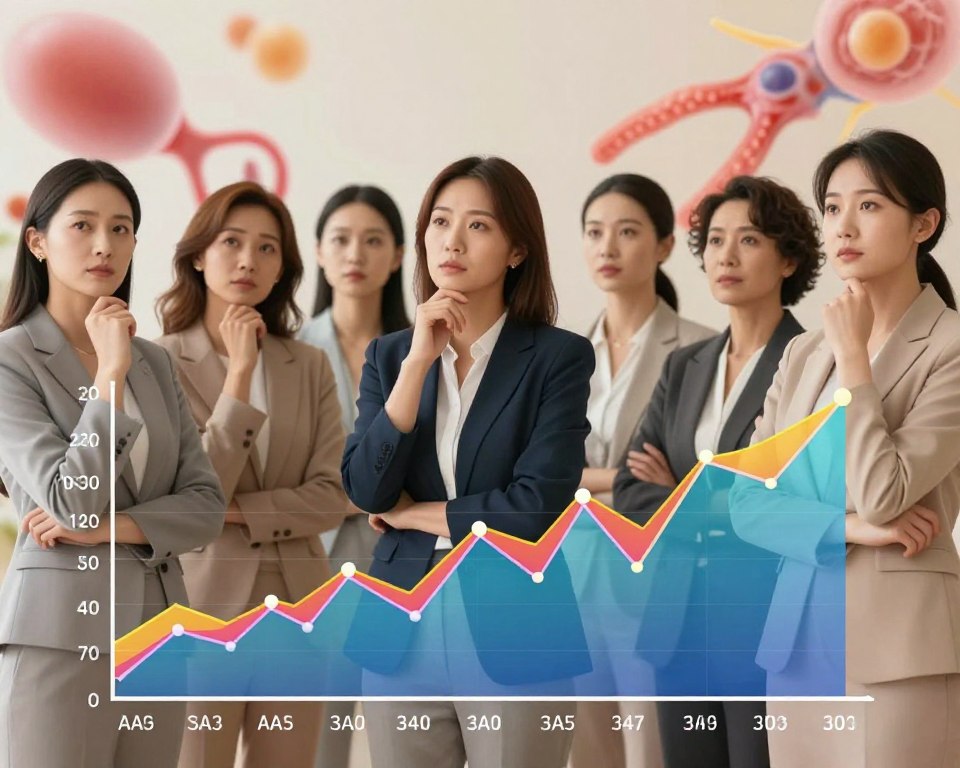
Several additional factors contribute to reduced fertility beyond egg quality:
- Irregular ovulatory cycles that make predicting your fertile window more difficult
- Increased risk of chromosomal abnormalities in eggs, leading to higher miscarriage rates
- Potential decline in uterine health affecting embryo implantation
- Greater likelihood of developing endometriosis, uterine fibroids, and tubal disease
- Cumulative exposure to environmental toxins over your lifetime
- Changes in sexual activity frequency that can impact conception timing
Research shows that maternal age fertility rates are highest in women under twenty-five. Your fertility starts declining in your early thirties, with a more significant drop after thirty-five. If you’ve undergone chemotherapy or had ovarian or tubal surgeries, these experiences compound age-related fertility decline, further reducing your reproductive capacity.
Age and Fertility Decline: What the Statistics Show
Your age significantly impacts your ability to conceive and carry a healthy pregnancy. Grasping fertility success by age is key to informed family planning. Research highlights how fertility evolves across life stages, with notable changes after 35.
It’s estimated that 10% to 15% of couples face difficulty in conceiving. Age is a major factor in conception rates, with women’s fertility peaking in their early twenties and declining through their thirties. Studies from Japan and Europe show that fertility success rates by age peak in your early twenties and then decline.
Fertility Success Rates by Age Group
Women under 25 have the highest natural conception rates. Fertility starts to decline gradually in the late twenties and early thirties. After 35, the decline accelerates and becomes more pronounced.
| Age Group | Fertility Status | Conception Difficulty |
|---|---|---|
| Under 25 years | Peak fertility rates | Lowest difficulty rates |
| 25-30 years | Gradual decline begins | Slight increase in difficulty |
| 30-35 years | Moderate decline | Noticeable increase in difficulty |
| 35-40 years | Significant decline | Substantial difficulty reported |
| 40+ years | Rapid decline | Major fertility challenges |
Maternal Age Fertility Statistics and Trends
Maternal age fertility statistics show significant changes in pregnancy outcomes with age. The risk of chromosomal abnormalities increases dramatically with each year.
Down syndrome risk is a clear example:
- Mothers younger than 25: approximately 2% risk
- Mothers aged 30: about 3% risk
- Mothers aged 35: approximately 5% risk
- Mothers aged 40: nearly 35% risk
Aneuploidy (chromosomal abnormalities) is a major concern for pregnancy success rates by age. Your aneuploidy risk at age 40 is ten times higher than at age 25. These chromosomal problems cause 65% to 75% of early pregnancy losses and about 35% of clinically recognized miscarriages.
Understanding maternal age fertility statistics helps explain why miscarriage rates increase with maternal age. If you’re over 35 and trying to conceive, early fertility evaluation is key to understanding your specific situation.
The Impact of Egg Quality and Aging on Conception
Your egg quality is key to conceiving and carrying a healthy pregnancy. It’s not just about how many eggs you have, but whether they can support fertilization and embryo growth. Knowing about egg quality and age is vital for planning your reproductive future.
Genetics are at the core of egg quality. Your eggs must have 23 chromosomes to combine with the sperm’s 23, creating a normal embryo with 46 chromosomes. Any imbalance increases the risk of conception issues and miscarriage.
How Aging Affects Your Eggs
With age, your eggs face more chromosomal errors, known as aneuploidy. This is due to the deterioration of the machinery that divides chromosomes. Egg quality and aging are linked through several biological processes:
- DNA damage builds up in eggs stored in your ovaries for decades
- Cohesin proteins, which hold chromosomes together, weaken and break down
- The spindle assembly checkpoint becomes less effective at catching errors
- Telomeres, which protect chromosome ends, shorten with age
- Mitochondrial function declines, reducing cellular energy production
- Ovarian inflammation and fibrosis create a less favorable environment
Egg quality and aging pose significant challenges. Aneuploidy becomes more common with age, greatly impacting fertility.
Grasping these biological changes can help you explore fertility preservation options. It also allows you to discuss treatment strategies with your healthcare provider.
IVF Success Rates by Age and Treatment Options
Understanding IVF success rates by age is key to making informed decisions about your fertility journey. Your age significantly impacts how well your body responds to fertility treatments and your chances of pregnancy. As you age, your eggs undergo natural changes that affect their ability to create healthy pregnancies. This section delves into the importance of reproductive age and IVF outcomes, providing realistic expectations for your situation.
Reproductive Health and Aging Considerations
Your reproductive health undergoes significant changes with age. After 42, about 85% of your eggs contain chromosomal abnormalities. This drastic change means your body produces fewer eggs that can develop into healthy embryos.
Here are some key facts about egg production at different ages:
- At 35, you need about 5 eggs to get one chromosomally normal embryo
- At 42, you would need approximately 200 eggs to achieve the same result
- Your ovaries respond less effectively to fertility medications as you age
- Decreased ovarian responsiveness limits the number of eggs retrieved per cycle
Your reproductive health and aging body also show reduced sensitivity to ovarian stimulation hormones. This results in fewer eggs produced during treatment cycles, limiting embryo creation options.
Fertility Treatment Success Rates by Age Statistics
Understanding fertility treatment success rates by age is vital for knowing when to seek professional help. The timeline for evaluation varies based on your age:
| Your Age Group | When to Seek Evaluation | Recommended Next Step |
|---|---|---|
| Under 35 years | After 12 months of trying | Consultation with fertility specialist |
| 35 to 39 years | After 6 months of trying | Ovarian reserve testing recommended |
| 40 years and older | Immediately when ready to start | Reproductive endocrinologist evaluation |
IVF success rates and age statistics highlight the power of donor egg use. Using donor eggs significantly improves your IVF success rates by age. This is because outcomes depend on the donor’s age, not yours. Donor eggs, typically from younger women with better egg quality, offer a higher chance of success.
Testing for decreased ovarian reserve is critical if you’re 35 or older and haven’t conceived after six months. A reproductive endocrinologist can assess your situation. They can discuss whether donor eggs might be your best option if you haven’t frozen your own eggs.
Fertility Preservation Options and Reproductive Planning
Planning your family timeline is a deeply personal decision. If you’re not ready to have children now but want to protect your future reproductive options, fertility preservation offers real solutions. These strategies help you take control of your fertility clock before age-related changes affect your chances of conception.
The most effective fertility preservation method available today is egg freezing, also called oocyte cryopreservation. This procedure involves removing eggs from your ovaries and freezing them using a rapid-freezing technique called vitrification. This process stops ice crystal formation and keeps your eggs in excellent condition for future use.
How Egg Freezing Works
The process is straightforward. Your doctor gives you hormone medications to stimulate your ovaries. This produces multiple eggs in a single cycle, unlike the usual one egg per cycle. A minor surgical procedure retrieves these eggs. Then they’re frozen and stored until you’re ready to use them with in vitro fertilization (IVF).
The success rates are impressive. If you freeze 15 eggs before age 35, you have an 85.2% probability of achieving a live birth when you use them. This approach is called “AGE-Banking” because it effectively stops your biological clock at your current age.
Comparing Your Preservation Choices
You have several fertility preservation options to consider:
- Oocyte cryopreservation (egg freezing) – Best choice if you don’t have a partner. No legal complications arise if relationships change later.
- Embryo cryopreservation – Less ideal because frozen embryos raise ownership questions if you and a partner separate.
- Ovarian tissue banking – A more invasive surgical procedure. Less commonly used than egg freezing.
Understanding Risks of Fertility After 35
Egg freezing helps you preserve your eggs at a younger age. This matters because fertility after 35 involves real health considerations. Once you become pregnant, your risks increase for several pregnancy complications.
| Age at Pregnancy | Miscarriage Risk | Preterm Birth Risk | Gestational Diabetes Risk | Preeclampsia Risk |
|---|---|---|---|---|
| Under 35 | Lower rates | Lower rates | Standard rates | Standard rates |
| 35-39 | Increased | Increased | Increased | Increased |
| 40 and older | Significantly increased | Significantly increased | Significantly increased | Significantly increased |
Advanced maternal age pregnancy brings specific health challenges. Women giving birth at 34 or older face higher rates of miscarriage, preterm birth, and congenital malformations. After age 40, these risks climb even higher. Gestational hypertension, preeclampsia, and gestational diabetes become more common during advanced maternal age pregnancy.
Making Your Decision
Understanding these facts helps you make informed choices about your reproductive future. Freezing your eggs now means you’ll have healthy eggs available later. You preserve them at their current quality before age-related decline affects them. This gives you flexibility to pursue your career, find the right partner, or simply wait until you’re ready for parenthood.
Your fertility preservation decision is deeply personal. Discussing options with a fertility specialist helps you understand what works best for your situation and goals.
Conclusion
Understanding how age impacts your fertility is a critical step for reproductive health. This knowledge empowers you to make informed decisions about family planning. Whether you aim to start a family immediately, plan for the future, or simply understand your body better, knowing the facts about age and fertility gives you control.
Your biological clock is a reality, but you have choices. You can’t halt time, but you can take steps to safeguard your fertility. Begin by adopting healthy habits today. Focus on maintaining a healthy weight, quitting smoking, and reducing alcohol consumption. These actions enhance your fertility at any age. If you’re considering delaying parenthood, discuss fertility preservation options with your doctor. If you’re facing challenges in conceiving, seek medical assistance promptly. Women over 35 should consult a doctor after six months of trying, and those over 40 should seek help immediately.
Many women overestimate their fertility as they age. They often rely too heavily on fertility treatments like IVF to overcome age-related issues. This misplaced optimism can cause delays in seeking necessary care. Accurate information enables proactive, not reactive, approaches. Open discussions with your doctor about your family aspirations are essential. Reproductive endocrinologists and fertility specialists are ready to assist you with personalized plans. Armed with the right support and honest knowledge about your body, you can make the most informed choices for your future.
What if the most important decision about your family’s future has already been made by your body before you even realized it was happening?
Your fertility follows a biological timeline that doesn’t pause for your career goals or personal plans. Understanding how age affects fertility and success rate is critical for making informed decisions about your reproductive future. Every woman is born with a set number of eggs, and that number only decreases throughout her lifetime.
The reality of age and fertility decline hits differently when you understand the numbers. Medical research shows that women have approximately 1 to 2 million eggs at birth. By puberty, that number drops to between 300,000 and 500,000. At age 37, you have roughly 25,000 eggs left. By age 51, you’re down to about 1,000. This predetermined countdown affects not just how many eggs you have available but also their quality.
📞 Get in Touch for a Free Surrogacy Consultation
📱 +91-8800481100 (WhatsApp | LINE | Viber)
📧 neelam@ivfconceptions.com
Modern life has changed when women attempt to have children. More American women are focusing on careers and personal goals before starting families. Between 1970 and 2002, the rate of first-time mothers over 30 increased sixfold. From 2000 to 2014, the number of women aged 30 to 34 having their first child rose by 28 percent. The number of women aged 35 and older having their first child increased by 23 percent during that same period.
Age-related infertility isn’t just about the number of eggs remaining in your ovaries. It involves the quality of those eggs, changes in your menstrual cycle, and increased risks of pregnancy complications as you get older. The average age at menopause in the United States is 51, marking the end of your reproductive years.
Planning surrogacy abroad?
Read our complete Guide to International Surrogacy to understand the process, costs, legal rules, and timeline for international intended parents.
Additional Resources to Read:
Surrogacy Services in Georgia Country
Surrogacy Services in Colombia
Surrogacy Services in Kazakhstan
This article provides evidence-based information to help you understand your reproductive timeline. Whether you’re currently trying to conceive or planning for future family building, knowing how age affects fertility and success rate empowers you to make choices that align with your personal and medical situation.
Key Takeaways
- Women are born with a finite number of eggs that continuously decrease throughout their lifetime.
- Age and fertility decline are inevitable biological processes affecting all women.
- Egg quantity drops from 6 to 7 million in utero to approximately 1,000 by age 51.
- Modern women are delaying childbearing due to career advancement and personal goals, shifting when conception attempts occur.
- Age-related infertility involves egg quality, ovulatory changes, and increased pregnancy complications beyond just egg quantity.
- Understanding your reproductive timeline helps with informed family planning decisions.
- The average age of menopause in the United States is 51 years old.
Understanding the Biological Clock and Conception
Your biological clock and conception are intricately connected to your reproductive timeline. Unlike men, who produce sperm throughout their lives, you were born with a finite number of eggs. This fundamental truth shapes your fertility across your adult years. Grasping how your biological clock operates is key to making informed decisions about family planning and reproductive health.
The window for biological clock fertility narrows with age. Your peak reproductive years, when both quantity and quality of eggs are optimal, typically fall in your 20s and early 30s. After 32, egg loss accelerates, significantly altering your fertility landscape. Currently, no medical method can halt or reverse this natural process.
The Female Reproductive System and Age
Your ovaries are remarkable organs with dual functions. They store and release eggs for pregnancy and produce essential hormones like estrogen, progesterone, and testosterone. These hormones control your menstrual cycle and maintain reproductive health.
Female fertility by age heavily relies on ovarian function. As you age, hormonal levels change, affecting your ability to conceive and carry a pregnancy.
Oocyte Development and Depletion Over Time
Your egg supply undergoes a dramatic timeline from birth to menopause:
- Around 20 weeks of gestation: 6 to 7 million eggs
- At birth: 1 to 2 million eggs
- At puberty: 300,000 to 500,000 eggs
- At age 37: 25,000 eggs
- At age 51: approximately 1,000 eggs
This depletion is due to atresia, a natural process. Your ovarian reserve and aging are linked through continuous egg loss. The exact mechanism is not fully understood, but hormonal changes are believed to play a significant role. Rising follicle-stimulating hormone levels and declining anti-müllerian and inhibin B hormones trigger this process.
The decline in ovarian reserve speeds up after 35. This acceleration significantly impacts both fertility and egg quality, making age a critical factor in reproductive planning.
How Age Affects Fertility and Success Rate
Your age significantly impacts your ability to conceive and carry a pregnancy to term. It’s vital to understand how maternal age affects the decline in fertility rates. The link between age and fertility is complex, influenced by various biological changes that affect success rates.
The main reason for declining fertility is the decrease in both the quantity and quality of your eggs. Your ovaries hold a limited number of eggs, which decreases over time. The quality of your remaining eggs also deteriorates, making successful fertilization less likely. This decline in egg quality is the primary reason why maternal age fertility rates drop noticeably after your mid-thirties.
Several additional factors contribute to reduced fertility beyond egg quality:
- Irregular ovulatory cycles that make predicting your fertile window more difficult
- Increased risk of chromosomal abnormalities in eggs, leading to higher miscarriage rates
- Potential decline in uterine health affecting embryo implantation
- Greater likelihood of developing endometriosis, uterine fibroids, and tubal disease
- Cumulative exposure to environmental toxins over your lifetime
- Changes in sexual activity frequency that can impact conception timing
Research shows that maternal age fertility rates are highest in women under twenty-five. Your fertility starts declining in your early thirties, with a more significant drop after thirty-five. If you’ve undergone chemotherapy or had ovarian or tubal surgeries, these experiences compound age-related fertility decline, further reducing your reproductive capacity.
Age and Fertility Decline: What the Statistics Show
Your age significantly impacts your ability to conceive and carry a healthy pregnancy. Grasping fertility success by age is key to informed family planning. Research highlights how fertility evolves across life stages, with notable changes after 35.
It’s estimated that 10% to 15% of couples face difficulty in conceiving. Age is a major factor in conception rates, with women’s fertility peaking in their early twenties and declining through their thirties. Studies from Japan and Europe show that fertility success rates by age peak in your early twenties and then decline.
Fertility Success Rates by Age Group
Women under 25 have the highest natural conception rates. Fertility starts to decline gradually in the late twenties and early thirties. After 35, the decline accelerates and becomes more pronounced.
| Age Group | Fertility Status | Conception Difficulty |
|---|---|---|
| Under 25 years | Peak fertility rates | Lowest difficulty rates |
| 25-30 years | Gradual decline begins | Slight increase in difficulty |
| 30-35 years | Moderate decline | Noticeable increase in difficulty |
| 35-40 years | Significant decline | Substantial difficulty reported |
| 40+ years | Rapid decline | Major fertility challenges |
Maternal Age Fertility Statistics and Trends
Maternal age fertility statistics show significant changes in pregnancy outcomes with age. The risk of chromosomal abnormalities increases dramatically with each year.
Down syndrome risk is a clear example:
- Mothers younger than 25: approximately 2% risk
- Mothers aged 30: about 3% risk
- Mothers aged 35: approximately 5% risk
- Mothers aged 40: nearly 35% risk
Aneuploidy (chromosomal abnormalities) is a major concern for pregnancy success rates by age. Your aneuploidy risk at age 40 is ten times higher than at age 25. These chromosomal problems cause 65% to 75% of early pregnancy losses and about 35% of clinically recognized miscarriages.
Understanding maternal age fertility statistics helps explain why miscarriage rates increase with maternal age. If you’re over 35 and trying to conceive, early fertility evaluation is key to understanding your specific situation.
The Impact of Egg Quality and Aging on Conception
Your egg quality is key to conceiving and carrying a healthy pregnancy. It’s not just about how many eggs you have, but whether they can support fertilization and embryo growth. Knowing about egg quality and age is vital for planning your reproductive future.
Genetics are at the core of egg quality. Your eggs must have 23 chromosomes to combine with the sperm’s 23, creating a normal embryo with 46 chromosomes. Any imbalance increases the risk of conception issues and miscarriage.
How Aging Affects Your Eggs
With age, your eggs face more chromosomal errors, known as aneuploidy. This is due to the deterioration of the machinery that divides chromosomes. Egg quality and aging are linked through several biological processes:
- DNA damage builds up in eggs stored in your ovaries for decades
- Cohesin proteins, which hold chromosomes together, weaken and break down
- The spindle assembly checkpoint becomes less effective at catching errors
- Telomeres, which protect chromosome ends, shorten with age
- Mitochondrial function declines, reducing cellular energy production
- Ovarian inflammation and fibrosis create a less favorable environment
Egg quality and aging pose significant challenges. Aneuploidy becomes more common with age, greatly impacting fertility.
Grasping these biological changes can help you explore fertility preservation options. It also allows you to discuss treatment strategies with your healthcare provider.
IVF Success Rates by Age and Treatment Options
Understanding IVF success rates by age is key to making informed decisions about your fertility journey. Your age significantly impacts how well your body responds to fertility treatments and your chances of pregnancy. As you age, your eggs undergo natural changes that affect their ability to create healthy pregnancies. This section delves into the importance of reproductive age and IVF outcomes, providing realistic expectations for your situation.
Reproductive Health and Aging Considerations
Your reproductive health undergoes significant changes with age. After 42, about 85% of your eggs contain chromosomal abnormalities. This drastic change means your body produces fewer eggs that can develop into healthy embryos.
Here are some key facts about egg production at different ages:
- At 35, you need about 5 eggs to get one chromosomally normal embryo
- At 42, you would need approximately 200 eggs to achieve the same result
- Your ovaries respond less effectively to fertility medications as you age
- Decreased ovarian responsiveness limits the number of eggs retrieved per cycle
Your reproductive health and aging body also show reduced sensitivity to ovarian stimulation hormones. This results in fewer eggs produced during treatment cycles, limiting embryo creation options.
Fertility Treatment Success Rates by Age Statistics
Understanding fertility treatment success rates by age is vital for knowing when to seek professional help. The timeline for evaluation varies based on your age:
| Your Age Group | When to Seek Evaluation | Recommended Next Step |
|---|---|---|
| Under 35 years | After 12 months of trying | Consultation with fertility specialist |
| 35 to 39 years | After 6 months of trying | Ovarian reserve testing recommended |
| 40 years and older | Immediately when ready to start | Reproductive endocrinologist evaluation |
IVF success rates and age statistics highlight the power of donor egg use. Using donor eggs significantly improves your IVF success rates by age. This is because outcomes depend on the donor’s age, not yours. Donor eggs, typically from younger women with better egg quality, offer a higher chance of success.
Testing for decreased ovarian reserve is critical if you’re 35 or older and haven’t conceived after six months. A reproductive endocrinologist can assess your situation. They can discuss whether donor eggs might be your best option if you haven’t frozen your own eggs.
Fertility Preservation Options and Reproductive Planning
Planning your family timeline is a deeply personal decision. If you’re not ready to have children now but want to protect your future reproductive options, fertility preservation offers real solutions. These strategies help you take control of your fertility clock before age-related changes affect your chances of conception.
The most effective fertility preservation method available today is egg freezing, also called oocyte cryopreservation. This procedure involves removing eggs from your ovaries and freezing them using a rapid-freezing technique called vitrification. This process stops ice crystal formation and keeps your eggs in excellent condition for future use.
How Egg Freezing Works
The process is straightforward. Your doctor gives you hormone medications to stimulate your ovaries. This produces multiple eggs in a single cycle, unlike the usual one egg per cycle. A minor surgical procedure retrieves these eggs. Then they’re frozen and stored until you’re ready to use them with in vitro fertilization (IVF).
The success rates are impressive. If you freeze 15 eggs before age 35, you have an 85.2% probability of achieving a live birth when you use them. This approach is called “AGE-Banking” because it effectively stops your biological clock at your current age.
Comparing Your Preservation Choices
You have several fertility preservation options to consider:
- Oocyte cryopreservation (egg freezing) – Best choice if you don’t have a partner. No legal complications arise if relationships change later.
- Embryo cryopreservation – Less ideal because frozen embryos raise ownership questions if you and a partner separate.
- Ovarian tissue banking – A more invasive surgical procedure. Less commonly used than egg freezing.
Understanding Risks of Fertility After 35
Egg freezing helps you preserve your eggs at a younger age. This matters because fertility after 35 involves real health considerations. Once you become pregnant, your risks increase for several pregnancy complications.
| Age at Pregnancy | Miscarriage Risk | Preterm Birth Risk | Gestational Diabetes Risk | Preeclampsia Risk |
|---|---|---|---|---|
| Under 35 | Lower rates | Lower rates | Standard rates | Standard rates |
| 35-39 | Increased | Increased | Increased | Increased |
| 40 and older | Significantly increased | Significantly increased | Significantly increased | Significantly increased |
Advanced maternal age pregnancy brings specific health challenges. Women giving birth at 34 or older face higher rates of miscarriage, preterm birth, and congenital malformations. After age 40, these risks climb even higher. Gestational hypertension, preeclampsia, and gestational diabetes become more common during advanced maternal age pregnancy.
Making Your Decision
Understanding these facts helps you make informed choices about your reproductive future. Freezing your eggs now means you’ll have healthy eggs available later. You preserve them at their current quality before age-related decline affects them. This gives you flexibility to pursue your career, find the right partner, or simply wait until you’re ready for parenthood.
Your fertility preservation decision is deeply personal. Discussing options with a fertility specialist helps you understand what works best for your situation and goals.
Conclusion
Understanding how age impacts your fertility is a critical step for reproductive health. This knowledge empowers you to make informed decisions about family planning. Whether you aim to start a family immediately, plan for the future, or simply understand your body better, knowing the facts about age and fertility gives you control.
Your biological clock is a reality, but you have choices. You can’t halt time, but you can take steps to safeguard your fertility. Begin by adopting healthy habits today. Focus on maintaining a healthy weight, quitting smoking, and reducing alcohol consumption. These actions enhance your fertility at any age. If you’re considering delaying parenthood, discuss fertility preservation options with your doctor. If you’re facing challenges in conceiving, seek medical assistance promptly. Women over 35 should consult a doctor after six months of trying, and those over 40 should seek help immediately.
Many women overestimate their fertility as they age. They often rely too heavily on fertility treatments like IVF to overcome age-related issues. This misplaced optimism can cause delays in seeking necessary care. Accurate information enables proactive, not reactive, approaches. Open discussions with your doctor about your family aspirations are essential. Reproductive endocrinologists and fertility specialists are ready to assist you with personalized plans. Armed with the right support and honest knowledge about your body, you can make the most informed choices for your future.
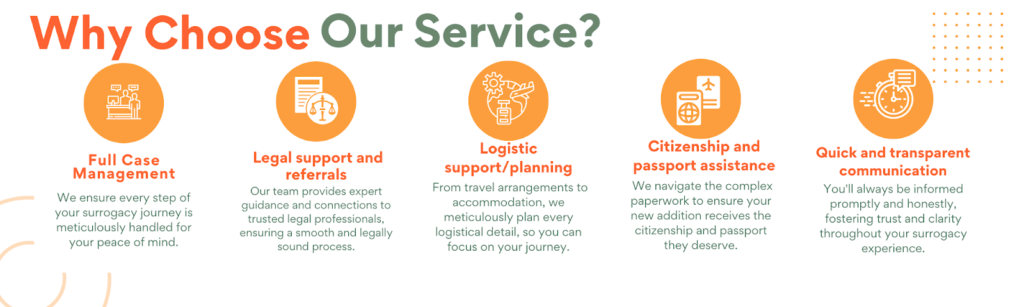
💫 Why Intended Parents Choose Complete Surrogacy for a Safe, Smooth & Successful Surrogacy Journey:
🌍 Access to multiple surrogacy destinations with 15+ years of international experience
🏥 Partnerships with top-tier fertility clinics and agencies, backed by references from past clients
👩🦱 Diverse egg donor options: Asian, Caucasian, African, Oriental, and more
💸 Transparent and affordable pricing—direct payments with no extra agency fees
🔒 No hidden costs—all charges are agreed upon upfront
🤝 Dedicated case manager for personalized support
📲 Fast, honest, and clear communication throughout
📑 Full legal support for visas, documentation, and baby exit processes
🚚 Assistance with frozen sperm/embryo shipment logistics
FAQ for How Age Affects Fertility and Success Rate
At what age does female fertility begin to decline?
How many eggs am I born with, and what happens to them?
Why is egg quality more important than egg quantity for fertility?
What are the statistics on Down syndrome risk by maternal age?
How does miscarriage risk change with age?
What percentage of couples experience fertility difficulties, and how does age factor in?
What happens to egg chromosomes as I age?
At what age should I seek a fertility evaluation?
What percentage of eggs have chromosomal abnormalities by age 42?
What are realistic IVF success rates based on age?
How does ovarian reserve change with age?
What other age-related infertility factors should I know about beside egg quality?
What is egg freezing, and how does it work?
How do fertility preservation options compare?
What risks are associated with advanced maternal age pregnancy?
Should I be concerned about my fertility if I’m in my late 20s?
Can lifestyle choices improve my fertility as I age?
What should I discuss with my healthcare provider about my fertility?
How can I make informed decisions about my reproductive timeline?
What is the difference between biological age and chronological age in fertility?

Author Bio: Neelam Chhagani is an International Surrogacy Expert with 15 years of experience in the fertility and surrogacy domain. As the founder of IVF Conceptions and Complete Surrogacy, she has guided over 4,000 intended parents worldwide on their surrogacy journey to parenthood. Recognized as a trusted authority, she specializes in holistic infertility solutions and third-party reproduction consulting.
Holding an MA in Counselling Psychology and a PGD in Mental Health, Neelam is a proud member of the European Fertility Society (EFS) and the European Society of Human Reproduction and Embryology (ESHRE). She is also a leading surrogacy blogger, providing valuable insights into ethical and practical surrogacy solutions.
Since 2010, committed to supporting ALL family types, Neelam has been passionate about helping intended parents grow their families with compassion, integrity, and a focus on secure and affordable surrogacy options Globally.
Learn more about Neelam:
https://www.ivfconceptions.com/neelam-chhagani-surrogacy-consultant/
https://www.linkedin.com/in/neelam-chhagani-92892229/













I was introduced to Neelam by a friend who worked with Neelam for surrogacy. Neelam is absolutely wonderful. I am a single male and the journey to fatherhood is not that easy. Neelam connected me to a program ideal for my circumstances. She was with me throughout the pregnancy providing advice and guidance along the way. I am so grateful I found her and am thrilled today that I have a beautiful daughter. I highly recommend Neelam to anyone who is on a journey to become a parent. Having a child has changed my world for the better. I wish others success with their own journey and recommend you connect with Neelam to find a path that is best for you.
SA (USA)