
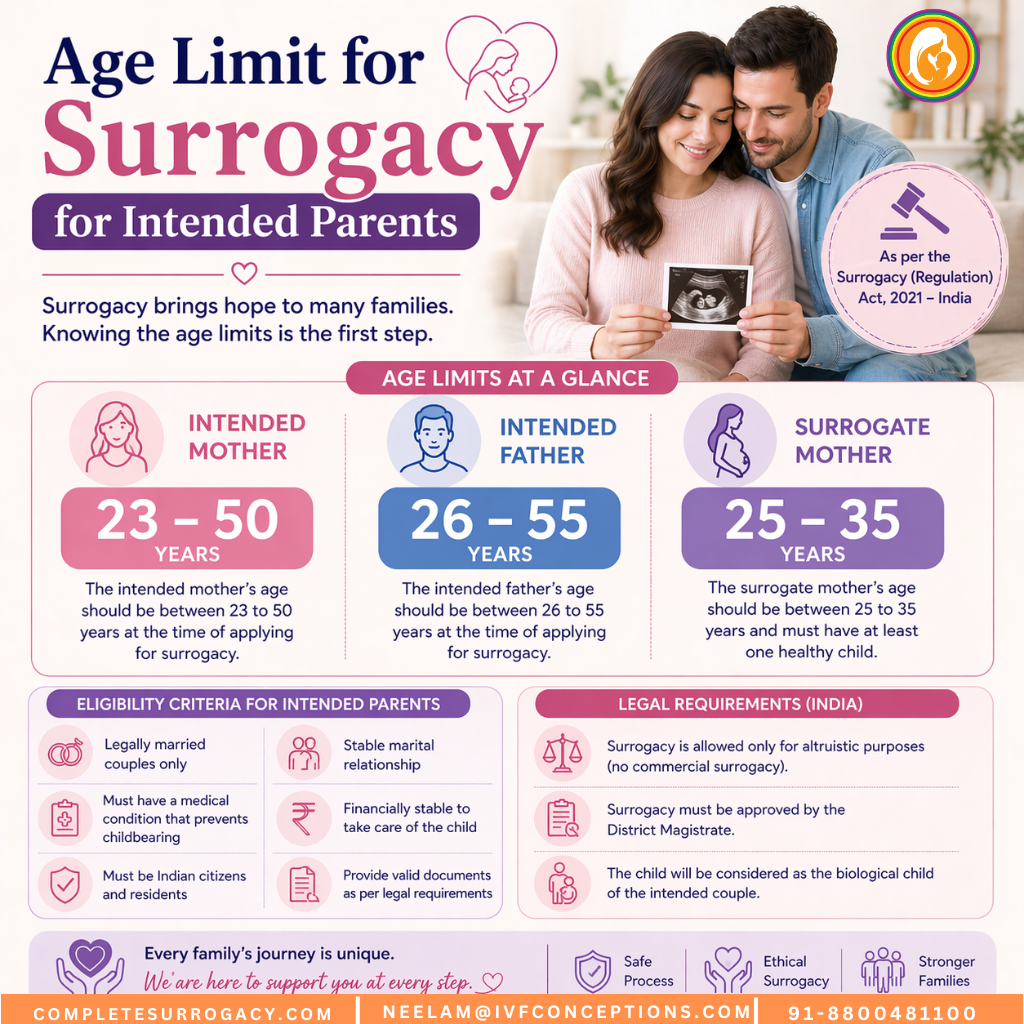
Can you become an intended parent through surrogacy if you’re in your fifties? The answer might surprise you. While surrogate mothers face strict age restrictions, the rules for intended parents are quite different. Understanding surrogacy age limits for intended parents helps you know where you stand and what options exist for your family-building journey.
Age restrictions for surrogacy for intended parents vary across the United States. Unlike surrogates who must typically fall within a defined age range, intended parents encounter more flexible requirements. Your age rarely disqualifies you entirely from pursuing surrogacy. The key is learning what specific clinics, agencies, and states expect from commissioning parents like you.
📞 Get in Touch for a Free Surrogacy Consultation
📱 +91-8800481100 (WhatsApp | LINE | Viber)
📧 neelam@ivfconceptions.com
This guide walks you through the real age requirements that apply to your situation. You’ll discover why age matters for some aspects of the surrogacy process while remaining less critical for others. You’ll learn how to work with fertility agencies that understand your unique circumstances and can accommodate your needs effectively.

Getting the facts upfront prevents confusion and helps you move forward with confidence. Whether you’re in your forties, fifties, or beyond, understanding surrogacy age limits for intended parents ensures you select the right partner for your journey. You can plan effectively and avoid unnecessary obstacles along the way.
Key Takeaways
- Intended parent age restrictions are generally more flexible than surrogate age limits
- Most surrogacy agencies and clinics do not have strict maximum age requirements for commissioning parents
- Age limits vary by state, agency, and fertility clinic policies
- Health assessments matter more than age alone when determining your eligibility
- Many agencies offer personalized packages to accommodate older intended parents
- International surrogacy options may present different age requirement standards
- Being informed about requirements helps you choose the right surrogacy partner for your family
Planning surrogacy abroad?
Read our complete Guide to International Surrogacy to understand the process, costs, legal rules, and timeline for international intended parents.
Additional Resources to Read:
Surrogacy Services in Georgia Country
Surrogacy Services in Colombia
Surrogacy Services in Kazakhstan
Understanding Surrogacy Age Requirements for Hopeful Parents
Your age is critical in the surrogacy journey, even if you won’t carry the pregnancy. Knowing how age impacts hopeful parents helps you prepare for the screening process. This knowledge boosts your chances of approval. Fertility clinics and surrogacy agencies assess your age for medical, legal, and practical reasons. These factors are essential for your ability to become a parent through surrogacy.
Agencies aim to ensure you can provide stable, long-term care for your child. Your age affects your genetic material quality, physical capacity to parent, and financial stability. These aspects are vital because they determine if you can meet your child’s needs throughout their growth.
Why Age Matters in Your Surrogacy Journey
Your age impacts your fertility and the quality of your genetic material. Younger genetic material often leads to stronger embryos with higher success rates. Agencies also consider your ability to be present as your child grows, affecting the age limit for intended parents.
Consider these important factors:
- Genetic material quality decreases with age
- Your physical stamina to parent an active child
- Long-term financial capability and stability
- Life expectancy and your child’s needs through adulthood
- Insurance eligibility and coverage limitations
“Age is just one factor among many that surrogacy professionals evaluate. Your overall health, emotional readiness, and commitment matter equally.”
Medical and Legal Considerations for Intended Parents
Medical evaluations are central to age requirements in surrogacy decisions. Your fertility clinic will conduct tests to assess egg or sperm viability. These tests determine if your genetic contribution can produce viable embryos for implantation into your surrogate.
Legal considerations vary by state. Courts examine your age to ensure you’ll be alive and capable during your child’s formative years. Some states require psychological evaluations that include age assessment as part of the fitness for parenthood determination.
| Medical Factor | Age Impact | What You Should Know |
|---|---|---|
| Egg Quality | Declines after age 35 | Fertility testing becomes essential for intended parents over 40 |
| Sperm Quality | Gradually declines after age 40 | Regular health screening recommended for older intended parents |
| Health Screening | More extensive as age increases | Agencies require detailed medical history and current health status |
| Life Insurance | Higher premiums at older ages | Some agencies require proof of adequate life insurance coverage |
| Parental Capacity | Courts assess longevity concerns | Documentation of your ability to parent through adulthood strengthens your case |
Prepare documentation showing your medical history, current health status, and financial records. These materials demonstrate your readiness to surrogacy agencies and courts, regardless of where you fall within surrogacy age requirements for hopeful parents. Being thorough and transparent about your age and health accelerates the approval process and builds confidence with your surrogacy team.
Maximum Age for Intended Parents in Surrogacy
The maximum age for intended parents in surrogacy varies across the United States. Unlike the strict 45-year limit for gestational surrogates, the upper age for parents depends on several factors. Most clinics and agencies set maximum ages between 50 and 60 for intended parents. Some, though, have no upper age limit.
Your age eligibility is tied to the type of genetic material you plan to use. If you’re an intended mother using donor eggs, age barriers are less of an issue. Male intended parents often face fewer age restrictions due to their longer fertility window. This is important when choosing an agency that fits your situation.
Knowing the upper age limit for surrogacy parents is key to finding the right agency. Different clinics have varying standards based on their medical views and risk assessments. Some agencies are more flexible with older intended parents, while others are stricter.
- Ages 50-60: Standard maximum age at most U.S. clinics
- Age 55+: Consider agencies specializing in donor egg programs
- No upper limit: Some progressive agencies exist, but are less common
- Using your own eggs: Typically, stricter age restrictions apply
- Using donor gametes: Generally, more flexible age policies
Research specific agencies that work with your age bracket. This targeted approach saves time and helps you find programs that truly fit your needs.
Age Limit for Surrogacy for Intended Parents
Understanding the surrogacy age guidelines for parents is essential when you start your journey. The surrogacy field operates with specific standards that help clinics and agencies determine who qualifies to become an intended parent. While no single universal law sets a maximum age for surrogacy parents across the United States, the industry follows established guidelines rooted in medical evidence and practical considerations.
Your age influences how fertility centers and surrogacy agencies evaluate your readiness to parent. These evaluations look at your overall health, life expectancy, financial stability, and ability to provide long-term care for your child.
Industry Standards and ASRM Guidelines
The American Society for Reproductive Medicine (ASRM) establishes evidence-based guidelines that shape surrogacy age guidelines for parents. While ASRM’s primary focus addresses surrogate safety with age recommendations between 21 and 45 years old, fertility clinics apply similar risk-assessment frameworks to intended parents.
Most reputable surrogacy programs follow core principles when evaluating your eligibility:
- You should be healthy enough to parent through your child’s majority
- You must be able to obtain life insurance
- You need to demonstrate financial stability
- You should have strong family support systems in place
How Surrogacy Agencies Determine Age Eligibility
Agencies don’t apply arbitrary cutoff ages. Instead, they conduct thorough evaluations of multiple factors that matter more than your chronological age.
| Assessment Factor | What Agencies Evaluate |
|---|---|
| Medical History | Your current health status and any chronic conditions |
| Life Expectancy | Actuarial tables that estimate your lifespan based on age and health |
| Financial Stability | Your ability to support a child through adulthood |
| Parenting Experience | Your background with existing children or caregiving roles |
| Support Systems | Family, friends, and community resources are available to you |
A healthy, financially secure 58-year-old with strong family support might receive approval. On the other hand, a 48-year-old facing serious health challenges could encounter barriers. The maximum age for surrogacy parents depends on these combined factors, not just a single number.
Prepare for agency evaluations by strengthening areas beyond your age. Demonstrate financial security, obtain a clean health assessment, and show solid family support systems.
Intended Parent Age Requirements by State
Surrogacy laws across the United States show significant variations, making it critical to grasp the age restrictions by state for your family planning. The state where you reside determines the legality of your surrogacy arrangements. Some states have age-related restrictions, while others do not.
The landscape of surrogacy age restrictions in the United States highlights key differences. States like California, Connecticut, and Delaware are known for their surrogacy-friendly laws. These states generally do not set maximum age limits for intended parents. They recognize surrogacy contracts and protect parental rights, provided you meet basic legal criteria.

On the other hand, some states are more conservative. They might require intended parents to be at least 21 years old, mirroring the minimum age for surrogates. Your state’s specific requirements can greatly influence your surrogacy planning strategy.
State-by-State Variations
It’s essential to understand your state’s stance on surrogacy. The age restrictions by state can dictate where to establish your surrogacy contract and where the birth should occur. This strategic choice offers flexibility if your home state has unfavorable restrictions.
- Surrogacy-friendly states permit surrogacy agreements regardless of parental age
- Restrictive states may impose age minimums or deny parental rights establishment
- Some states recognize surrogacy contracts from other jurisdictions
- Birth location can affect legal parentage documentation
Your location matters less than understanding how to work across state lines. Many intended parents create surrogacy contracts in states with clear legal protections, even if they live elsewhere. This strategy ensures your parental rights are fully recognized, regardless of age restrictions in your home state.
Collaborate with surrogacy agencies that are well-versed in state-specific regulations. These experts will guide you through your state’s requirements and help find the most legally secure path for your family.
Flexibility in Age Restrictions for Commissioning Parents
Many surrogacy agencies recognize that age limits should not hinder those who wish to start a family. Your age does not determine your capacity to be a caring parent. Leading agencies focus on your readiness to parent, not just your age. They consider your overall situation, not just age.
Flexible agencies evaluate your health, finances, support systems, and parenting plans. This approach allows you to show you’re ready to be a parent, beyond age. Your commitment and preparation are more important than your birth certificate.
Working with Agencies That Accommodate Individual Needs
Finding the right agency is key to a successful surrogacy journey. Agencies that offer flexibility in age limits for commissioning parents surrogacy provide personalized evaluations. They consider your:
- Medical health and wellness history
- Financial stability and resources
- Emotional readiness for parenthood
- Support network and family connections
- Long-term parenting plans
These agencies understand that older parents can overcome restrictions with proper planning. They work with you to address concerns and tailor solutions to your needs.
Personalized Surrogacy Packages for Older Parents
Specialized packages are available for older parents who exceed typical age guidelines. These services include:
| Service Type | What It Offers | Benefit for Older Parents |
|---|---|---|
| Enhanced Legal Support | Advanced estate planning and guardianship arrangements | Protects your child’s future regardless of age |
| Donor Selection Guidance | Assistance in choosing younger egg or sperm donors | Addresses genetic and health considerations |
| Insurance Planning | Life insurance and disability coverage assistance | Ensures financial security for your child |
| Counseling Services | Therapy addressing the unique concerns of mature parents | Mental health support throughout your journey |
Choosing these packages depends on cost and personal preference. They empower you to address age restrictions proactively.
Age Limit for Single Parents Surrogacy
Single intended parents face unique age considerations. Agencies may scrutinize single older parents more, as they lack a younger partner for long-term care.
To build a strong case as a single older parent, you need to:
- Show a reliable support network of family and friends
- Create detailed parenting plans for your child’s future
- Prove financial independence and stability
- Exhibit commitment to your child’s education and welfare
By presenting a thorough plan, you can overcome age limit concerns. Your support systems and dedication to parenthood are more important than age limits. Single older parents who prepare well often find agencies willing to work with them.
Health Assessments and Age Eligibility Criteria
Your health status is key in determining your surrogacy eligibility, regardless of age. Fertility clinics and surrogacy agencies require detailed medical evaluations. These ensure you can handle the emotional and physical demands of parenting. Understanding the health assessments involved in surrogacy age eligibility criteria is essential for preparation and strengthening your candidacy.
When applying for surrogacy, medical professionals will examine various aspects of your health. These evaluations go beyond basic screening. They assess your overall fitness for parenthood through a surrogate arrangement.

- Complete physical examination and medical history review
- Cardiovascular health screening (important for those over 50)
- Blood work and infectious disease testing
- Mental health and psychological evaluations
- Fertility assessments if using your own genetic material
- Lifestyle evaluation, including BMI, smoking status, and substance use
Age alone does not determine eligibility. A 56-year-old with excellent health, an active lifestyle, and no chronic conditions faces fewer obstacles. In contrast, a 45-year-old with multiple health issues may face more challenges. Your intended parent’s eligibility for surrogacy depends heavily on your health management.
Before contacting surrogacy agencies, schedule thorough health screenings. This allows you to present a complete health profile, showing your capability regardless of age. Address any health concerns proactively to strengthen your candidacy and improve your approval chances.
International Surrogacy Age Limits and Alternatives
When the age cutoff for surrogacy in the United States blocks your path, exploring international options can open new doors. Countries worldwide have varying age limits for surrogacy, often more flexible than in the U.S. This allows many to pursue surrogacy when domestic restrictions seem too strict.
Delving into international surrogacy requires grasping both the advantages and challenges. Each nation has its own rules on who can become an intended parent through surrogacy. Your age, marital status, and financial situation all influence your eligibility abroad. Knowing these differences is key to making informed choices about your surrogacy journey.
Comparing Age Restrictions Across Different Countries
Age limits for surrogacy vary greatly across the globe. Some countries have more lenient policies, while others are stricter. Researching specific countries helps clarify your options.
| Country | Age Limit for Intended Parents | Additional Requirements | Legal Recognition |
|---|---|---|---|
| Georgia | Up to 55 years (married couples) | Marriage documentation required | Direct parentage established |
| Ukraine | Up to 60 years (historically) | Medical clearance needed | Birth certificate assignment varies |
| Canada | No specific age limit | Clinic discretion applies | Full legal parentage recognized |
| Mexico | Varies by state; some unlimited | State-specific regulations | Varies by jurisdiction |
| Colombia | Flexible policies | Medical evaluation required | Legal recognition established |
These countries offer alternatives when U.S. restrictions exclude you. Georgia welcomes married couples up to 55. Ukraine, historically, accepted parents up to 60, though recent issues have halted services. Canada has no strict age limits, leaving decisions to individual clinics.
Mexico’s regulations vary by state, with some allowing no upper age limits. This makes it appealing for older parents. Colombia is gaining popularity for its lenient age policies and strong legal protections for intended parents.
Key Considerations for International Surrogacy
Choosing international surrogacy requires more than just finding countries with favorable age policies. You must consider:
- Immigration laws and travel requirements for you and your surrogate
- Citizenship and passport procedures for your baby
- Legal parentage recognition in your home state
- Cost comparisons between domestic and international options
- Finding attorneys experienced in international family law
- Understanding language barriers and cultural differences
- Health standards and medical oversight in the destination country
Before starting international surrogacy, consult with lawyers who specialize in international reproductive law. Your home state must recognize the parentage established abroad, or you may face legal issues upon returning home. This step is critical before investing financially in any international arrangement.
Conclusion
Your age should not hinder your journey to building a family through surrogacy. The age limits for intended parents vary widely, depending on the program, agency, and state. While most set a maximum age between 50 and 60, these are not strict rules. Reputable agencies often show flexibility, considering your health, financial situation, and support system alongside your age.
The age limits for gestational surrogacy are evolving, becoming more accommodating. Top agencies value the life experience, emotional maturity, and stability that older intended parents bring. Your age is just one aspect. Health assessments, parenting plans, and long-term capability are key indicators of your readiness. Look for agencies that welcome older intended parents and consult with reproductive attorneys about your state’s laws. If domestic options are limited, consider international options.
Take proactive steps to advance your surrogacy journey. Obtain thorough medical evaluations to prove your health. Collect documents showing your financial stability and strong support networks. Develop detailed parenting plans that reflect your long-term commitment. Seek out fertility centers and surrogacy programs known for supporting diverse family-building timelines. Age is rarely a definitive barrier to becoming a parent through surrogacy.
Begin your search for the right agency today. There’s a program that aligns with your family-building aspirations. While age presents challenges, it’s not an insurmountable obstacle. Proceed with confidence, armed with the knowledge and support you need.
💫 Why Intended Parents Choose Complete Surrogacy for a Safe, Smooth & Successful Surrogacy Journey:
🌍 Access to multiple surrogacy destinations with 15+ years of international experience
🏥 Partnerships with top-tier fertility clinics and agencies, backed by references from past clients
👩🦱 Diverse egg donor options: Asian, Caucasian, African, Oriental, and more
💸 Transparent and affordable pricing—direct payments with no extra agency fees
🔒 No hidden costs—all charges are agreed upon upfront
🤝 Dedicated case manager for personalized support
📲 Fast, honest, and clear communication throughout
📑 Full legal support for visas, documentation, and baby exit processes
🚚 Assistance with frozen sperm/embryo shipment logistics

FAQ for Age Limit for Surrogacy for Intended Parents
What is the maximum age for intended parents pursuing surrogacy in the United States?
Do intended parents face different age restrictions than surrogates?
Why does my age matter if I’m not physically carrying the pregnancy?
How does using donor eggs or sperm affect age restrictions for intended parents?
Are there different age requirements for single intended parents versus couples?
What specific factors do surrogacy agencies consider beyond chronological age?
Does my state of residence affect age requirements for intended parents?
What health assessments will I undergo as an intended parent, particularlly if I’m over 50?
Can I pursue surrogacy if domestic agencies reject me due to age restrictions?
What documentation should I prepare if I’m an older intended parent concerned about age-related barriers?
Which types of surrogacy agencies are most flexible regarding intended parent age?
How does the American Society for Reproductive Medicine (ASRM) address intended parent age requirements?
What is the minimum age requirement for intended parents pursuing surrogacy?
Can I work with a surrogacy agency if I exceed the typical 50-60 year age range?
How do international surrogacy age limits compare to the United States requirements?
What should I do immediately if I’m concerned about age-related surrogacy restrictions?
Does my age affect my ability to use my own genetic material versus donor eggs or sperm?
How important is life insurance for older intended parents pursuing surrogacy?
Can psychological evaluations address age-related concerns in surrogacy applications?

Author Bio: Neelam Chhagani is an International Surrogacy Expert with 15 years of experience in the fertility and surrogacy domain. As the founder of IVF Conceptions and Complete Surrogacy, she has guided over 4,000 intended parents worldwide on their surrogacy journey to parenthood. Recognized as a trusted authority, she specializes in holistic infertility solutions and third-party reproduction consulting.
Holding an MA in Counselling Psychology and a PGD in Mental Health, Neelam is a proud member of the European Fertility Society (EFS) and the European Society of Human Reproduction and Embryology (ESHRE). She is also a leading surrogacy blogger, providing valuable insights into ethical and practical surrogacy solutions.
Since 2010, committed to supporting ALL family types, Neelam has been passionate about helping intended parents grow their families with compassion, integrity, and a focus on secure and affordable surrogacy options Globally.
Learn more about Neelam:
https://www.ivfconceptions.com/neelam-chhagani-surrogacy-consultant/
https://www.linkedin.com/in/neelam-chhagani-92892229/















I was introduced to Neelam by a friend who worked with Neelam for surrogacy. Neelam is absolutely wonderful. I am a single male and the journey to fatherhood is not that easy. Neelam connected me to a program ideal for my circumstances. She was with me throughout the pregnancy providing advice and guidance along the way. I am so grateful I found her and am thrilled today that I have a beautiful daughter. I highly recommend Neelam to anyone who is on a journey to become a parent. Having a child has changed my world for the better. I wish others success with their own journey and recommend you connect with Neelam to find a path that is best for you.
SA (USA)