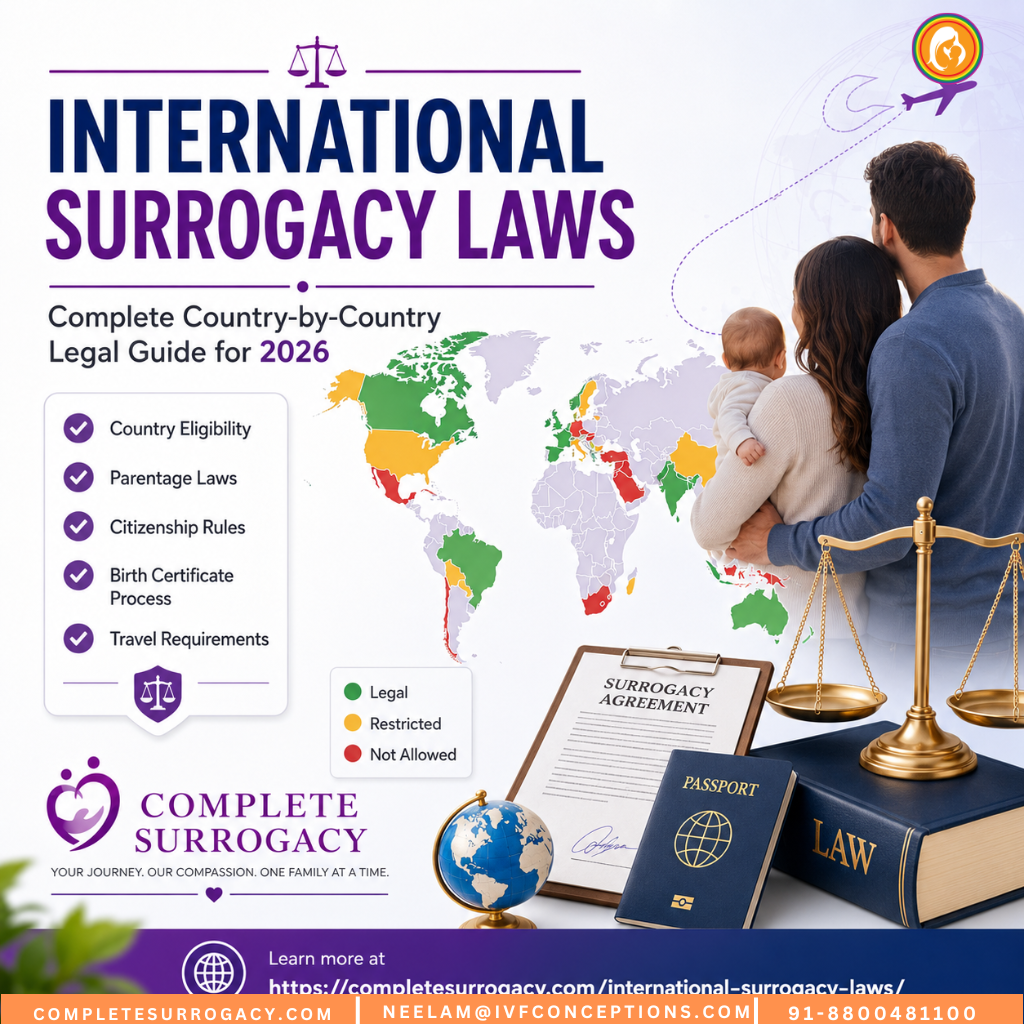
Navigating international surrogacy laws can feel overwhelming for intended parents. Different countries have vastly different regulations. Some welcome foreign intended parents with open arms. Others restrict or completely ban surrogacy arrangements.
Understanding these legal frameworks is essential. It protects your rights. It ensures your child’s citizenship. It prevents costly legal battles.
This comprehensive guide breaks down surrogacy laws across the globe. You’ll learn which countries permit commercial surrogacy. You’ll discover legal requirements for international intended parents. You’ll understand the birth certificate and passport process.
The landscape of international surrogacy laws continues to evolve in 2026. New regulations emerge. Existing laws change. Staying informed helps you make the safest choice for your family.
Understanding the law is only one part of international surrogacy. It is equally important to verify that the agency guiding your journey works with qualified legal professionals and experienced fertility clinics. Read our complete Surrogacy Agency Verification Guide before making your final decision.
Understanding International Surrogacy Laws

International surrogacy laws vary dramatically from country to country. No universal standard exists. Each nation develops its own legal framework based on cultural values, ethical considerations, and social policies.
Surrogacy legal frameworks generally fall into three categories. First, countries that fully legalize and regulate commercial surrogacy. Second, nations that permit only altruistic surrogacy arrangements. Third, countries that prohibit all forms of surrogacy.
Commercial surrogacy allows gestational carriers to receive compensation beyond medical expenses. The United States, Georgia, and Ukraine historically have permitted this arrangement. Altruistic surrogacy restricts payment to reasonable expenses only. The United Kingdom, Canada, and Australia follow this model.
Many intended parents seek international surrogacy for several reasons. Domestic laws may prohibit surrogacy altogether. Some countries exclude same-sex couples or single parents. Others impose strict residency requirements. Cost differences also drive decisions.
Legal parentage represents the most critical aspect of international surrogacy laws. Different countries apply different rules to establish who becomes the legal parent at birth. Some recognize intended parents immediately. Others require court orders or adoption procedures.
The child’s citizenship creates another complex layer. Birth location matters in some countries. Genetic connection influences citizenship in others. Intended parents must carefully plan to ensure their child can obtain citizenship and travel documents.
Surrogacy contracts form the foundation of legal protection. However, not all countries enforce these agreements. Some nations consider surrogacy contracts void or illegal. Understanding enforceability protects all parties involved.
International intended parents face unique challenges. They must navigate two legal systems simultaneously. Their home country’s laws matter as much as the surrogacy destination’s regulations. Embassy procedures and immigration requirements add additional complexity.
Legal requirements typically address several key areas. Marital status affects eligibility in many countries. Age restrictions may apply to intended parents or surrogates. Medical necessity requirements exist in some jurisdictions. Sexual orientation and single parent applications face restrictions in conservative nations.
The legal landscape shifts constantly. Countries that once welcomed international surrogacy may close their borders. Thailand and Nepal both restricted foreign access after controversies. Political changes, scandals, or ethical debates trigger regulatory reforms.
Working with experienced legal counsel becomes essential. International surrogacy law specialists understand both domestic and foreign regulations. They navigate immigration procedures. They ensure proper documentation. They protect your parental rights from the start.
Get Expert Legal Guidance for Your Surrogacy Journey
Download our free comprehensive Country Comparison Guide and schedule a consultation with our international surrogacy law specialists to ensure you choose the safest, most legally secure destination for your family.
Countries Where Surrogacy Is Legal
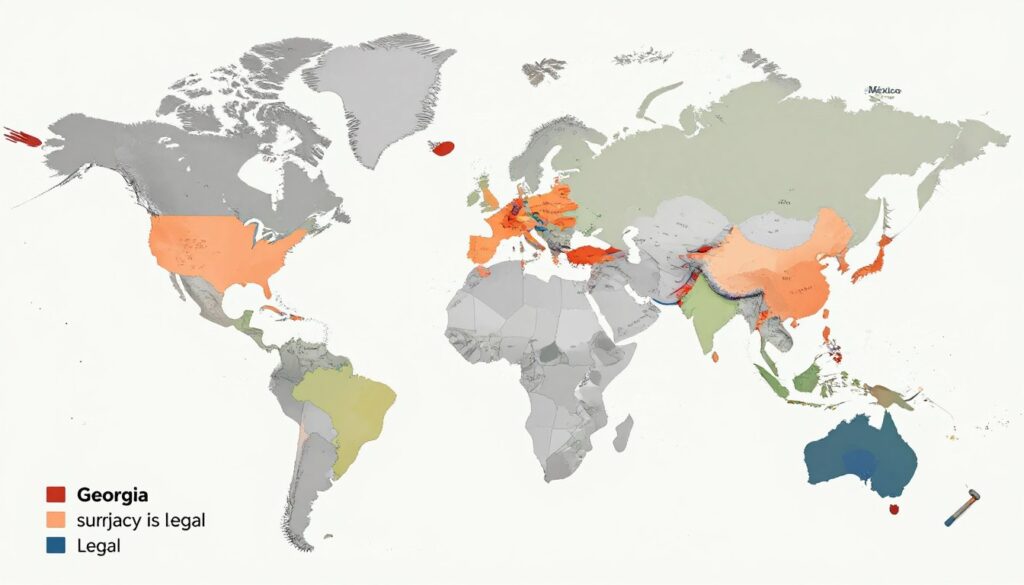
Several countries maintain legal frameworks that permit surrogacy arrangements for foreign intended parents. Understanding which nations welcome international surrogacy helps you identify viable options.
The United States stands as one of the most established surrogacy destinations. Many states fully regulate gestational surrogacy with clear legal pathways. California, Connecticut, Delaware, and Nevada offer particularly favorable laws. Intended parents can establish legal parentage before birth through pre-birth orders.
Learn more about Surrogacy in the USA, and you can also compare the Surrogacy Cost in the USA before choosing your destination.
Commercial surrogacy thrives in several US states. Surrogacy contracts receive legal recognition and enforcement. The gestational carrier has no parental rights. Intended parents appear on the original birth certificate. However, costs in the United States typically exceed other international options.
Georgia has emerged as a leading destination for international surrogacy. The country explicitly permits commercial surrogacy for foreign intended parents. Georgian law recognizes intended parents as legal parents from conception. Birth certificates list intended parents directly without adoption or court proceedings.
Read our complete guide on Surrogacy in Georgia to understand the legal process and eligibility requirements and compare the latest Surrogacy Cost in Georgia before making your decision.
Colombia recently joined the list of surrogacy-friendly nations. The Constitutional Court legalized surrogacy in 2009. Colombia permits both altruistic and commercial surrogacy arrangements. The country welcomes heterosexual couples, same-sex couples, and single intended parents. Legal frameworks continue to develop and strengthen.
Explore our complete guide to Surrogacy in Colombia for international intended parents and you can also compare the latest Surrogacy Cost in Colombia.
Mexico offers regional variation in surrogacy laws. The state of Tabasco previously welcomed foreign intended parents. However, recent legal changes restricted international surrogacy. The state of Sinaloa now provides opportunities for Mexican nationals and some foreign intended parents. Legal uncertainty requires careful evaluation.
Learn more about Surrogacy in Mexico and current legal updates and Compare the latest Surrogacy Cost in Mexico before selecting a clinic.
Argentina legalized surrogacy through judicial precedent rather than legislation. Courts have recognized surrogacy arrangements and granted parental rights to intended parents. However, the lack of comprehensive legislation creates some ambiguity. Legal counsel becomes essential to navigate the judicial system.
Read our detailed guide on Surrogacy in Argentina .Compare the current Surrogacy Cost in Argentina.
Armenia permits gestational surrogacy for married heterosexual couples. The country’s Civil Code recognizes surrogacy agreements. Intended parents must have medical necessity. The law excludes same-sex couples and single parents. Foreign intended parents face some restrictions but remain eligible under certain conditions.
Learn more about Surrogacy in Armenia and the eligibility requirements and See the latest Surrogacy Cost in Armenia.
Kazakhstan allows surrogacy for married couples. The surrogate cannot use her own eggs, ensuring gestational surrogacy only. Intended parents must prove medical necessity. Foreign intended parents can access surrogacy services. The legal framework provides reasonable protection for all parties.
Read our complete guide on Surrogacy in Kazakhstan and Compare the latest Surrogacy Cost in Kazakhstan
Greece regulates surrogacy through specific legislation. The law requires court approval before the surrogacy arrangement begins. At least one intended parent must have a genetic connection to the child. Greece permits commercial surrogacy within regulated parameters. Foreign intended parents can access Greek surrogacy services.
Learn more about Surrogacy in Greece and Compare the latest Surrogacy Cost in Greece.
Cyprus offers surrogacy options for international intended parents. The legal framework resembles Greek law in many aspects. Court approval precedes the surrogacy arrangement. Intended parents must meet specific medical and legal criteria. The small size of the surrogacy industry provides personalized attention.
Read our guide on Surrogacy in Cyprus and Compare the Surrogacy Cost in Cyprus.
Ukraine historically served as a major international surrogacy destination. However, the ongoing conflict has severely disrupted surrogacy services. While Ukrainian law remains favorable, practical considerations currently prevent most international surrogacy arrangements. The future legal status depends on political developments.
Learn more about Surrogacy in Ukraine and current legal considerations, and Compare the latest Surrogacy Cost in Ukraine.
Canada permits altruistic surrogacy only. Surrogacy contracts cannot include payment beyond reasonable expenses. Most provinces recognize intended parents through parentage orders. While not commercial, Canada offers a stable legal framework. Many American intended parents use Canadian surrogacy services.
Read our guide on Surrogacy in Canada.
The United Kingdom similarly allows only altruistic surrogacy. Surrogacy agreements are not legally enforceable. Intended parents must obtain a parental order after birth. The surrogate remains the legal mother until the order is granted. Despite complexities, the UK maintains an active surrogacy community.
Advantages of Legal Surrogacy Destinations
- Clear legal frameworks protect all parties
- Enforceable surrogacy contracts provide security
- Established medical infrastructure ensures quality care
- Predictable timelines and procedures reduce uncertainty
- Direct parental recognition eliminates adoption
- International support networks exist
- Embassy cooperation facilitates citizenship process
Considerations When Choosing
- Home country recognition of foreign surrogacy
- Citizenship and immigration requirements
- Cost variations between destinations
- Travel distance and frequency required
- Language barriers and cultural differences
- Political stability and legal consistency
- Medical standards and healthcare quality
Speak with a Surrogacy Law Specialist
Our experienced legal team has helped hundreds of intended parents navigate international surrogacy laws. Schedule your free consultation to discuss which destination best fits your unique situation and legal requirements.
Countries With Restricted or Altruistic Surrogacy

Many countries permit surrogacy only under restrictive conditions. These limitations aim to prevent exploitation while allowing families to grow. Understanding these restrictions helps intended parents determine eligibility.
Altruistic surrogacy represents the most common restriction. Gestational carriers cannot receive payment beyond medical expenses and reasonable costs. This model exists in Canada, the United Kingdom, Australia, and several other developed nations.
The prohibition on commercial compensation significantly impacts surrogacy availability. Fewer women volunteer as surrogates without financial incentive. Wait times extend considerably. Finding a suitable gestational carrier becomes more challenging.
Some countries restrict surrogacy to specific family structures. India previously allowed international surrogacy but now limits access to married heterosexual Indian citizens. Similar restrictions exist in many conservative nations. Same-sex couples and single parents face exclusion.
Residency requirements create another barrier for foreign intended parents. Australia requires intended parents to be Australian residents. Canada prioritizes Canadian citizens and permanent residents. These laws effectively close borders to international surrogacy tourism.
Medical necessity clauses appear in many restrictive frameworks. Intended parents must demonstrate they cannot carry a pregnancy themselves. Documentation from medical professionals becomes mandatory. This requirement excludes some intended parents, particularly male same-sex couples without additional justification.
Age restrictions may apply to intended parents or surrogates. Some countries set minimum and maximum ages for participation. These limitations aim to protect health and ensure parental capacity. However, they exclude otherwise qualified candidates.
Genetic connection requirements exist in certain jurisdictions. At least one intended parent must have a biological link to the child. This rule prevents full embryo donation scenarios. It also complicates arrangements for intended parents using both donor eggs and donor sperm.
Court approval prerequisites appear in restrictive surrogacy frameworks. Greece and Cyprus require judicial authorization before beginning the surrogacy process. This oversight provides safeguards but adds time and legal complexity. Not all applications receive approval.
Some nations permit surrogacy only between family members. This severe restriction effectively eliminates commercial surrogacy while allowing compassionate arrangements. Sisters, cousins, or close friends may serve as surrogates. Finding eligible carriers becomes extremely difficult.
Several countries maintain ambiguous legal positions on surrogacy. Laws neither explicitly permit nor prohibit the practice. This gray area creates uncertainty for all participants. Court decisions may determine outcomes on a case-by-case basis. Legal precedents slowly build frameworks.
Countries with altruistic models often have lengthy waiting periods. Intended parents may wait years to find a suitable surrogate. The limited pool of volunteers constrains capacity. Some intended parents ultimately pursue international options due to domestic delays.

Enforcement of altruistic surrogacy rules varies significantly. Some countries strictly monitor compliance. Others take a more permissive approach to “reasonable expenses.” The definition of allowable reimbursement remains subject to interpretation.
Legal parentage in altruistic surrogacy countries typically requires post-birth procedures. Parental orders transfer legal rights from the surrogate to the intended parents. Adoption processes may be necessary in some jurisdictions. Time requirements range from weeks to months.
The surrogate retains legal mother status at birth in most altruistic frameworks. She must consent to the transfer of parental rights. Although rare, surrogates can legally change their minds before finalizing the parental order. This vulnerability concerns many intended parents.
Altruistic Surrogacy Countries
- Canada – compassionate expense model
- United Kingdom – regulated altruism
- Australia – state-by-state variation
- New Zealand – altruistic only
- Denmark – limited scope allowed
- Belgium – permitted with restrictions
Restricted Access Countries
- India – citizens only since 2015
- Thailand – citizens only since 2015
- Nepal – banned after controversies
- Cambodia – effectively banned
- South Africa – residents only
- Israel – complex eligibility rules
Countries That Ban Surrogacy
- France – all forms prohibited
- Germany – surrogacy illegal
- Italy – criminal penalties
- Spain – contracts void
- Switzerland – prohibited
- China – banned practice
Explore Country-Specific Surrogacy Guides
Surrogacy Laws in Georgia

Georgia has established itself as one of the most favorable international surrogacy destinations. The country’s clear legal framework welcomes foreign intended parents with comprehensive protections.
Georgian surrogacy law explicitly recognizes commercial surrogacy. The Civil Code permits gestational surrogacy arrangements with financial compensation for surrogates. This legal certainty attracts intended parents from around the world.
Intended parents gain legal recognition from the moment of conception under Georgian law. The surrogate has no parental rights whatsoever. This immediate legal parentage eliminates post-birth adoption or court proceedings. The birth certificate lists intended parents directly.
Foreign intended parents can access Georgian surrogacy services without residency requirements. No minimum stay period exists. Intended parents typically visit Georgia for the embryo transfer and return for the birth. This flexibility accommodates international families.
Georgia welcomes heterosexual married couples as intended parents. Single women also qualify for surrogacy arrangements. However, same-sex couples and single men face restrictions. At least one intended parent must have a genetic connection to the child born through surrogacy.
Surrogacy contracts in Georgia are legally binding and enforceable. Courts uphold these agreements. The contract must be notarized and registered. Clear terms protect both intended parents and the gestational carrier.
The surrogate must be a Georgian citizen or permanent resident. She must be between 25 and 40 years old. Previous successful pregnancy is mandatory. Medical and psychological evaluations ensure suitability. These requirements protect surrogate health and well-being.
Georgian law requires the surrogate cannot use her own eggs. Only gestational surrogacy is permitted, ensuring no genetic connection between surrogate and child. This provision simplifies legal parentage and reduces emotional complications.
Medical facilities in Georgia meet international standards. Several reproductive clinics specialize in surrogacy arrangements. English-speaking staff accommodate foreign intended parents. Success rates compare favorably with Western European and American clinics.
The birth certificate process in Georgia is straightforward for intended parents. The hospital issues the birth certificate listing intended parents as mother and father. No court order or adoption is required. This efficiency expedites the citizenship and passport process.
Costs in Georgia remain significantly lower than the United States or Western Europe. Comprehensive surrogacy programs typically range from $50,000 to $70,000. This affordability combined with legal certainty makes Georgia attractive to international intended parents.

Embassy procedures for citizenship vary by the intended parents’ home country. Most Western embassies in Tbilisi are familiar with surrogacy cases. Consular staff can guide the process of obtaining passports for the baby born in Georgia.
Some countries may require DNA testing to confirm genetic parentage. The genetic connection requirement under Georgian law aligns with many national citizenship requirements. Documentation from the Georgian clinic provides necessary evidence.
Travel logistics in Georgia are manageable for international intended parents. Tbilisi International Airport connects to major European cities. Hotels and accommodations suit various budgets. English is increasingly spoken in medical and legal settings.
The political stability of Georgia supports reliable surrogacy services. The government maintains a consistent legal framework. Unlike some countries that have suddenly restricted surrogacy, Georgia demonstrates commitment to the industry.
Georgia Surrogacy Consultation – Free Case Evaluation
Considering Georgia for your surrogacy journey? Our legal team specializes in Georgian surrogacy law and has successfully guided hundreds of international intended parents. Get a personalized evaluation of your case and timeline.
Surrogacy Laws in Colombia

Colombia represents an emerging destination for international surrogacy. The country’s progressive legal framework and inclusive policies attract diverse intended parents.
The Colombian Constitutional Court legalized surrogacy in 2009 through a landmark decision. This judicial recognition provided the foundation for surrogacy arrangements. Subsequent rulings have clarified and expanded the legal framework.
Colombia permits both altruistic and commercial surrogacy. Gestational carriers may receive compensation beyond medical expenses. The flexible approach accommodates different family preferences and financial situations.
One of Colombia’s most progressive features is inclusivity. The law welcomes heterosexual couples, same-sex couples, and single intended parents. This openness distinguishes Colombia from more restrictive surrogacy destinations. LGBTQ+ families find particularly welcoming legal treatment.
Foreign intended parents can pursue surrogacy in Colombia without residency requirements. International intended parents must work with Colombian legal counsel to ensure proper documentation. The process involves notarized agreements and court approval.
Colombian law requires a gestational surrogacy arrangement. The surrogate cannot use her own eggs. At least one intended parent must have a genetic connection to the child. These requirements align with international best practices.
The surrogate must consent voluntarily to the arrangement. Psychological evaluation and legal counseling are mandatory. She must be of legal age and in good health. Previous pregnancy is typically required though not always legally mandated.
Surrogacy contracts in Colombia require judicial homologation. A family court reviews and approves the agreement before the pregnancy begins. This oversight ensures all parties understand their rights and obligations. The process provides legal security for everyone involved.
Legal parentage is established through the court-approved surrogacy agreement. Intended parents are recognized as legal parents from birth. The surrogate has no parental rights. Birth certificates list intended parents directly without adoption.
Medical facilities in major Colombian cities offer high-quality reproductive services. Bogotá, Medellín, and Cali host specialized fertility clinics. Many doctors trained internationally bring advanced expertise. English-speaking medical staff accommodate foreign intended parents.

Costs in Colombia are moderate compared to other surrogacy destinations. Complete surrogacy programs typically range from $60,000 to $90,000. This pricing falls between Eastern European destinations and the United States. Quality medical care justifies the investment.
The citizenship process for children born through surrogacy in Colombia varies by the intended parents’ nationality. Most embassies in Bogotá are familiar with surrogacy cases. Consular staff provide guidance on obtaining passports and visas.
Colombian law continues to evolve regarding surrogacy. Court decisions establish precedents that guide future cases. The absence of comprehensive legislation creates some uncertainty. However, judicial support remains strong and consistent.
Travel to Colombia is convenient for North American and European intended parents. Major airlines connect Bogotá to international hubs. Tourist infrastructure provides comfortable accommodations. Colombia’s improving security situation enhances its appeal.
Language considerations merit attention in Colombia. Spanish is the primary language. While English speakers exist in medical and legal fields, working with translators often proves necessary. Reputable agencies provide language support services.
Advantages of Colombia
- Inclusive policies welcome all family types
- Judicial oversight provides legal protection
- Moderate costs with quality medical care
- No residency requirements for foreign intended parents
- Direct parental recognition at birth
- Progressive legal environment supports surrogacy
- Convenient location for Americas-based intended parents
Considerations
- Lack of comprehensive legislation creates some uncertainty
- Court approval process adds time to arrangements
- Language barriers for non-Spanish speakers
- Less established industry than some destinations
- Embassy procedures vary by nationality
- Regional variations in legal application
Surrogacy Laws in Mexico

Mexico’s surrogacy laws vary significantly by state. This federal system creates both opportunities and complexities for international intended parents seeking surrogacy arrangements.
The state of Tabasco historically provided the most accessible surrogacy framework. For many years, Tabasco welcomed foreign intended parents with minimal restrictions. Commercial surrogacy thrived in the state, attracting international families.
However, Tabasco changed its laws in 2016. The state restricted surrogacy to Mexican nationals only. This sudden legal shift stranded some foreign intended parents mid-process. The change illustrates the risks of unstable legal frameworks.
The state of Sinaloa currently offers surrogacy options. Sinaloa permits surrogacy for Mexican citizens and some categories of foreign intended parents. The legal requirements include marriage and medical necessity. Same-sex couples and single parents face restrictions.
Surrogacy contracts in Sinaloa require notarization and registration. Legal parentage is established through the agreement and genetic connection. Birth certificates can list intended parents, though procedures vary by circumstances.
Some Mexican states have no specific surrogacy legislation. This legal vacuum creates uncertainty. Surrogacy arrangements may occur through private contracts. However, enforceability remains questionable. Courts decide cases without clear statutory guidance.
Several Mexican states explicitly prohibit surrogacy. These bans reflect conservative social values. Penalties may apply to those facilitating commercial surrogacy arrangements. Foreign intended parents must carefully verify state-specific laws.
Medical facilities in Mexico City and other major cities offer advanced reproductive services. Many clinics serve international patients with English-speaking staff. Mexican doctors often train in the United States or Europe. Quality of care generally meets international standards.

Costs in Mexico vary by state and service provider. Surrogacy programs range from $50,000 to $80,000 depending on location and services included. The proximity to the United States makes Mexico attractive for American intended parents despite legal uncertainties.
The citizenship process for babies born through surrogacy in Mexico can be complex. American parents typically establish citizenship through genetic parentage. The U.S. Embassy in Mexico City handles numerous surrogacy cases. However, each case requires individual documentation and DNA testing.
Some intended parents face challenges obtaining Mexican birth certificates. Recognition of surrogacy arrangements varies by state and local registry officials. Legal counsel becomes essential to navigate bureaucratic obstacles.
The legal instability in Mexico concerns many international intended parents. States can change laws relatively quickly. The Tabasco experience demonstrated how suddenly borders can close. This unpredictability increases risk for those pursuing Mexican surrogacy.
Alternative pathways exist for intended parents drawn to Mexico. Some pursue surrogacy in the United States while utilizing Mexican medical facilities for certain procedures. Others complete the entire process in U.S. border states with more favorable laws.
Language is generally less of a barrier in Mexico compared to other international destinations. Many legal and medical professionals speak English, especially in areas serving American clients. Cultural familiarity also benefits North American intended parents.
Important Legal Notice About Mexico
Mexican surrogacy laws are highly variable and subject to change. Several states have restricted or banned surrogacy in recent years. Foreign intended parents should conduct thorough legal due diligence and work with experienced Mexican legal counsel before pursuing surrogacy arrangements. The legal landscape remains uncertain in many jurisdictions.
| Mexican State | Surrogacy Legal Status | Foreign Access | Type Permitted |
| Tabasco | Previously Open, Now Restricted | Mexican Citizens Only | Altruistic Only |
| Sinaloa | Permitted with Restrictions | Limited Foreign Access | Commercial Allowed |
| Querétaro | Prohibited | Not Available | Banned |
| Coahuila | Prohibited | Not Available | Banned |
| Mexico City | Legal Gray Area | Uncertain | No Clear Framework |
Surrogacy Laws in Argentina

Argentina has developed a unique approach to surrogacy through judicial decisions rather than comprehensive legislation. This case-by-case legal framework creates both opportunities and uncertainties for intended parents.
Argentine courts have recognized surrogacy arrangements since 2013. Landmark judicial decisions established that surrogacy does not violate public policy. These precedents provide the foundation for legal surrogacy in Argentina.
The absence of specific surrogacy legislation means each case requires individual court approval. Intended parents must petition a family court before beginning the surrogacy process. The judge evaluates the agreement and circumstances before authorizing the arrangement.
Argentine courts have approved surrogacy for heterosexual couples, same-sex couples, and single intended parents. The judiciary demonstrates progressive attitudes toward family formation. LGBTQ+ intended parents find particularly welcoming treatment compared to many other countries.
Gestational surrogacy is the accepted model in Argentina. The surrogate cannot use her own eggs. At least one intended parent typically has a genetic connection to the child, though some courts have shown flexibility on this requirement.
Commercial surrogacy arrangements exist in a gray area under Argentine law. Courts have approved agreements that include reasonable compensation for surrogates. However, overtly commercial transactions may face judicial scrutiny. The distinction between reasonable compensation and commercial payment remains somewhat unclear.
The judicial authorization process provides strong legal protection once obtained. Courts issue orders recognizing intended parents as legal parents from conception or birth. These judicial decisions prevent challenges to parentage. Birth certificates list intended parents directly.
Foreign intended parents can access Argentine surrogacy services. No explicit residency requirements exist in the judicial precedents. However, practical considerations may favor those with some connection to Argentina. Working with Argentine legal counsel is essential for foreign intended parents.

Medical facilities in Buenos Aires offer excellent reproductive services. Argentine doctors often train internationally and bring sophisticated expertise. Several clinics specialize in assisted reproduction and surrogacy. English-speaking staff serve international patients.
Costs in Argentina are generally moderate to high depending on the specific arrangement. The lack of established commercial surrogacy industry means prices vary significantly. Legal fees for court proceedings add to overall expenses. Total costs typically range from $60,000 to $100,000.
The citizenship process for children born through surrogacy in Argentina varies by the intended parents’ nationality. Argentine law grants citizenship based on birth location. Foreign intended parents must navigate their home country’s citizenship requirements as well. Embassy cooperation depends on national policies.
The judicial approval requirement adds time to the surrogacy process in Argentina. Court proceedings can take several months. Judges may request additional documentation or hearings. This timeline must be factored into planning.
Legal certainty in Argentina depends heavily on obtaining proper judicial authorization. Without court approval, surrogacy arrangements risk legal challenges. The judicial process, while sometimes lengthy, provides essential protection for all parties.
The lack of comprehensive legislation creates ongoing uncertainty about future legal developments. Argentina could enact new laws that change the current framework. However, judicial precedents suggest continued support for surrogacy arrangements.
Cultural attitudes in Argentina generally support assisted reproduction and diverse family structures. The progressive legal environment extends to surrogacy. Social acceptance facilitates the process for intended parents.
Key Consideration for Argentina
Unlike countries with statutory surrogacy frameworks, Argentina relies on judicial authorization. This case-by-case approach provides flexibility but requires patience. Intended parents should expect court involvement throughout the process. Working with experienced Argentine legal counsel is not optional but essential for success.
Surrogacy Laws in Armenia

Armenia maintains a clear legal framework for surrogacy within specific parameters. The country’s Civil Code explicitly addresses surrogacy arrangements, providing certainty for eligible intended parents.
Armenian law permits gestational surrogacy for married heterosexual couples. The legislation specifically limits access to this family structure. Same-sex couples and single parents cannot legally pursue surrogacy in Armenia under current law.
Medical necessity is a prerequisite for surrogacy in Armenia. Intended parents must demonstrate they cannot carry a pregnancy for medical reasons. Documentation from physicians proves this requirement. The medical necessity clause aims to ensure surrogacy serves genuine reproductive needs.
Armenian law requires the surrogate cannot use her own eggs. Only gestational surrogacy arrangements are legal. This provision ensures no genetic connection between the surrogate and the child born. The requirement aligns with international best practices.
The intended mother’s eggs should be used when medically possible. If the intended mother cannot provide eggs, donor eggs are permitted. The intended father’s sperm should be used, though donor sperm is allowed under certain circumstances. At least one intended parent must have a genetic connection to the child.
Foreign intended parents can access Armenian surrogacy services under certain conditions. The law does not explicitly prohibit international surrogacy. However, practical requirements and bureaucratic processes may favor Armenian citizens or residents. Legal counsel helps navigate these nuances.
Surrogacy contracts in Armenia must comply with Civil Code provisions. The agreement should clearly specify rights, obligations, and compensation. Notarization strengthens enforceability. Working with experienced legal counsel ensures compliance with Armenian requirements.
Legal parentage in Armenia is established through the surrogacy agreement and birth process. Intended parents are recognized as legal parents. The surrogate has no parental rights. Birth certificates list intended parents as mother and father.

Medical facilities in Yerevan provide quality reproductive services. Several clinics specialize in in vitro fertilization and surrogacy. Armenian doctors often receive international training. Success rates compare favorably with regional competitors.
Costs in Armenia are lower than Western Europe or the United States. Comprehensive surrogacy programs typically range from $40,000 to $60,000. This affordability combined with legal clarity makes Armenia attractive to eligible intended parents.
The surrogate must be an Armenian citizen or permanent resident. Age requirements typically range from 21 to 35 years old. Previous successful pregnancy is usually required. Medical and psychological evaluations ensure suitability and voluntary participation.
The citizenship process for children born through surrogacy in Armenia depends on the intended parents’ nationality. Armenian law grants citizenship based on parentage rather than birth location. Foreign intended parents must establish citizenship through their home country’s requirements.
Embassy cooperation varies by nationality. Western European and North American embassies in Yerevan are generally familiar with surrogacy cases. Consular staff can guide the passport and visa application process. DNA testing may be required to confirm genetic parentage.
Travel logistics in Armenia are manageable for international intended parents. Yerevan’s international airport connects to major European cities. Hotels and accommodations suit various budgets. English is increasingly spoken in medical and legal settings serving foreign clients.
The political stability of Armenia supports reliable surrogacy services. The government maintains consistent legal frameworks. No sudden legal changes have disrupted the surrogacy industry. This stability provides confidence for intended parents planning multi-month arrangements.
Armenia Eligibility Requirements
- Married heterosexual couples only
- Medical necessity must be documented
- At least one genetic parent required
- Gestational surrogacy only (no traditional)
- Surrogate must be Armenian citizen/resident
- Foreign intended parents accepted conditionally
Armenia Process Overview
- Medical evaluation and documentation
- Surrogate matching and screening
- Legal contract preparation and review
- IVF procedure and embryo transfer
- Pregnancy monitoring and support
- Birth and legal parentage establishment
- Citizenship and passport application
Surrogacy Laws in Kazakhstan

Kazakhstan has developed a regulatory framework for surrogacy that balances accessibility with protective measures. The country’s Marriage and Family Code provides the legal foundation for surrogacy arrangements.
Kazakh law permits gestational surrogacy for married couples. The legislation requires couples to be legally married to pursue surrogacy. Single parents and unmarried couples face restrictions under current regulations.
Medical necessity serves as a prerequisite for surrogacy in Kazakhstan. Intended parents must prove they cannot achieve pregnancy naturally or carry to term. Medical documentation from qualified physicians establishes this requirement. The necessity clause ensures surrogacy addresses genuine reproductive challenges.
Kazakhstan requires gestational surrogacy only. The surrogate cannot use her own eggs. This legal mandate prevents genetic connection between the surrogate and child. The requirement protects all parties and simplifies legal parentage.
At least one intended parent must have a genetic connection to the child. The intended mother’s eggs or intended father’s sperm must be used in the IVF process. Donor gametes may supplement when medically necessary, but complete donor embryos are not permitted.
Foreign intended parents can access Kazakh surrogacy services. The law does not explicitly prohibit international surrogacy. However, practical and bureaucratic considerations may create challenges. Working with experienced local legal counsel proves essential for foreign intended parents.
Surrogacy agreements in Kazakhstan must be formalized in writing. The contract should clearly define all terms, including compensation, medical care, and parental rights. Notarization adds legal weight. Compliance with Family Code provisions ensures enforceability.
Legal parentage is established through the surrogacy agreement and genetic connection. Intended parents are recognized as the legal parents. The surrogate has no parental rights or obligations. Birth certificates list intended parents without adoption proceedings.

The surrogate must meet specific eligibility criteria in Kazakhstan. She must be between 20 and 35 years old. Previous successful pregnancy and delivery are mandatory. She must be in good physical and mental health. These requirements protect surrogate welfare.
Medical facilities in Almaty and Nur-Sultan offer advanced reproductive services. Kazakh clinics invest in modern equipment and techniques. Many doctors train internationally. English-speaking medical staff accommodate foreign intended parents in major facilities.
Costs in Kazakhstan are moderate compared to Western destinations. Complete surrogacy programs typically range from $45,000 to $65,000. This pricing reflects quality medical care at affordable rates. Kazakhstan’s cost structure attracts budget-conscious intended parents.
The citizenship process for children born through surrogacy in Kazakhstan varies by the intended parents’ nationality. Kazakhstan grants citizenship based on parental citizenship rather than birth location. Foreign intended parents must establish their child’s citizenship through their home country’s requirements.
Embassy procedures depend on national policies and bilateral relations. Western embassies in Nur-Sultan generally cooperate with surrogacy cases. Consular staff provide guidance on documentation and passport applications. DNA testing often confirms genetic parentage.
Travel to Kazakhstan requires planning for visa requirements and logistics. International airports in Almaty and Nur-Sultan connect to major hubs. Accommodations range from budget to luxury options. English proficiency varies, making translators helpful in some situations.
The political environment in Kazakhstan remains relatively stable. The government maintains consistent policies toward surrogacy. No sudden legal changes have disrupted the industry. This predictability provides confidence for international intended parents.
Kazakhstan Legal Framework Summary
Kazakhstan offers a structured legal approach to surrogacy with clear requirements and protections. The emphasis on gestational surrogacy, medical necessity, and formal agreements creates a framework that balances access with safeguards. While restrictions exist for same-sex couples and single parents, eligible married couples find a supportive legal environment with reasonable costs and quality medical care.
Surrogacy Laws in Greece

Greece has established one of the most regulated surrogacy frameworks in Europe. The country’s comprehensive legislation provides clear rules and judicial oversight for surrogacy arrangements.
Greek law permits gestational surrogacy under strict conditions. Legislation enacted in 2002 and updated in subsequent years governs all surrogacy arrangements. The regulatory framework aims to protect all participants while enabling family formation.
Court approval is mandatory before beginning a surrogacy arrangement in Greece. Intended parents must petition a family court for authorization. The judge reviews the medical necessity, surrogacy agreement, and suitability of all parties. Only after receiving judicial approval can the medical procedures commence.
Greek law requires at least one intended parent to have a genetic connection to the child. The intended mother’s eggs or intended father’s sperm must be used. Complete embryo donation is not permitted under Greek surrogacy law. This genetic link requirement facilitates legal parentage establishment.
The intended mother must demonstrate medical inability to carry a pregnancy. Documentation from medical professionals proves this requirement. Acceptable reasons include absence of a uterus, medical conditions making pregnancy dangerous, or repeated pregnancy failures. The medical necessity clause ensures surrogacy serves genuine reproductive needs.
Greek law permits commercial surrogacy within regulated parameters. The surrogate may receive reasonable compensation beyond medical expenses. However, the payment must not constitute exploitation. Courts review compensation arrangements as part of the authorization process.
Foreign intended parents can access Greek surrogacy services. The law does not impose residency requirements. However, at least one intended parent must have a connection to Greece or be a European Union citizen. Non-EU intended parents face additional scrutiny but are not automatically excluded.

The surrogate must be a Greek resident, though not necessarily a citizen. Age restrictions typically range from 25 to 45 years old. Previous successful pregnancy is generally required. Medical and psychological evaluations ensure suitability and voluntary participation.
Surrogacy agreements in Greece must comply with legal requirements and receive court approval. The contract should clearly define rights, obligations, compensation, and medical care. Legal counsel ensures the agreement meets judicial standards. Court approval makes the contract legally binding.
Legal parentage is established through the court order issued before the pregnancy. The judicial decision recognizes intended parents as legal parents from conception. The surrogate has no parental rights. Birth certificates list intended parents directly without post-birth adoption.
Medical facilities in Athens and other major Greek cities offer high-quality reproductive services. Greek fertility clinics often have international reputations for excellence. Many doctors train throughout Europe and speak multiple languages. Success rates compare favorably with top European centers.
Costs in Greece are moderate to high compared to other international destinations. Comprehensive surrogacy programs typically range from $60,000 to $90,000. The combination of legal certainty, medical quality, and European location justifies the investment for many intended parents.
The citizenship process for children born through surrogacy in Greece depends on the intended parents’ nationality. Greek citizenship is not automatic based on birth location. Foreign intended parents establish citizenship through their home country’s requirements. EU citizens may have simplified procedures.
Embassy cooperation varies by nationality. Most European embassies in Athens are familiar with Greek surrogacy procedures. The judicial authorization provides strong documentation for citizenship applications. Consular staff guide the passport and visa process.
Travel to Greece is convenient for European intended parents. Athens International Airport connects to cities worldwide. Greece’s tourism infrastructure provides excellent accommodations and amenities. The Mediterranean climate and culture make extended stays pleasant.

Judicial Oversight
Mandatory court approval before starting surrogacy provides strong legal protection. The judicial process ensures all requirements are met and all parties are protected. This oversight creates certainty and reduces risks.

Medical Excellence
Greek fertility clinics maintain high European medical standards. Advanced technology, experienced doctors, and comprehensive care ensure excellent outcomes. Success rates match or exceed other European destinations.

Legal Clarity
Comprehensive legislation and judicial precedents create clear legal pathways. Intended parents know exactly what to expect. The established framework has proven reliable over many years of operation.
Surrogacy Laws in Cyprus

Cyprus has developed a surrogacy legal framework that closely resembles the Greek model. The country’s legislation provides structured oversight while enabling surrogacy arrangements for eligible intended parents.
Cypriot law permits gestational surrogacy under regulated conditions. The legislation balances accessibility with protective measures. Clear legal requirements create predictability for all participants in surrogacy arrangements.
Court approval is mandatory before initiating a surrogacy arrangement in Cyprus. Intended parents must petition a family court for authorization. The judicial review examines medical necessity, the surrogacy agreement, and participant suitability. Only after obtaining court approval can medical procedures begin.
At least one intended parent must have a genetic connection to the child under Cypriot law. Either the intended mother’s eggs or the intended father’s sperm must be used in the IVF process. This genetic link requirement facilitates legal parentage and citizenship procedures.
The intended mother must demonstrate medical inability to carry a pregnancy. Medical documentation from qualified physicians establishes this requirement. Acceptable medical reasons include uterine abnormalities, conditions making pregnancy dangerous, or repeated pregnancy losses.
Cyprus permits reasonable compensation for surrogates beyond medical expenses. The payment must not constitute exploitation or commercialization. Courts review compensation arrangements during the authorization process to ensure appropriateness.
Foreign intended parents can access Cypriot surrogacy services. No explicit residency requirements exist in the legislation. However, practical considerations and judicial discretion may favor European Union citizens or those with connections to Cyprus.

The surrogate must be a Cyprus resident. Age restrictions typically range from 21 to 45 years old. Previous successful pregnancy is generally required, though exceptions may exist. Medical and psychological evaluations ensure the surrogate’s suitability and voluntary informed consent.
Surrogacy agreements in Cyprus must comply with legal standards and receive judicial approval. The contract should comprehensively address rights, obligations, compensation, medical care, and contingencies. Experienced legal counsel ensures compliance with court requirements.
Legal parentage is established through the pre-conception court order. The judicial authorization recognizes intended parents as legal parents from the beginning. The surrogate has no parental rights or obligations. Birth certificates list intended parents without adoption procedures.
Medical facilities in Nicosia, Limassol, and other Cypriot cities offer quality reproductive services. Many fertility clinics cater to international patients. English is widely spoken in medical settings. Cypriot doctors often train in the United Kingdom or other European countries.
Costs in Cyprus are moderate compared to Western European destinations. Comprehensive surrogacy programs typically range from $55,000 to $80,000. The combination of European medical standards, English language accessibility, and reasonable costs attracts international intended parents.
The citizenship process for children born through surrogacy in Cyprus depends on the intended parents’ nationality. Cyprus does not grant citizenship based solely on birth location. Foreign intended parents must establish citizenship through their home country’s requirements.
Embassy cooperation varies by nationality. British and other European embassies in Nicosia are generally familiar with Cypriot surrogacy procedures. The court authorization provides essential documentation for citizenship applications. Consular staff guide passport and visa processes.
Travel to Cyprus is convenient from Europe and the Middle East. Major airlines connect Cyprus to international destinations. The island’s tourism infrastructure provides excellent accommodations. The warm climate and English-speaking population make Cyprus comfortable for international intended parents.
The small scale of Cyprus’s surrogacy industry provides personalized attention. Clinics often offer more individualized care than larger commercial operations. The close-knit medical and legal community facilitates coordination throughout the process.
Cyprus Advantages
- Judicial oversight ensures legal protection
- European medical standards and quality care
- English widely spoken in medical and legal settings
- Moderate costs compared to Western Europe
- Personalized attention from smaller industry
- Pleasant Mediterranean climate and culture
- Convenient travel connections from Europe
- Established legal framework with precedents
Process Considerations
- Court approval adds time to the process
- Medical necessity must be documented
- Genetic connection requirement must be met
- Limited surrogate pool due to residency requirement
- Judicial discretion in case evaluations
- Citizenship depends on home country recognition
- Smaller industry means fewer service providers
Surrogacy Laws in Ukraine

Ukraine historically served as one of the world’s most popular international surrogacy destinations. The country’s favorable legal framework and established industry attracted thousands of foreign intended parents. However, the ongoing conflict has dramatically impacted surrogacy services.
Ukrainian law explicitly permits commercial surrogacy. The Family Code provides clear legal recognition for surrogacy arrangements. These favorable laws made Ukraine particularly attractive to international intended parents before the current crisis.
Legal parentage under Ukrainian law is established immediately at birth. Intended parents are recognized as the legal parents from the moment of birth. The surrogate has no parental rights whatsoever. Birth certificates list intended parents directly without any adoption or court proceedings required.
Ukraine welcomed foreign intended parents without residency requirements. Heterosexual married couples, same-sex couples, and single parents could all access Ukrainian surrogacy services. This inclusivity distinguished Ukraine from more restrictive destinations.
Surrogacy contracts in Ukraine are legally binding and enforceable. Courts uphold these agreements. The contract must clearly specify all terms, compensation, and rights. Legal counsel ensures compliance with Ukrainian requirements.
The surrogate must be a Ukrainian citizen between 18 and 45 years old. Previous successful pregnancy is required. Medical and psychological evaluations ensure suitability. These requirements aimed to protect surrogate health and ensure informed consent.

Medical facilities in Kyiv and other Ukrainian cities previously offered advanced reproductive services. Ukrainian fertility clinics maintained high success rates. Many doctors trained internationally. The established infrastructure supported a significant surrogacy industry.
Costs in Ukraine were notably lower than Western destinations. Comprehensive surrogacy programs typically ranged from $35,000 to $50,000. This affordability combined with legal certainty made Ukraine highly competitive internationally.
The ongoing conflict that began in 2014 and escalated dramatically in 2022 has severely disrupted Ukrainian surrogacy services. Many clinics have closed, relocated, or suspended operations. Safety concerns prevent most international intended parents from pursuing Ukrainian surrogacy currently.
Some intended parents who began surrogacy arrangements before the escalation face extraordinary challenges. Evacuating pregnant surrogates and newborn babies has required international coordination. Humanitarian efforts have helped some families complete their journeys despite the crisis.
The future of Ukrainian surrogacy remains uncertain. The legal framework remains in place. However, practical realities make Ukraine inaccessible for most intended parents. Post-conflict reconstruction may eventually restore Ukraine’s surrogacy industry.
Intended parents who had planned Ukrainian surrogacy have had to seek alternative destinations. Georgia, Colombia, and other countries have absorbed some of the displaced demand. The disruption illustrates the importance of political stability when choosing surrogacy destinations.
Current Status of Ukrainian Surrogacy
Due to the ongoing military conflict, Ukraine is not recommended as a surrogacy destination at this time. While Ukrainian surrogacy laws remain among the most favorable globally, safety concerns and operational disruptions make surrogacy arrangements impractical for most international intended parents. Those with existing connections to Ukraine should consult with legal and security experts before making decisions.
The Ukrainian situation highlights how quickly international surrogacy landscapes can change. Political instability, conflicts, or sudden legal reforms can close previously accessible destinations. This reality emphasizes the importance of flexibility and contingency planning.
For historical context and future reference, Ukraine’s legal framework represents one of the most intended-parent-friendly models. If stability returns, Ukraine could potentially resume its position as a leading surrogacy destination. The established infrastructure and experienced professionals may facilitate eventual recovery.
Legal Requirements for International Intended Parents

International intended parents must navigate complex legal requirements spanning multiple jurisdictions. Understanding these requirements prevents costly delays and protects your parental rights throughout the surrogacy journey.
Documentation requirements begin with proving your identity and marital status. Valid passports for all intended parents are essential. Marriage certificates are required if the destination country restricts surrogacy to married couples. Divorce decrees may be necessary if previously married.
Medical documentation often proves necessary even when not legally mandated. Fertility assessments, diagnoses of infertility, or documentation of medical conditions preventing pregnancy strengthen your case. Some countries require formal medical necessity certificates from qualified physicians.
Background checks and criminal records may be required in certain jurisdictions. These screenings ensure intended parents meet suitability standards. Processing these documents takes time and should begin early in the planning process.
Financial proof demonstrates your ability to support the surrogacy arrangement and resulting child. Bank statements, employment letters, or financial guarantees may be requested. Some countries require escrow accounts or financial bonds.
Legal representation in both the destination country and your home country is essential. Experienced international surrogacy attorneys navigate the complex intersection of legal systems. They ensure compliance with all requirements and protect your rights.

Surrogacy contracts must comply with destination country requirements. The agreement should address parental rights, compensation, medical decisions, termination provisions, and contingencies. Both parties need independent legal counsel. Notarization and registration may be required.
Genetic material transfer requires careful documentation. If using frozen embryos from another country, import permits and customs documentation become necessary. Medical records accompanying the genetic material must meet destination country standards.
Embassy registration early in the pregnancy facilitates later citizenship procedures. Many embassies require notification of the surrogacy arrangement. Some countries issue consular birth registration documents that simplify passport applications.
DNA testing often proves genetic parentage for citizenship purposes. Intended parents should plan for paternity or maternity testing after birth. Embassy procedures typically require certified DNA results from approved laboratories.
Immigration documentation for the child requires careful planning. Exit permits from the birth country and entry visas for your home country must be obtained. Some countries require court orders or adoption decrees despite the surrogacy agreement.
Tax implications of international surrogacy vary by country. Payments to surrogates and agencies may have tax consequences. Some countries tax foreign income. Consulting with tax professionals helps avoid surprises.
Insurance coverage should address international medical care, surrogate health, and potential complications. Standard health insurance may not cover surrogacy-related expenses abroad. Specialized insurance products exist for international surrogacy arrangements.
Travel planning must account for multiple trips to the destination country. Embryo transfer, birth, and document collection typically require separate visits. Budget for extended stays if complications arise. Visa requirements may limit trip duration.
| Document Category | Typical Requirements | When Needed | Processing Time |
| Identity Documents | Valid passports, national ID cards, marriage certificates | Initial application and contract signing | Immediate to 6 weeks |
| Medical Records | Fertility assessments, diagnosis documentation, physician letters | Contract approval and court proceedings | 2 to 8 weeks |
| Background Checks | Criminal record checks, child welfare clearances | Application and legal proceedings | 4 to 12 weeks |
| Financial Documents | Bank statements, employment verification, financial guarantees | Contract execution and escrow setup | 1 to 4 weeks |
| Legal Contracts | Surrogacy agreement, notarization, legal review | Before medical procedures begin | 2 to 6 weeks |
| Embassy Registration | Notification forms, pregnancy confirmation, genetic documentation | First or second trimester | Immediate to 2 weeks |
| DNA Testing | Certified paternity/maternity tests from approved labs | After birth for citizenship | 1 to 3 weeks |
| Immigration Documents | Exit permits, entry visas, citizenship applications | After birth before travel | 2 to 8 weeks |
Apostille certification authenticates documents for international use. Many countries require apostille stamps on vital records and legal documents. Processing apostilles takes time and should not be left to the last minute.
Translation requirements apply when dealing with non-English speaking countries. Official certified translations of all documents may be mandatory. Professional translation services ensure accuracy and acceptance.
Ongoing communication with legal counsel throughout the process ensures compliance with evolving requirements. Laws change, embassy procedures update, and individual circumstances may require adjustments. Regular consultation prevents problems.
Get Your Complete Legal Documentation Checklist
Don’t let missing paperwork delay your surrogacy journey. Download our comprehensive legal documentation checklist and schedule a consultation to review your specific requirements based on your chosen destination and home country.
Birth Certificate, Citizenship and Passport Process

Obtaining legal documentation for your child born through international surrogacy requires careful navigation of multiple bureaucratic processes. Understanding these procedures prevents delays in bringing your baby home.
The birth certificate process begins immediately after delivery. In most surrogacy-friendly countries, intended parents appear on the original birth certificate. The hospital or local registry office issues the document listing you as legal parents based on the surrogacy agreement.
Required documentation for birth certificate issuance typically includes the surrogacy contract, identification documents, and proof of genetic parentage. Some countries require court orders or pre-birth authorizations. Hospital staff familiar with surrogacy usually guide this process.
Translation and apostille of the birth certificate become necessary for international recognition. Your home country’s embassy typically requires certified English translations if the original is in another language. Apostille certification authenticates the document for cross-border use.
Citizenship determination depends on your nationality and destination country laws. Many countries grant citizenship based on parentage (jus sanguinis) rather than birth location (jus soli). If you have genetic connection to the child, citizenship through descent usually applies.
United States citizens can transmit citizenship to children born abroad through surrogacy. The Consular Report of Birth Abroad (CRBA) establishes citizenship and serves as proof of U.S. nationality. DNA testing typically proves genetic parentage when required.

United Kingdom citizens must apply for citizenship through descent. The process requires proving parental rights under UK law. Parental orders obtained in the UK after returning home establish legal parentage. The citizenship application follows the parental order.
Canadian citizenship can be claimed by children born abroad to Canadian parents. The proof of citizenship application requires birth certificates, DNA evidence if requested, and documentation of the parent’s Canadian citizenship. Processing takes several weeks.
Australian citizens face complex procedures for children born through surrogacy abroad. Australia requires parental orders to establish legal parentage. Citizenship can be claimed after obtaining Australian parental orders. The timing and location of these proceedings require expert legal guidance.
European Union citizens should verify their specific country’s citizenship laws. Some EU nations readily recognize foreign surrogacy arrangements. Others require domestic legal proceedings to establish parentage before granting citizenship. Requirements vary significantly across member states.
DNA testing for citizenship purposes must meet embassy standards. Accredited laboratories perform the tests. Chain of custody documentation proves the validity of results. Both genetic parent and child provide samples. Results typically arrive within one to three weeks.
Passport application follows citizenship establishment. Each country has specific passport application procedures. Required documents typically include the birth certificate, proof of citizenship, passport photos, and parental identification.
Emergency travel documents may be available if standard passport processing would create undue delays. Many embassies can issue temporary travel documents for newborns. These emergency documents allow travel home while regular passports are processed.
Exit permits from the birth country are often required before departing with your newborn. Some countries automatically issue exit permits with birth certificates. Others require separate applications. Verify requirements well before your planned departure.

Travel timing requires careful planning around document processing. Most families remain in the destination country for two to eight weeks after birth. Complex citizenship procedures may extend this timeline. Budget for flexible travel arrangements.
Some countries require exit interviews at the embassy. Consular officers may ask questions about the surrogacy arrangement and verify documentation. These interviews are routine procedures to prevent child trafficking and ensure legal compliance.
Local registration requirements in your home country apply after returning. You may need to register the foreign birth certificate with local authorities. Some jurisdictions require additional steps to fully recognize the foreign birth certificate.
Parental order proceedings in your home country may be necessary depending on your nationality. Countries like the UK and Australia require post-birth domestic court proceedings. These orders transfer legal parentage from the surrogate to the intended parents under home country law.
The parental order process typically begins within months of returning home. Family courts review the surrogacy arrangement and issue orders recognizing your parental rights. Legal counsel experienced in international surrogacy is essential for these proceedings.
- Obtain the birth certificate from the hospital or local registry listing you as legal parents within days of birth
- Get apostille and translation of the birth certificate for international recognition within one week
- Register with your embassy and begin citizenship application immediately after obtaining birth certificate
- Complete DNA testing if required by your embassy, using approved laboratories within two weeks
- Receive citizenship documentation such as CRBA or citizenship certificate within two to four weeks
- Apply for passport using citizenship documentation and passport photos within one week of citizenship approval
- Obtain exit permit from the birth country if required, typically concurrent with passport processing
- Travel home once all documentation is complete, typically six to eight weeks after birth
- Complete domestic registration of foreign birth and citizenship documents within months of returning home
- Obtain parental order if required by your home country law within six months to one year
Coordination between legal counsel in both countries streamlines the process. Your destination country attorney handles local procedures. Your home country attorney manages embassy coordination and domestic requirements. This dual representation prevents gaps in coverage.
Emergency situations requiring medical care or extended hospitalization can complicate documentation timelines. Travel insurance covering international medical care for newborns provides financial protection. Flexible travel arrangements accommodate unexpected delays.
Choosing a Legally Safe Surrogacy Destination
Selecting the right surrogacy destination represents one of the most critical decisions in your journey. Multiple factors beyond cost must guide this choice to ensure legal safety and successful outcomes.
Legal clarity stands as the paramount consideration. Choose countries with explicit statutory frameworks or strong judicial precedents supporting surrogacy. Avoid jurisdictions with ambiguous legal status or recent political instability affecting surrogacy laws.
Recognition of parental rights should occur at or before birth. Countries requiring lengthy post-birth proceedings increase risk and extend timelines. Immediate legal parentage listing on birth certificates simplifies subsequent citizenship and travel procedures.
Your home country’s recognition of foreign surrogacy matters as much as destination country law. Some nations refuse to recognize surrogacy arrangements completed abroad. Verify your home country will grant citizenship and accept foreign birth certificates before committing to a destination.
Enforceability of surrogacy contracts protects all parties. Select destinations where courts uphold surrogacy agreements. Unenforceable contracts leave intended parents vulnerable if surrogates change their minds or complications arise.
Political and social stability in the destination country ensures reliable services throughout your multi-month journey. Recent examples demonstrate how conflicts or political changes can suddenly disrupt surrogacy industries. Assess long-term stability, not just current conditions.

Medical standards and success rates directly impact your chances of achieving pregnancy and healthy birth. Research clinic reputations, success rates, and accreditations. International accreditation from organizations like JCI indicates quality standards.
Accessibility factors include visa requirements, travel distance, and trip frequency. Destinations requiring multiple extended stays may not suit your work schedule or budget. Consider time zone differences for communication during the pregnancy.
Language considerations affect your comfort and ability to participate in medical appointments and legal proceedings. While interpreters help, destinations where your language is widely spoken in medical and legal contexts provide easier experiences.
Cultural compatibility influences your surrogacy experience. Some families prefer destinations with cultural similarities. Others embrace cross-cultural experiences. Consider what environment would make you most comfortable during this emotional journey.
Cost transparency and predictability prevent financial surprises. Countries with established surrogacy industries typically offer comprehensive pricing. Be wary of destinations where costs are unclear or vary dramatically between providers.
Hidden costs can significantly exceed initial estimates. Factor in multiple trips, extended stays, legal fees in both countries, translation services, emergency medical care, and potential complications. Budget conservatively with substantial contingency funds.
Availability of surrogate candidates affects timeline. Some destinations have limited surrogate pools, creating lengthy waiting periods. Others maintain robust surrogate databases allowing quicker matching.
Agency reputation and industry establishment matter significantly. Choose destinations with experienced agencies that have successfully completed numerous international surrogacy journeys. New or untested service providers increase risk.
Essential Legal Safety Factors
- Explicit legal framework permitting surrogacy
- Recognition of intended parents at birth
- Enforceable surrogacy contracts
- Established judicial or regulatory oversight
- Your home country’s recognition of arrangements
- Clear citizenship pathways for children
- Political stability and consistent policies
- No recent legal restrictions or bans
- Successful track record with international cases
Practical Considerations
- Medical facility quality and success rates
- Total cost including all potential expenses
- Travel accessibility and visa requirements
- Language spoken in medical and legal settings
- Timeline from start to bringing baby home
- Availability of qualified surrogates
- Agency experience and reputation
- Cultural comfort and support services
- Embassy cooperation and efficiency
Surrogate welfare protections indicate ethical practices. Countries with regulations protecting surrogate health, requiring psychological screening, and ensuring informed consent demonstrate commitment to ethical surrogacy. These protections also reduce legal risks.
Embassy efficiency in your destination country affects how quickly you can obtain travel documents for your child. Research embassy processing times and procedures. Some consulates handle surrogacy cases routinely while others have limited experience.
Backup planning proves essential given the long timeline of surrogacy. Consider what happens if laws change, political instability arises, or your chosen destination becomes unavailable. Some intended parents prepare contingency plans with alternative destinations.
Consultation with experienced international surrogacy attorneys who practice in multiple jurisdictions provides invaluable guidance. These specialists understand the nuances of different destinations and can recommend options suited to your specific circumstances.
Personal eligibility factors into destination selection. Some countries restrict surrogacy by marital status, sexual orientation, or family structure. Verify you meet eligibility requirements before investing time and money in a particular destination.

Medical requirements vary by destination. Some countries mandate medical necessity documentation. Others have age restrictions for intended parents. Genetic connection requirements affect those planning to use donor eggs and donor sperm simultaneously.
The surrogate matching process quality impacts your entire experience. Destinations with thorough screening, comprehensive medical and psychological evaluation, and careful matching create better foundations for successful journeys.
Legal support throughout the journey should be available in your chosen destination. Agencies offering comprehensive legal services, English-speaking attorneys, and coordination with your home country counsel provide smoother experiences.
Post-birth support often gets overlooked during destination selection. Consider what assistance the agency provides after delivery. Help with documentation, local navigation, newborn care, and problem-solving adds significant value during a stressful time.
Related International Surrogacy Guides
- Complete Guide to International Surrogacy
- International Surrogacy Timeline
- International Surrogacy Costs
- How Much Does Surrogacy Cost?
- Cheapest Surrogacy Options in the World
- Surrogacy Cost in Colombia
- Surrogacy Cost in Georgia
Ready to Choose Your Surrogacy Destination?
Let our experts help you evaluate destinations based on your specific legal, medical, and personal circumstances. We’ll analyze your eligibility, home country requirements, and preferences to recommend the safest and most suitable option for your family.
Frequently Asked Questions

Which countries have the most favorable international surrogacy laws?
Georgia, the United States (certain states), and Colombia currently offer the most favorable legal frameworks for international surrogacy. These countries provide clear legal recognition of intended parents, enforceable contracts, and straightforward citizenship processes.
Georgia stands out for immediate parental recognition at conception and no post-birth court proceedings. The United States offers the most established legal infrastructure, though at higher costs. Colombia provides inclusive policies welcoming all family structures.
Is commercial surrogacy legal internationally?
Commercial surrogacy is legal in several countries including the United States, Georgia, Ukraine (though currently inaccessible), Colombia, and parts of Mexico. Many other nations permit only altruistic surrogacy where surrogates receive reimbursement for expenses but not additional compensation.
Countries like Canada, the United Kingdom, and Australia restrict surrogacy to altruistic arrangements. Some European nations and Asian countries prohibit all forms of surrogacy. The legal landscape varies dramatically by jurisdiction.
How do I know if my home country will recognize a foreign surrogacy arrangement?
Consult with immigration attorneys in your home country before beginning international surrogacy. Many countries recognize foreign surrogacy if you have genetic connection to the child. Some nations require domestic parental order proceedings after returning home.
The United States, Canada, and the United Kingdom generally recognize foreign surrogacy arrangements with appropriate documentation. Some European countries may not recognize foreign surrogacy, potentially requiring adoption. Professional legal counsel is essential for verification.
What legal documents do international intended parents need?
Essential documents include valid passports, marriage certificates (if applicable), medical documentation of infertility or inability to carry pregnancy, background checks, financial proof, and surrogacy contracts. After birth, you’ll need birth certificates, DNA test results, citizenship applications, and passport applications.
Many documents require apostille certification for international recognition. Certified translations may be necessary for non-English documents. Requirements vary by destination and your home country. Comprehensive legal guidance ensures you obtain all necessary documentation.
Can same-sex couples pursue international surrogacy?
Yes, several countries welcome same-sex couples for surrogacy. The United States, Colombia, and Canada offer inclusive legal frameworks. Georgia previously restricted same-sex couples but has shown some flexibility. Greece and Cyprus may consider cases individually.
However, many countries including Armenia, Kazakhstan, and parts of Mexico restrict surrogacy to heterosexual married couples. Same-sex intended parents should carefully verify eligibility before choosing a destination. LGBTQ+ friendly legal counsel provides essential guidance.
How long does the international surrogacy process take?
The complete international surrogacy journey typically takes 18 to 24 months from initial planning to bringing your baby home. This includes legal preparations (2-3 months), surrogate matching and medical screening (2-4 months), IVF and pregnancy (9-10 months), and post-birth documentation (2-8 weeks).
Timelines vary based on destination country, individual circumstances, and potential complications. Countries requiring court approval before starting add several months. Post-birth citizenship procedures range from weeks to months depending on your nationality.
What happens if the surrogate changes her mind?
In countries with strong surrogacy legal frameworks like Georgia and certain U.S. states, the surrogate has no parental rights and cannot legally change her mind about relinquishing the baby. Enforceable contracts and pre-birth legal parentage protect intended parents.
In altruistic surrogacy countries like the UK, surrogates technically retain the right to change their minds until parental orders are finalized, though this rarely occurs. Thorough psychological screening and legal counseling minimize this risk. Choose destinations with strong legal protections.
How much does international surrogacy cost?
International surrogacy costs typically range from $50,000 to $150,000 depending on the destination country and services included. Georgia and Colombia generally cost $50,000-$80,000. The United States ranges from $100,000-$150,000 or more.
Costs include medical procedures, surrogate compensation, agency fees, legal expenses in both countries, travel, and accommodation. Budget for contingencies including potential medical complications, extended stays, and additional legal proceedings. Hidden costs can significantly impact total expenses.
Do both intended parents need to have a genetic connection to the child?
Most countries require at least one intended parent to have a genetic connection to the child. Very few jurisdictions permit complete embryo donation in surrogacy arrangements. This genetic link facilitates legal parentage establishment and citizenship procedures.
Same-sex male couples typically have one partner provide sperm. Same-sex female couples usually have one partner provide eggs while the other gestates, or they pursue surrogacy with one partner’s eggs. Single parents must use their own genetic material with donor eggs or donor sperm as needed.
What if laws change while I’m in the middle of surrogacy?
Countries sometimes change surrogacy laws, as seen in Thailand and Nepal. Most nations grandfather existing arrangements, allowing cases in progress to complete under old laws. However, sudden closures to foreign intended parents have occurred.
Choose politically stable destinations with established legal frameworks to minimize this risk. Work with agencies experienced in crisis management. Some intended parents prepare contingency plans with alternative destinations. Comprehensive legal counsel monitors legal developments throughout your journey.
Can single parents pursue international surrogacy?
Yes, several countries permit surrogacy for single parents. The United States, Colombia, and Georgia allow single intended parents subject to other requirements. Canada’s altruistic framework is accessible to single parents willing to pursue non-commercial arrangements.
However, many countries including Armenia, Kazakhstan, Greece, and Cyprus restrict surrogacy to married couples. Single intended parents must carefully verify eligibility requirements. Some single parents travel to permissive jurisdictions specifically for this reason.
How do I obtain citizenship and a passport for my baby born through surrogacy abroad?
Citizenship typically derives from your nationality if you have genetic connection to the child. Register with your embassy after birth, provide DNA evidence if requested, and apply for citizenship documentation like the U.S. Consular Report of Birth Abroad.
Once citizenship is established, apply for a passport through your embassy. The process takes two to eight weeks depending on your nationality. Some countries require domestic parental order proceedings after returning home. Professional legal coordination streamlines this complex process.
Start Your Surrogacy Journey Today
You don’t have to navigate international surrogacy laws alone. Our experienced team has guided hundreds of families through successful surrogacy journeys worldwide. Schedule your free consultation to discuss your specific situation, answer your questions, and create a personalized roadmap for your family.
Prefer to speak with someone now?
Our surrogacy law specialists are available Monday through Friday, 9 AM to 6 PM EST

International surrogacy laws create a complex but navigable landscape for intended parents worldwide. Understanding these legal frameworks empowers you to make informed decisions that protect your rights and ensure your child’s legal status.
Each country offers unique advantages and considerations. Georgia provides clear legal frameworks with immediate parental recognition. Colombia welcomes diverse family structures with inclusive policies. The United States maintains the most established industry despite higher costs. Other destinations offer compelling combinations of legal certainty, affordability, and medical quality.
The key to successful international surrogacy lies in thorough legal planning. Work with experienced attorneys in both the destination country and your home jurisdiction. Verify citizenship pathways before beginning. Ensure your surrogacy arrangement will be recognized where you live.
Legal requirements span multiple categories from initial documentation to post-birth citizenship procedures. Preparation prevents delays and complications. The investment in professional legal guidance pays dividends throughout your journey and protects your growing family.
Political stability and legal consistency matter as much as current laws. Recent history demonstrates how quickly surrogacy landscapes can change. Choose destinations with established industries, stable governments, and proven track records serving international intended parents successfully.
The birth certificate, citizenship, and passport process requires patience and attention to detail. Understanding timelines and requirements allows realistic planning. Most families spend six to eight weeks in the destination country after birth completing necessary procedures.
Your choice of surrogacy destination represents one of the most important decisions in your family-building journey. Balance legal safety, medical quality, costs, and personal circumstances. No single destination suits everyone. What matters most is finding the option that provides legal certainty for your specific situation.
International surrogacy continues to evolve. Laws change, new destinations emerge, and procedures refine. Staying informed and working with current experts ensures you navigate this dynamic landscape successfully.
Thousands of families have successfully built their families through international surrogacy. With proper legal guidance, thorough planning, and patience, you can join them. The journey requires commitment and navigation of complex regulations, but the reward of bringing your child home makes every step worthwhile.
Begin your journey with education and expert consultation. Understand your options, verify your eligibility, and create a comprehensive plan addressing legal, medical, and practical considerations. The path to parenthood through international surrogacy is challenging but achievable with the right preparation and support.
Because surrogacy laws change regularly, intended parents should always verify the latest legal requirements before selecting a destination country. Our country-specific legal guides and international surrogacy experts can help you understand the current regulations and choose the safest pathway to parenthood.