About Us

We understand that surrogacy is a deeply personal and emotional decision. We are here to provide you with the guidance, resources, and support that you need to achieve your dreams of surrogacy parenthood.
Menu
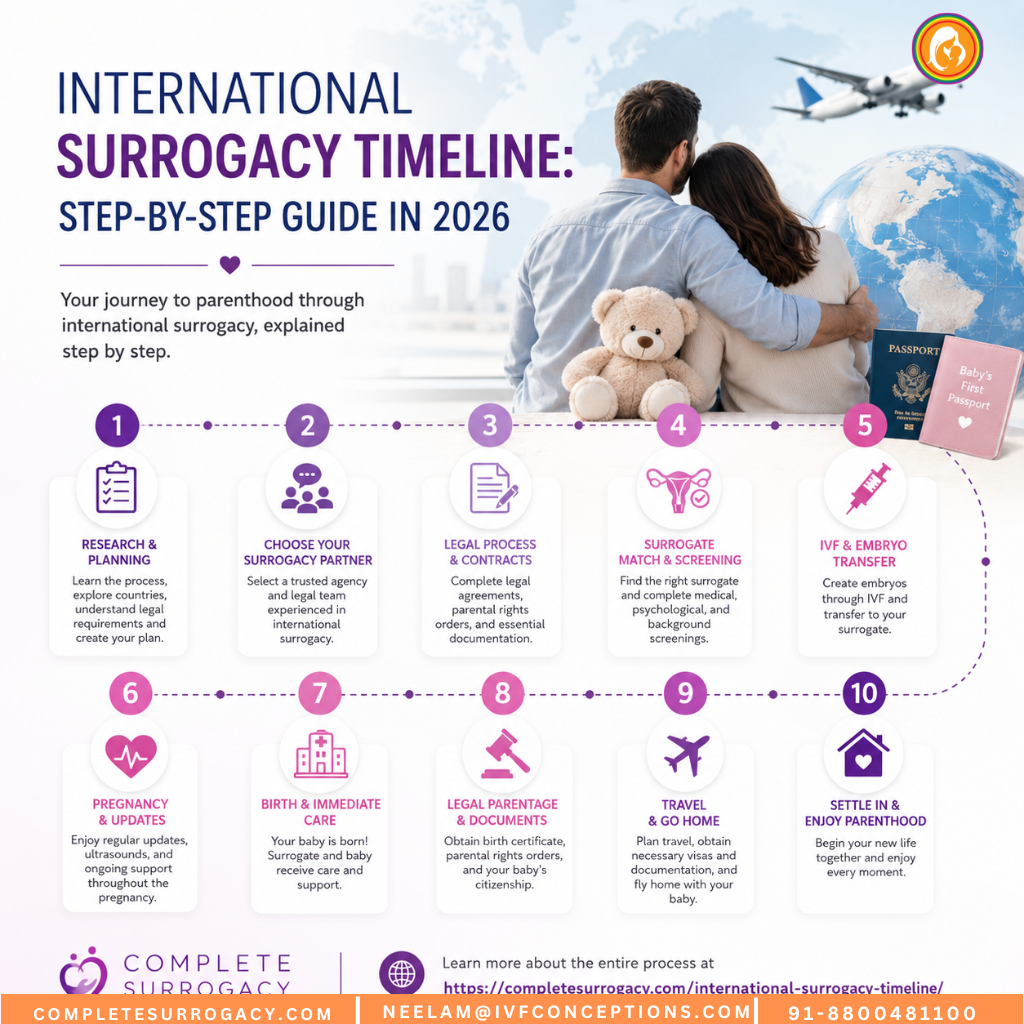
Starting your surrogacy journey can feel overwhelming. The international surrogacy timeline involves multiple stages across several months. Understanding each phase helps intended parents prepare mentally, emotionally, and financially.
This comprehensive guide breaks down the entire surrogacy process into manageable monthly steps. You will learn what to expect during each stage of your journey.
| Stage | Average Timeline |
|---|---|
| Initial Consultation | 1–2 weeks |
| Medical Screening | 2–4 weeks |
| IVF & Embryo Creation | 1–2 months |
| Surrogate Matching | 1–4 months |
| Legal Agreements | 2–6 weeks |
| Embryo Transfer | 1 day |
| Pregnancy | 38–40 weeks |
| Birth & Documentation | 2–6 weeks |
| Total Journey | 16–24 months |
If you’re planning international surrogacy, these guides will help you understand costs, legal requirements, and country options before starting your journey.
The overall timeline for international surrogacy typically ranges from 18 to 24 months. This timeframe includes everything from your initial consultation through bringing your baby home.
Several factors influence how quickly the surrogacy process moves forward. Surrogate availability plays a significant role in determining your timeline. The legal processes in your chosen country also impact duration.
Medical screening requirements vary by location. Some countries complete evaluations within weeks. Others require extensive testing that extends several months.
Every stage of the timeline depends on working with an experienced and transparent agency. Before beginning your journey, read our complete guide on verifying a surrogacy agency so you know exactly what to expect before signing any agreement.
Planning surrogacy abroad?
Read our complete Guide to International Surrogacy to understand the process, costs, legal rules, and timeline for international intended parents.
Families using their own embryos often move through the process faster. Creating new embryos adds approximately two to three months to your timeline.
The matching phase varies considerably among families. Some intended parents find their surrogate within weeks. Others take three to six months to find the right match.
First-time embryo transfers succeed in approximately 60-70% of cases. If additional transfers become necessary, this adds three to four months per attempt to your overall timeline.
Important Note: While these timelines represent typical experiences, every surrogacy journey is unique. Working with an experienced surrogacy agency helps streamline each phase and avoid unnecessary delays.
Your surrogacy journey begins with an initial consultation. This critical first step establishes the foundation for your entire experience.
During this phase, intended parents meet with surrogacy professionals to discuss goals and expectations. You will explore different country options and understand the full scope of the surrogacy process.
A surrogacy agency representative guides you through available programs. They explain the legal framework in various countries. This conversation covers timeline expectations and financial planning.
Medical screening starts immediately for intended parents. You will provide complete medical histories and undergo fertility assessments. These evaluations determine the best approach for embryo creation or transfer.

The surrogate matching stage is usually the most unpredictable part of the international surrogacy timeline. Choosing an experienced agency with a large pool of pre-screened surrogate mothers can significantly reduce waiting times.
You will select your preferred country for surrogacy. This choice depends on legal security, costs, and your personal comfort level.
Families decide whether to use their own genetic material or work with an egg donor. This decision impacts the subsequent timeline and preparation stages.
The surrogacy agency develops a customized plan based on your specific needs. This roadmap outlines each upcoming phase with realistic timelines.
Month 2: IVF Planning and Embryo Preparation
The second month focuses on embryo creation or preparation. This stage involves detailed coordination with your chosen IVF clinic.
Intended parents work closely with fertility specialists during this phase. The preparation process varies depending on whether you use existing embryos or create new ones.
For families creating embryos, the egg retrieval process begins. If using an egg donor, your surrogacy agency coordinates the donor selection and synchronization.
The IVF clinic administers hormone medications to stimulate egg production. This stimulation phase typically lasts 10-14 days with regular monitoring appointments.
Sperm collection occurs on the same day as egg retrieval. The fertility lab then fertilizes the eggs and monitors embryo development for five to six days.

Many families choose preimplantation genetic testing (PGT). This screening identifies chromosomal abnormalities and genetic disorders before embryo transfer.
PGT adds approximately two to three weeks to your timeline. The testing provides valuable information about embryo health and viability.
Results from genetic testing help select the healthiest embryo for transfer. This increases the likelihood of successful pregnancy and reduces the risk of genetic conditions.
Families with frozen embryos skip the creation phase. Your fertility clinic prepares the embryos for transfer through a thawing protocol.
The clinic verifies embryo quality through post-thaw assessment. High-quality embryos maintain their cellular structure and development potential after freezing.
Choosing an egg donor adds specific steps to the surrogacy process. Your agency provides access to donor databases with detailed profiles.
Donor selection considers physical characteristics, medical history, and education background. Most families spend two to four weeks reviewing profiles and making their choice.
The egg donor undergoes the same medical screening and stimulation process. Synchronization with the surrogate’s cycle ensures optimal timing for embryo transfer.
Embryo quality has a much greater impact on success than the country where the transfer takes place. High-quality embryos can reduce the need for multiple transfer attempts and shorten the overall timeline.
Finding the right surrogate represents a pivotal moment in your surrogacy journey. This matching phase balances practical considerations with personal connection.
Your surrogacy agency presents surrogate profiles based on your preferences. These profiles include medical history, lifestyle information, and personal motivations for becoming a surrogate.

Surrogacy agencies maintain strict qualification standards. All surrogates complete comprehensive medical and psychological screening before entering the matching pool.
Surrogate availability affects the timeline significantly. Popular programs with high demand may have limited immediate options. Other programs offer larger pools of pre-screened candidates.
Once you identify a potential match, both parties participate in a matching meeting. This conversation helps everyone assess compatibility and comfort levels.
Intended parents and surrogates discuss expectations about communication frequency. You will explore preferences regarding pregnancy updates and involvement during appointments.
The meeting addresses important topics like lifestyle during pregnancy. Surrogates explain their approach to prenatal care and intended parents share their hopes for staying connected.
After a successful match, families and surrogates develop their unique relationship dynamic. Some maintain frequent contact through video calls and messages. Others prefer periodic updates at key milestones.
Clear boundaries established early prevent misunderstandings later. Your surrogacy agency facilitates these conversations to ensure both parties feel comfortable and respected.
The strength of this relationship impacts the entire surrogacy journey. Open communication creates trust that carries through pregnancy and beyond.
Our experienced team has helped thousands of intended parents find their perfect surrogate match. We guide you through every step with personalized support and expert coordination.
Month four involves critical legal and medical preparations. This phase establishes the framework protecting all parties throughout the surrogacy process.
Legal agreements define parental rights, financial responsibilities, and medical decision-making authority. Each country has specific legal requirements that must be carefully followed.
Independent legal representation protects both intended parents and surrogates. Each party retains separate attorneys specializing in reproductive law.
The surrogacy contract covers compensation, medical expenses, and insurance provisions. It addresses potential complications and decision-making protocols for unexpected situations.

Legal steps require approximately four to six weeks to complete. Contract negotiations ensure all parties understand their rights and responsibilities. Once finalized, the agreement provides legal security for the entire surrogacy journey.
Comprehensive medical screening ensures the surrogate can safely carry a pregnancy. These evaluations verify physical health and identify any potential risk factors.
The screening process includes blood work, physical examinations, and ultrasounds. Testing confirms uterine health and rules out infectious diseases or medical conditions.
Psychological evaluations assess emotional readiness for the surrogacy journey. Mental health professionals ensure surrogates understand the commitment and have adequate support systems.
Obtaining complete medical clearance typically takes two to three weeks. The fertility clinic reviews all test results before approving the surrogate for embryo transfer.
Sometimes additional testing or consultations become necessary. This can extend the clearance timeline but ensures the safest possible pregnancy outcome.
Once medical clearance is granted, the clinic begins preparing the surrogate’s uterus for embryo transfer. This preparation phase involves hormone medications to optimize the uterine lining.
Always verify whether intended parents are recognized as the legal parents at birth in your chosen destination. Countries with clear surrogacy laws generally have faster documentation and passport processing.
Embryo transfer marks an exciting milestone in the surrogacy process. This relatively quick medical procedure represents months of preparation coming together.
The transfer typically occurs once the surrogate’s uterine lining reaches optimal thickness. Medical monitoring ensures perfect timing for the highest success rates.

In the weeks leading up to transfer, the surrogate takes hormone medications. These medications prepare the uterine lining to receive and nurture the embryo.
The fertility clinic monitors the surrogate through ultrasounds and blood tests. These appointments track uterine lining development and hormone levels.
Many intended parents travel to be present for the embryo transfer. This special moment allows families to participate in the beginning of their pregnancy.
Embryo transfer is a painless procedure lasting about 15-20 minutes. The surrogate does not require anesthesia for this minimally invasive process.
The fertility specialist uses ultrasound guidance to place the embryo in the optimal uterine location. A thin catheter delivers the embryo through the cervix into the uterus.
After transfer, the surrogate rests briefly before returning home. Most clinics recommend taking it easy for the remainder of the day.
Following embryo transfer comes the anticipated two-week wait. This period allows time for the embryo to implant in the uterine lining.
The surrogate continues hormone medications throughout this waiting period. These medications support early pregnancy development and implantation.
Pregnancy testing occurs approximately 10-14 days after transfer. Blood tests measure hCG hormone levels to confirm successful implantation.
First-time embryo transfer success rates vary based on embryo quality and surrogate factors. High-quality embryos transferred to healthy surrogates achieve success rates of 60-75%.
Positive pregnancy tests lead to early ultrasound appointments. These scans confirm fetal heartbeat and proper embryo development around week six.
If the first transfer is unsuccessful, your medical team evaluates what adjustments might improve outcomes. Additional transfers can occur after the surrogate’s menstrual cycle resumes.
Many programs include multiple transfer attempts in their packages. Discuss your agency’s policies regarding additional transfers before beginning treatment.
Once pregnancy is confirmed, regular monitoring ensures healthy development. This stage spans approximately 36-40 weeks from conception to birth.
Pregnancy monitoring involves standard prenatal care with your surrogacy journey’s unique aspects. Communication between all parties maintains connection throughout the pregnancy.

Early pregnancy appointments occur frequently to monitor development. Initial ultrasounds confirm heartbeat and rule out complications like ectopic pregnancy.
The surrogate continues taking prenatal vitamins and hormone support medications. These supplements support healthy fetal development during critical early weeks. You can read Average cost of a Surrogate
Morning sickness and fatigue are common during the first trimester. Your surrogacy agency ensures the surrogate receives support managing these normal pregnancy symptoms.
The second trimester brings important developmental milestones. Anatomy scan ultrasounds around week 20 assess fetal growth and detect any abnormalities.
Many intended parents choose to learn the baby’s gender during this phase. This special moment can be shared through video calls if parents cannot attend in person.
Pregnancy symptoms typically ease during the second trimester. The surrogate generally feels more energetic and comfortable during these months.
The final trimester involves more frequent medical appointments. Healthcare providers closely monitor fetal growth, position, and the surrogate’s health status.
Intended parents should plan to arrive in the birth country by week 36. This timing ensures your presence for delivery and allows buffer time for unexpected early labor.

Arrangements for birth should be finalized during the third trimester. This includes hospital selection, delivery preferences, and immediate post-birth plans.
Most intended parents should plan to arrive in the birth country at least two to three weeks before the expected delivery date to avoid missing the birth due to early labor.
Maintaining regular contact strengthens the relationship between intended parents and surrogates. Communication frequency varies based on everyone’s preferences and comfort levels.
Most surrogate pregnancies proceed without serious complications. However, your surrogacy contract addresses decision-making protocols if issues arise.
Conditions like gestational diabetes or high blood pressure may require additional monitoring. Your medical team implements appropriate treatment plans to protect surrogate and baby health.
Your surrogacy agency coordinates care between all parties if complications occur. Clear communication ensures everyone stays informed and involved in medical decisions.
As delivery approaches, practical preparations ensure a smooth birth experience. Planning ahead reduces stress during this exciting but busy time.
Intended parents typically travel to the birth country several weeks before the due date. This early arrival provides cushion time for unexpected early labor.

Booking flexible travel accommodations is essential for international surrogacy. Due dates are estimates, and babies often arrive earlier or later than expected.
Consider accommodations near the hospital where delivery will occur. This proximity allows quick access when labor begins and convenient visits after birth.
Extended stay apartments work well for the weeks surrounding delivery. These options provide kitchen facilities and more space than traditional hotels.
Your surrogacy agency typically coordinates with specific hospitals experienced in surrogacy births. These facilities understand the unique aspects of surrogate deliveries.
Tour the hospital before delivery when possible. Familiarity with the facility reduces anxiety when labor begins.
Discuss your birth plan preferences with the medical team in advance. While flexibility is important, communicating your wishes helps staff support your vision.
Packing for birth involves items for both baby and parents. Creating a comprehensive list prevents last-minute stress.
When labor begins, your surrogacy agency coordinates communication between all parties. You will be notified immediately to head to the hospital.
Many intended parents choose to be present in the delivery room. This decision should be discussed with the surrogate in advance and included in your birth plan.
Hospital staff familiar with surrogacy understand the unique dynamics. They facilitate bonding time between baby and intended parents immediately after birth.
The first hours after birth involve standard newborn care procedures. Your baby receives Apgar scores, measurements, and initial health assessments.
Skin-to-skin contact helps establish bonding between parents and baby. This practice also regulates newborn temperature and promotes calmness.
Hospital stays typically last 2-3 days for uncomplicated vaginal deliveries. Cesarean births may require 3-4 days before discharge.
Pro Tip: Pack a special outfit for your baby’s first photos. These images become treasured keepsakes of your first moments together.
Obtaining proper documentation represents one of the most critical phases of international surrogacy. Legal processes vary significantly by country and require careful attention to detail.
Your baby’s citizenship, passport, and exit documents must be secured before returning home. Understanding these legal steps prevents delays during an already emotional time.
The local government issues the birth certificate listing intended parents as legal parents. This process typically takes several days to several weeks depending on the country.
Required documentation for birth registration includes the surrogacy contract and court orders establishing parental rights. Your surrogacy agency guides you through this administrative process.
Some countries issue birth certificates immediately at the hospital. Others require separate registration appointments at government offices.
Legal processes establish parental rights before the baby’s birth or immediately after. These processes differ dramatically by surrogacy destination country.
Pre-birth orders declare intended parents as legal parents before delivery. This approach provides immediate legal recognition when the baby is born.
Post-birth orders require court proceedings after delivery to establish legal parentage. These proceedings typically conclude within days or weeks depending on local court schedules.
Securing your baby’s passport allows you to return to your home country. The passport application process varies based on your citizenship.
United States citizens apply at the local U.S. Embassy or Consulate. This requires appointments, documentation, and photos of the newborn.
Processing times for newborn passports range from a few days to several weeks. Some countries offer expedited services for an additional fee.
Schedule embassy appointments as early as possible after birth. Many locations require advance booking that fills quickly during busy seasons.

Bring all required documentation to your appointment. Missing paperwork results in delays and requires rescheduling.
Both parents typically must appear in person for passport applications. Some countries allow one parent with notarized permission from the other.
Some countries require DNA testing to establish biological relationship to at least one intended parent. This testing must be completed by approved facilities.
DNA test results typically process within several days. The approved laboratory sends results directly to the embassy or consulate.
Your surrogacy agency coordinates these tests and ensures proper documentation. Following correct procedures prevents complications with document processing.
Certain countries require exit permits before a baby born through surrogacy can leave. These permits confirm proper legal procedures were followed.
Immigration authorities review all documentation before issuing clearance. This process adds days or weeks to your in-country stay.
Working with experienced legal professionals streamlines these requirements. Your surrogacy agency’s local team navigates bureaucratic processes efficiently.
The journey home with your newborn marks the transition from surrogacy process to everyday family life. Proper preparation makes international travel with an infant more manageable.
Most families spend 4-6 weeks in the birth country completing legal processes. This extended stay allows time for document processing and newborn adjustment.

Book direct flights when possible to minimize travel time and connections. Long layovers with a newborn create unnecessary stress and logistics challenges.
Reserve bassinet seats on international flights if available. These special seats accommodate infants and provide more comfort during long journeys.
Pack carry-on bags with all essential baby supplies. Include extra diapers, formula, clothing changes, and comfort items beyond what you estimate needing.
Arriving in your home country requires passing through immigration with your new baby. Have all documentation readily accessible for immigration officers.
Some countries have specific declaration requirements for babies born abroad. Research your home country’s entry requirements in advance.
Immigration processing for surrogacy babies usually proceeds smoothly with proper documentation. Officers may ask basic questions about your journey.
Arriving home brings relief and excitement after weeks of travel and legal processes. However, newborn care continues with new challenges.
Jet lag affects both parents and babies. Establishing routines helps everyone adjust to new time zones and schedules.
Schedule pediatrician appointments within the first week home. Your baby needs health checks and establishment with local healthcare providers.
The transition to parenthood after surrogacy involves unique emotional aspects. You have anticipated this moment through months of process and waiting.
Some parents experience overwhelming emotions after bringing baby home. These feelings are completely normal and part of bonding.
Connect with other families who built their families through surrogacy. These relationships provide understanding and support from those with shared experiences.
Many intended parents stay connected with their surrogates after birth. The nature and frequency of contact varies widely among families.
Send photos and updates if your surrogate expressed interest in staying connected. These communications honor the special role she played in your family creation.
Respect boundaries if your surrogate prefers limited post-birth contact. Every relationship dynamic is unique and equally valid.
Keep copies of all surrogacy documentation in secure locations. You may need these records for future legal or medical purposes.
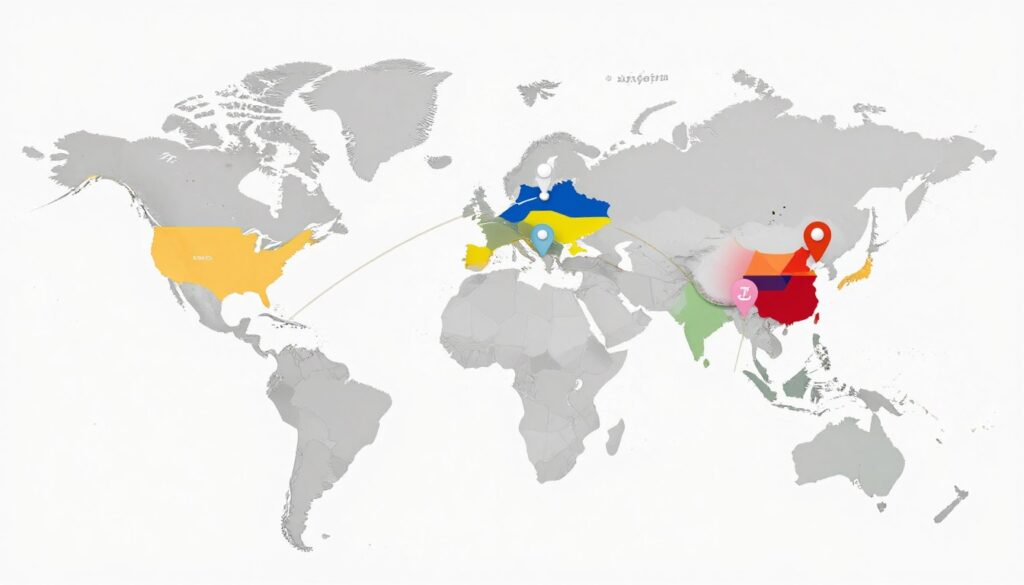
International surrogacy timelines vary significantly depending on destination country. Understanding these differences helps intended parents select the best program for their needs.
Each country has unique legal frameworks, medical protocols, and administrative processes. These factors directly impact the overall timeline from start to bringing your baby home.
| Country | Total Timeline | Best For | Average Cost | Legal Security |
|---|---|---|---|---|
| Georgia | 16–18 months | Married couples | $55,000–$75,000 | High |
| Armenia | 16–20 months | Affordable programs | $45,000–$65,000 | High |
| Kazakhstan | 16–20 months | Budget-friendly surrogacy | $50,000–$65,000 | High |
| Colombia | 18–22 months | Single parents & LGBTQ+ | $55,000–$75,000 | Moderate–High |
| Mexico | 18–22 months | International parents | $60,000–$80,000 | Moderate |
| USA | 18–24 months | Strong legal protection | $150,000–$220,000 | Very High |
The United States offers the most legally secure surrogacy framework. However, laws vary significantly by state, creating different timelines and processes.
States with pre-birth order options allow faster post-delivery departures. Parents receive legal recognition before birth, simplifying documentation processes.
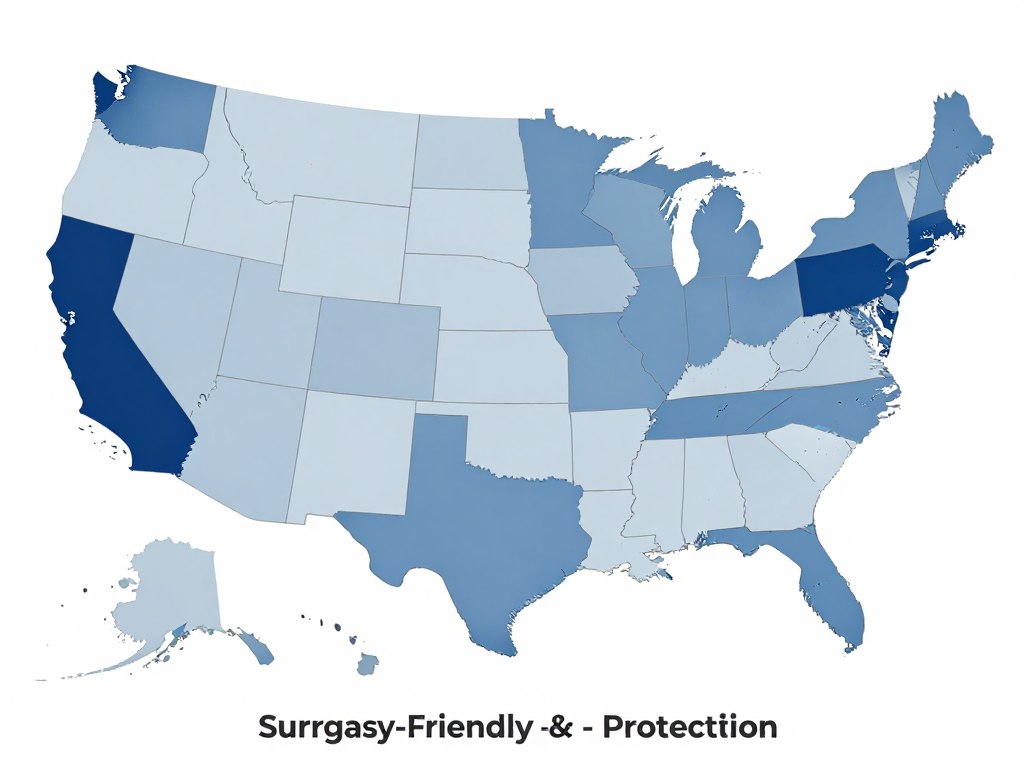
California, Illinois, and Connecticut have the most surrogacy-friendly legal environments. These locations offer strong protections for intended parents and established medical infrastructure.
Ukraine has offered surrogacy services to international intended parents for many years. The country provides cost-effective options with experienced medical professionals.
Legal parentage establishes through post-birth court proceedings. This process typically completes within two to three weeks after delivery.
Surrogate availability in Ukraine is generally good. Matching often occurs more quickly than in higher-cost destinations.
Georgia provides a clear legal framework for international surrogacy. The country’s laws explicitly permit surrogacy for married heterosexual couples.
Medical facilities in Tbilisi offer high-quality care with modern technology. Success rates are comparable to Western European clinics.
Post-birth registration processes are relatively straightforward. Most families complete necessary documentation within three weeks.
Colombia has emerged as a surrogacy destination offering Latin American cultural connection. The legal framework continues developing, requiring careful navigation.
Mexico’s surrogacy laws vary by state, similar to the United States. Tabasco and Sinaloa have the most established surrogacy programs.
Both countries require longer post-birth stays for documentation. Budget additional time for potential administrative delays.
Consider your priorities when selecting a surrogacy destination. Legal security, costs, timeline, and cultural factors all play important roles.
Families prioritizing fastest timelines may prefer countries with pre-birth legal processes. Those focused on cost-effectiveness might choose destinations with longer but less expensive timelines.
Your surrogacy agency provides detailed comparisons based on your specific situation. They help you understand which country best meets your unique needs and timeline goals.
Comparing total program costs—not just the advertised package price—helps avoid unexpected expenses related to legal fees, travel, newborn documentation, and extended accommodation.
Intended parents commonly have similar questions about the international surrogacy timeline. These answers provide clarity on frequently raised concerns.
Completing international surrogacy in less than 18 months is possible but uncommon. Families with existing high-quality embryos who match quickly with an available surrogate may complete the process in 14-16 months. However, rushing critical steps like screening and legal processes increases risks. Most agencies recommend realistic expectations of 18-24 months for the complete journey from consultation through bringing baby home.
If the initial transfer is unsuccessful, your medical team evaluates what adjustments might improve outcomes. The surrogate must complete a full menstrual cycle before attempting another transfer, adding approximately 8-12 weeks to your timeline. Many surrogacy programs include multiple transfer attempts in their packages. Your contract should clearly specify how many attempts are covered and associated costs for additional transfers beyond the agreement.
Plan to arrive in the birth country around week 36 of pregnancy, approximately 3-4 weeks before the due date. You will typically stay 2-6 weeks after birth depending on the country’s documentation requirements. Total in-country time usually ranges from 6-10 weeks. Some intended parents make multiple trips, staying for key milestones like embryo transfer and birth rather than remaining continuously. Discuss travel strategies with your agency based on your work situation and preferences.
Common delays include extended surrogate matching when seeking specific characteristics, failed embryo transfers requiring additional attempts, pregnancy complications requiring extended monitoring, embassy appointment scheduling difficulties, and document processing delays in either the birth country or home country. Building buffer time into your expectations prevents disappointment. Most successful families approach the timeline with flexibility rather than rigid scheduling.
Most of the surrogacy timeline does not require time away from work. You will need time for initial consultations, potentially embryo creation procedures, and the extended stay for birth. Many employers offer parental leave policies covering surrogacy. Plan for 6-10 weeks away from work surrounding the birth. Some intended parents arrange remote work during their stay in the birth country. Discuss your employment situation with your agency to create a realistic plan.
Working with an egg donor adds approximately 2-3 months to the early stages of your timeline. This includes time for donor selection, medical screening, legal agreements, and cycle synchronization. However, using donor eggs often results in higher-quality embryos and better transfer success rates. Many programs have pre-screened donor databases allowing faster selection. Fresh versus frozen donor eggs also impacts timing, with frozen eggs available more quickly.
Approximately 10% of pregnancies continue beyond the due date. Most providers induce labor by 41-42 weeks to ensure safety. Budget extra time and flexibility in your travel plans to accommodate this possibility. Extended stay accommodations should be flexible or month-to-month rather than fixed end dates. The additional wait is typically only days to two weeks, but planning for this contingency reduces stress.
Return timelines depend entirely on your birth country’s documentation requirements and your home country’s embassy processing times. Fastest scenarios allow departure within 2-3 weeks after birth. More complex situations require 4-6 weeks or longer. Your baby must have a passport, birth certificate, and any required exit permits before traveling. Embassy appointments often require advance booking, potentially adding weeks to your stay. Your agency coordinates this process to minimize delays.
Working with experienced local legal counsel and agencies familiar with documentation procedures helps streamline processes. Some countries offer expedited services for additional fees. Completing preparatory paperwork before birth, scheduling embassy appointments in advance, and ensuring all documents are properly authenticated reduces delays. However, some wait times are unavoidable due to government processing schedules. Your agency’s local team navigates these requirements efficiently based on their experience.
Passport processing timelines vary widely by country. Delays usually occur because of embassy appointments rather than birth certificate issuance.
Twin or multiple pregnancies typically require additional monitoring and often result in earlier delivery. Babies may require brief NICU stays even if healthy. This can extend your post-birth timeline by 1-2 weeks. Documentation processes remain similar but require obtaining documents for each child. Discuss multiple embryo transfer implications with your medical team. Many providers recommend single embryo transfer to reduce multiple pregnancy risks and complications.

Understanding the international surrogacy timeline empowers intended parents to approach this journey with confidence. While the process spans many months, each phase brings you closer to your ultimate goal of parenthood. Read more about International Surrogacy Costs
The surrogacy timeline requires patience, flexibility, and realistic expectations. Delays occasionally occur despite careful planning. Successful families maintain focus on the end result rather than fixating on minor setbacks.

Working with experienced professionals makes the difference between a smooth journey and a stressful experience. Reputable surrogacy agencies navigate complexities while providing emotional support throughout your timeline.
Every surrogacy journey is unique, with its own timeline and special moments. The path may seem long when you begin, but families universally reflect that the wait was worthwhile when they finally hold their baby.
Our experienced team has guided thousands of intended parents through successful international surrogacy journeys. We provide comprehensive support from your first consultation through bringing your baby home. Let us help you navigate the timeline with expert coordination and compassionate care.
Your path to parenthood through international surrogacy begins with a single step. Take that step today by connecting with professionals who understand your dreams and have the expertise to make them reality.



Author Bio: Neelam Chhagani is an International Surrogacy Expert with 15 years of experience in the fertility and surrogacy domain. As the founder of IVF Conceptions and Complete Surrogacy, she has guided over 4,000 intended parents worldwide on their surrogacy journey to parenthood. Recognized as a trusted authority, she specializes in holistic infertility solutions and third-party reproduction consulting.
Holding an MA in Counselling Psychology and a PGD in Mental Health, Neelam is a proud member of the European Fertility Society (EFS) and the European Society of Human Reproduction and Embryology (ESHRE). She is also a leading surrogacy blogger, providing valuable insights into ethical and practical surrogacy solutions.
Since 2010, committed to supporting ALL family types, Neelam has been passionate about helping intended parents grow their families with compassion, integrity, and a focus on secure and affordable surrogacy options Globally.
Learn more about Neelam:
https://www.ivfconceptions.com/neelam-chhagani-surrogacy-consultant/
https://www.linkedin.com/in/neelam-chhagani-92892229/