
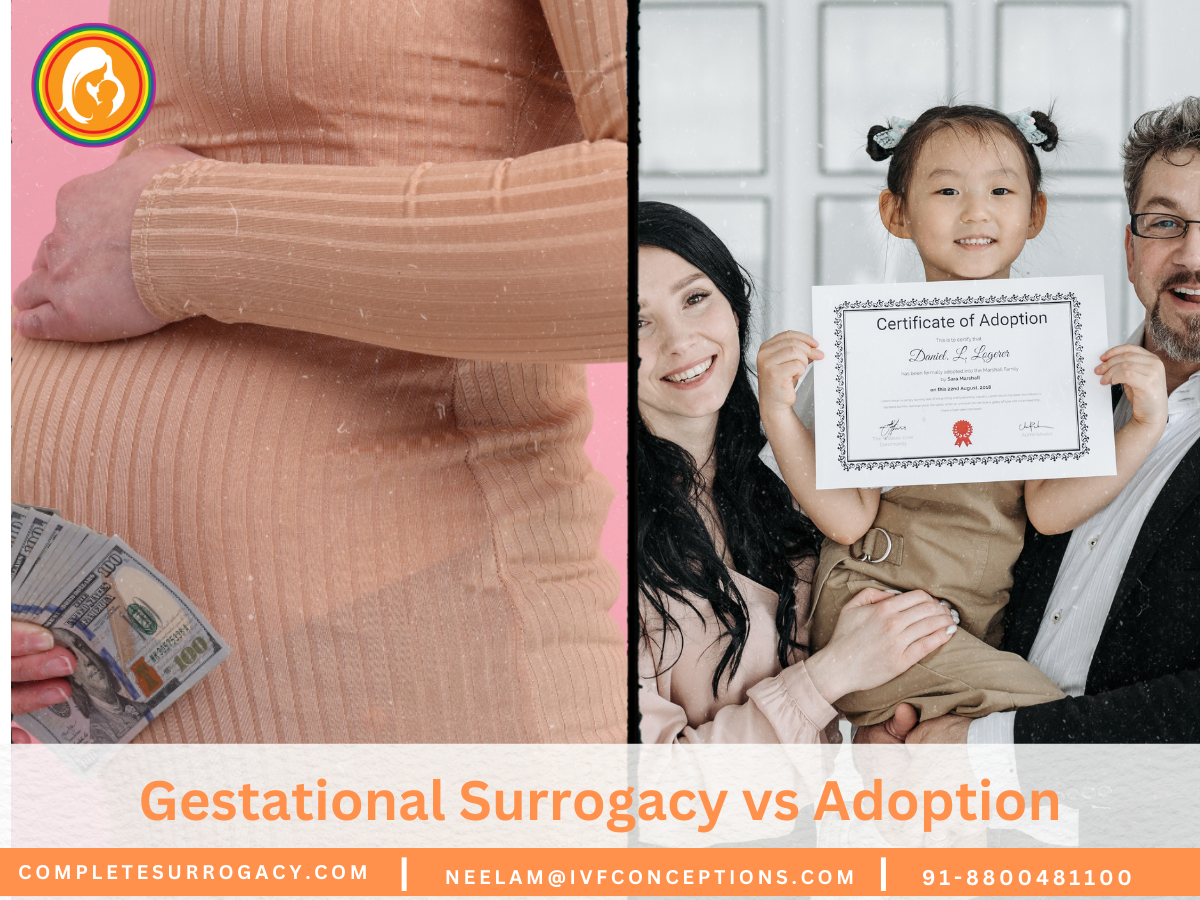
The main difference between gestational surrogacy and adoption is that in gestational surrogacy, the child is biologically related to the intended parents, whereas in adoption, there is no genetic link. About 1 in 8 couples in the U.S. face infertility. This makes options like surrogacy and adoption key to building families. Every year, thousands of people choose these paths to start their families, each with its own set of challenges and benefits.
Surrogacy and adoption are two deep ways to create a family when regular ways don’t work. They give hope to those who want to be parents but can’t because of biology or personal reasons.
Knowing the differences between surrogacy and adoption requires careful thought about medical, legal, emotional, and financial aspects. Both ways let families welcome a child with love. Yet, each journey has its own experiences and needs.
Key Takeaways
- Surrogacy and adoption are viable family planning options for individuals facing fertility challenges
- Each path involves unique medical, legal, and emotional considerations
- Financial investments differ significantly between surrogacy and adoption
- Genetic connections vary depending on the chosen family-building method
- Professional guidance is key in navigating these complex family-building journeys
📞 Get in Touch for a Free Surrogacy Consultation
📱 +91-8800481100 (WhatsApp | LINE | Viber)
📧 neelam@ivfconceptions.com
Understanding Gestational Surrogacy and Its Process
Gestational surrogacy is a complex and caring way for people who can’t have kids the usual way. It lets intended parents have a biological child through a detailed reproductive process.
The surrogacy process has many steps that need medical, legal, and emotional care. People wanting to have a child through surrogacy must go through several important sta
Types of Surrogacy Arrangements
There are two main types of surrogacy:
- Gestational surrogacy: The carrier has an embryo made from the intended parents’ or donors’ genetic material
- Traditional surrogacy: The surrogate uses her own genetic material, which is less common today.
Medical Procedures and Requirements
The medical part of gestational surrogacy includes a lot of screening and special reproductive technologies:
- Extensive medical evaluations for intended parents and gestational carrier
- Genetic testing and health screenings
- In vitro fertilization (IVF) embryo creation
- Embryo transfer procedure
- Pregnancy monitoring and support
Legal Framework for Surrogacy
Legal stuff is very important in surrogacy. Intended parents need to work with special reproductive lawyers to:
- Draft detailed surrogacy agreements
- Set up parental rights
- Protect the interests of both the surrogate and intended parents
- Deal with state laws on surrogacy
Every surrogacy journey is different. It needs personal medical, legal, and emotional support for a successful experience for everyone.
The Journey Through Adoption: A Comprehensive Overview

Adoption is both exciting and complex for those wanting to start a family. Each adoption journey is unique, with its own challenges and rewards. Knowing the differences between domestic and international adoption helps families make better choices.
Domestic vs International Adoption
Families often choose between domestic and international adoption. Domestic adoption means adopting a child in the U.S. International adoption brings a child from another country to an American family.
- Domestic adoption offers more chances for birth parent interactions
- International adoption provides homes for children from various cultural backgrounds
- Each has its own legal and procedural needs
Legal Requirements and Home Studies
The adoption process includes legal and personal checks. Prospective parents must do detailed home studies. These studies check if they can offer a stable and caring home.
| Adoption Type | Home Study Requirements | Average Completion Time |
|---|---|---|
| Domestic Adoption | Background checks, interviews, home visits | 3-6 months |
| International Adoption | More international documents, country-specific rules | 6-12 months |
Birth Parent Relationships
Adoptions can be open or closed. Open adoption allows for some contact between birth parents and adoptive families. Closed adoption keeps all information private.
“Adoption is not about finding perfect children, but finding perfect love.” – Unknown
Families need to think about what kind of adoption they’re comfortable with. They must also consider how to communicate with birth parents.
Surrogacy vs Adoption: Key Differences and Considerations
Choosing between surrogacy and adoption is a personal journey for those wanting to start a family. Each option has its own emotional and complex aspects to consider.
The main differences between surrogacy and adoption include:
- Genetic Connection: Surrogacy lets intended parents keep a genetic link to their child
- Legal Parenthood: Surrogacy usually sets up parental rights before birth through contracts
- Birth Parent Involvement: Adoption often means ongoing relationships with birth parents
Ethical dilemmas arise in both choices. Surrogacy brings up questions about reproductive freedom and exploitation. Adoption faces issues of consent and cultural complexities.
| Aspect | Surrogacy | Adoption |
|---|---|---|
| Genetic Connection | Potential genetic link | No genetic relationship |
| Legal Risks | Minimal pre-birth legal agreements | Potential consent withdrawal |
| Parental Rights | Established before birth | Finalized after legal process |
Parental rights vary greatly between these options. Surrogacy contracts offer quick legal clarity. Adoption, on the other hand, needs detailed legal steps to transfer rights.
Understanding these nuanced differences empowers prospective parents to make informed decisions aligned with their family-building goals.
Surrogacy cost Vs adoption cost
Exploring the costs of surrogacy and adoption can be tough for those wanting to start a family. It’s key to understand the costs of fertility treatments and different ways to build a family. This knowledge helps in making a well-informed choice.
Cost Breakdown for Both Options
The money needed for surrogacy and adoption is quite different. Surrogacy can cost between $90,000-$130,000. Adoption costs vary widely:
- Domestic infant adoption: $20,000 – $45,000
- International adoption: $30,000 – $50,000
- Foster care adoption: $0 – $2,500

Duration and Waiting Periods
Waiting times affect the total cost of both surrogacy and adoption. Surrogacy usually takes 12-18 months. Adoption times can range from 1-5 years, depending on the type.
“The journey to parenthood is unique for every family, and understanding the financial implications is a critical step.” – Fertility Expert
Available Financial Assistance
There are many ways to get financial help for surrogacy or foster care adoption:
- Employer-provided fertility benefits
- Adoption tax credits
- Grants and financial assistance programs
- Personal loans and crowdfunding
Good financial planning and looking into different funding options can help manage family expansion costs.
Additional Resources to Read:
9 Factors To Improve IVF Pregnancy Rate
IVF With Egg Donor Success Rates
How To Choose Between IVF and IUI
What is Mitochondrial Donation IVF Treatment
Conclusion
Choosing between surrogacy and adoption is a deeply personal decision. Each option has its own emotional, legal, and financial aspects. Knowing these differences helps parents make choices that fit their lives.
Deciding on a surrogate mother or adoption needs careful thought. You must consider your readiness, finances, and family goals. Experts suggest talking to counselors and doing thorough research before deciding.
Surrogacy and adoption both lead to beautiful families but require different efforts. Parents must think about their emotional strength, support, and ability to handle legal and medical steps. Getting professional help can make this journey easier.
Building a family is a unique journey for everyone. Whether through surrogacy or adoption, the key is to provide a loving home. Seeking advice, staying open, and being patient will help make your family’s dreams come true.
At Complete Surrogacy, we help connect intended parent to fertility clinics/surrogacy agencies worldwide, based on their individual situation assessment. If you’re considering IVF, IVF with egg donor, Surrogacy, Egg donor surrogacy, and LGBT+ Surrogacy.
Get in touch today to get world-class services with ethical, legal, and affordable surrogacy options worldwide.
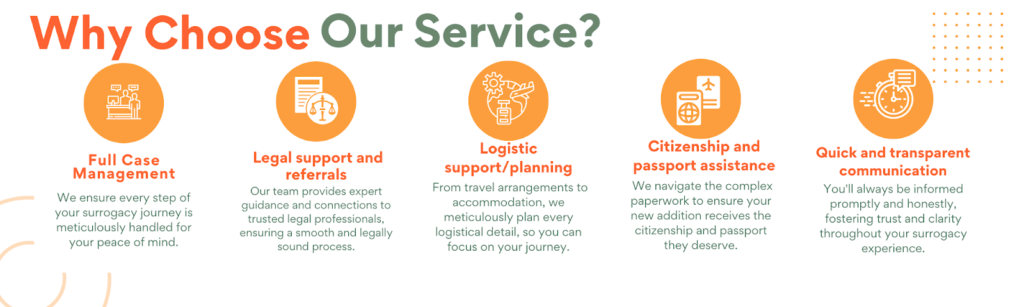
Why Intended Parents Choose Complete Surrogacy for a Safe, Smooth & Successful Surrogacy Journey:
🌍 Access to multiple surrogacy destinations with 15+ years of international experience
🏥 Partnerships with top-tier fertility clinics and agencies, backed by references from past clients
👩🦱 Diverse egg donor options: Asian, Caucasian, African, Oriental, and more
💸 Transparent and affordable pricing—direct payments with no extra agency fees
🔒 No hidden costs—all charges are agreed upon upfront
🤝 Dedicated case manager for personalized support
📲 Fast, honest, and clear communication throughout
📑 Full legal support for visas, documentation, and baby exit processes
🚚 Assistance with frozen sperm/embryo shipment logistics
FAQs for surrogacy vs adoption
What is the main difference between surrogacy and adoption?
Surrogacy and adoption differ mainly in the biological connection and pregnancy process. In surrogacy, the intended parents may have a genetic link to the child. The pregnancy happens through IVF. Adoption, on the other hand, creates a legal bond with a child who is not biologically related to the parents.
How much does surrogacy typically cost compared to adoption?
Surrogacy costs more, ranging from $90,000 to $130,000. Adoption, whether domestic or international, is less expensive. Domestic adoption costs $20,000 to $45,000, while international adoption is $20,000 to $50,000. Costs vary based on medical procedures, legal needs, and agency fees.
What are the types of surrogacy available?
There are two main types of surrogacy. Gestational surrogacy uses an embryo created via IVF, with no genetic link to the child. Traditional surrogacy uses the surrogate’s egg, creating a genetic link. Gestational surrogacy is more common and simpler legally.
What are the legal considerations for surrogacy and adoption?
Both require detailed legal documents. Surrogacy needs contracts that outline parental rights and responsibilities. Adoption involves home studies, background checks, and adoption decrees. Legal advice is key due to state and country regulations.
How long does the surrogacy or adoption process typically take?
Surrogacy takes 12-18 months from start to birth. Adoption times vary. Domestic adoption takes 1-2 years, while international adoption can take 1-5 years. Timelines depend on country rules, agency processes, and individual cases.
What are the emotional challenges of surrogacy and adoption?
Both paths have emotional challenges. Surrogacy involves medical stress and personal procedures. Adoption may deal with birth parent relationships and emotional challenges for the child. Both need emotional strength, counseling, and support.
Can single individuals or LGBTQ+ couples pursue surrogacy or adoption?
Yes, both options are open to more people. Agencies and states support single-parent and LGBTQ+ families. It’s important to research and consult with legal experts to understand local rules.
What medical requirements exist for surrogacy?
Surrogates must be 21-45 years old, have given birth before, and be in good health. They also need to pass medical screenings. Intended parents may need fertility tests and psychological evaluations.
Are there financial assistance options for surrogacy and adoption?
Yes, there are financial help options. This includes employer benefits, grants, loans, tax credits, and state programs. Some employers offer family-building benefits. Military families may have extra support. A financial advisor can help find the best resources.
What is an open adoption, and how does it differ from closed adoption?
Open adoption allows ongoing contact between all parties. Closed adoption keeps identifying information secret. The level of openness is agreed upon and documented legally during the adoption process.

Author Bio: Neelam Chhagani is an International Surrogacy Expert with 15 years of experience in the fertility and surrogacy domain. As the founder of IVF Conceptions and Complete Surrogacy, she has guided over 4,000 intended parents worldwide on their surrogacy journey to parenthood. Recognized as a trusted authority, she specializes in holistic infertility solutions and third-party reproduction consulting.
Holding an MA in Counselling Psychology and a PGD in Mental Health, Neelam is a proud member of the European Fertility Society (EFS) and the European Society of Human Reproduction and Embryology (ESHRE). She is also a leading surrogacy blogger, providing valuable insights into ethical and practical surrogacy solutions.
Since 2010, committed to supporting ALL family types, Neelam has been passionate about helping intended parents grow their families with compassion, integrity, and a focus on secure and affordable surrogacy options Globally.
Learn more about Neelam:
https://www.ivfconceptions.com/neelam-chhagani-surrogacy-consultant/
https://www.linkedin.com/in/neelam-chhagani-92892229/














I was introduced to Neelam by a friend who worked with Neelam for surrogacy. Neelam is absolutely wonderful. I am a single male and the journey to fatherhood is not that easy. Neelam connected me to a program ideal for my circumstances. She was with me throughout the pregnancy providing advice and guidance along the way. I am so grateful I found her and am thrilled today that I have a beautiful daughter. I highly recommend Neelam to anyone who is on a journey to become a parent. Having a child has changed my world for the better. I wish others success with their own journey and recommend you connect with Neelam to find a path that is best for you.
SA (USA)