

For many hopeful parents, building a family through ethical medical assistance remains a complex global challenge. Recent legal reforms in one of the world’s leading destinations now offer clear pathways for overseas citizens seeking compassionate solutions. Altruistic Surrogacy in India for UK Citizens with OCI Cards is possible now with The Surrogacy (Regulation) Act, 2021.
This framework balances medical expertise with emotional support, ensuring intended parents receive guidance through every step. Skilled professionals, transparent costs, and modern facilities make this option increasingly popular among those holding specific residency privileges. Couples often find that it combines affordability with peace of mind.
Key Takeaways
- Recent laws ensure ethical practices and legal protections for all participants
- High-quality medical care is available at significantly lower costs than in Western countries
- Specific residency statuses simplify access to regulated services
- Step-by-step guidance helps couples navigate requirements smoothly
- Transparent processes reduce stress during this life-changing journey
📞 Get in Touch for a Free Surrogacy Consultation
📱 +91-8800481100 (WhatsApp | LINE | Viber)
📧 neelam@ivfconceptions.com

Introduction: Why UK Families Are Considering Surrogacy in India Again
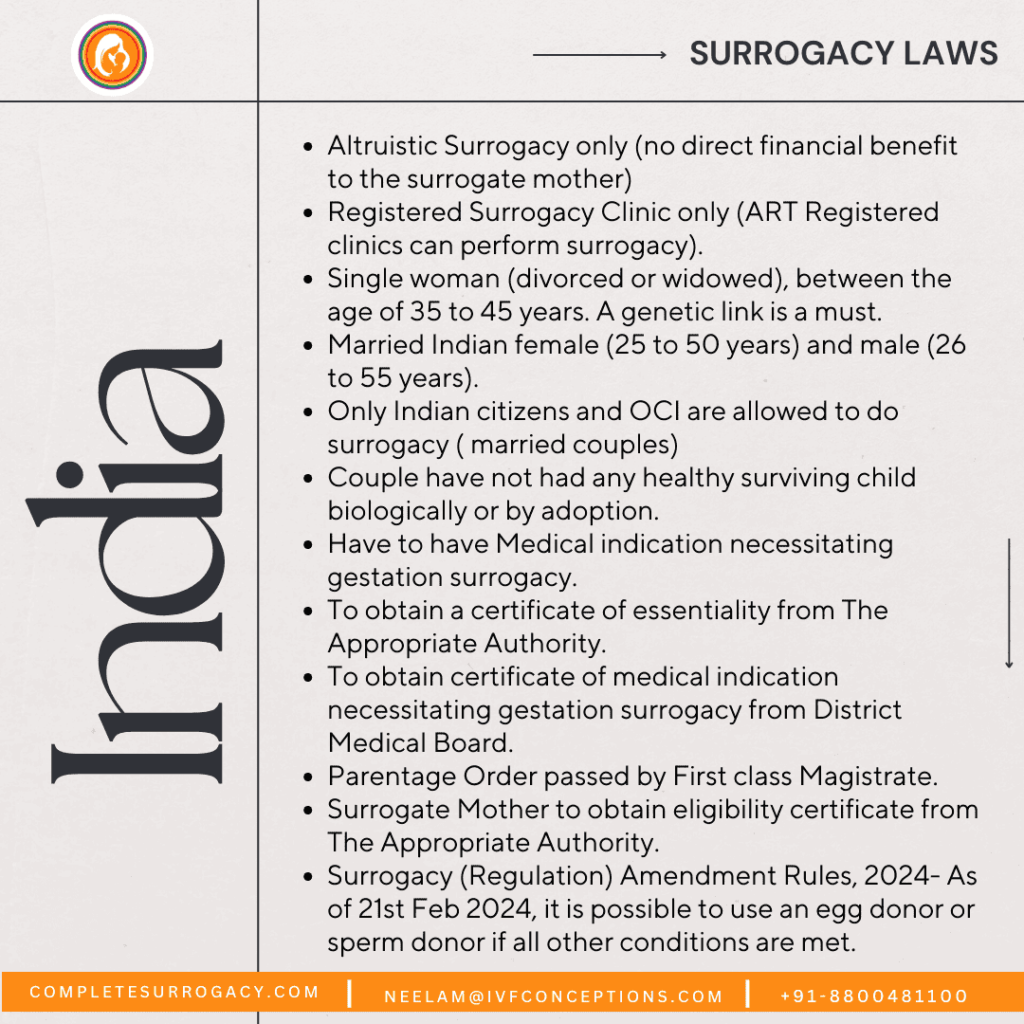
For many UK citizens with Indian heritage, surrogacy in India was once a practical, affordable, and emotionally connected pathway to parenthood. With recent regulations, commercial surrogacy is banned, but altruistic surrogacy remains legal—only for eligible couples with close familial ties and Indian roots.
If you are a UK citizen holding an Overseas Citizen of India (OCI) card, you may be eligible to pursue altruistic surrogacy in India under the Surrogacy (Regulation) Act, 2021 (amended 2023). This blog explains who qualifies, how the process works, and what it costs in 2025.
What Is Altruistic Surrogacy in India?
Altruistic surrogacy means the surrogate does not receive financial compensation beyond medical expenses and insurance. Under current Indian law, commercial surrogacy is strictly prohibited, and only altruistic arrangements are allowed under tightly regulated conditions.
Can UK Citizens with OCI Cards Legally Do Surrogacy in India?
Yes, but with strict eligibility.
The Indian government allows altruistic surrogacy only for OCI cardholders, who are treated similarly to Indian citizens for certain rights, including surrogacy, provided they meet all legal conditions.
Eligibility Criteria for Surrogacy in India (2025):
- Must be a heterosexual married couple.
- At least one partner must hold a valid OCI card or if both of them are UK citizens, then both need OCI card
- The couple must be clinically infertile, with a certificate from a government-recognized ART clinic in India.
- The couple can undertake surrogacy only once in their lifetime.
- The surrogate must be a married woman aged 25–35 years with at least one biological child.
Note: Single individuals, LGBTQ+ couples, and those without Indian roots are not eligible for surrogacy in India.
Legal Framework and Regulatory Overview
Navigating parenthood through ethical family-building requires robust legal safeguards. India’s 2021 legislation reshaped reproductive rights by establishing clear guidelines for cross-border arrangements. This framework prioritizes safety over profit, creating accountability at every stage.
Surrogacy (Regulation) Act, 2021 Explained
The law bans monetary incentives beyond medical expenses, ensuring partnerships remain trust-based. All agreements must undergo judicial review and include:
- Proof of genetic relation to at least one parent
- Medical certificates confirming the surrogate’s fitness
- Approval from state-level regulatory boards
Safeguards for All Parties
Mandatory insurance covers the carrier’s health risks, while intended parents receive enforceable custody rights post-birth. Courts verify consent through three documented stages:
| Stage | Requirement | Purpose |
|---|---|---|
| 1. Pre-Agreement | Psychological evaluations | Confirm voluntary participation |
| 2. Pregnancy | Monthly medical reports | Monitor health standards |
| 3. Post-Birth | Parental order hearings | Establish legal guardianship |
These measures prevent exploitation while allowing overseas citizens of Indian origin to pursue family growth through regulated channels. Licensed clinics now report compliance metrics to central authorities annually.
Essential Documentation Checklist
Prepare these vital records to initiate the process:
- Notarized marriage certificate with English translation
- Current OCI cards show valid residency privileges
- Fertility specialist reports confirming medical need
Reputable clinics often provide templates for required affidavits. “Proper documentation prevents legal delays,” notes a Delhi-based surrogacy coordinator.
Health Evaluations That Matter
Both intended parents and carriers undergo rigorous testing. Medical teams assess:
- Reproductive health status through IVF compatibility tests
- Psychological readiness via certified counselor evaluations
- General wellness markers for surrogate mothers (age 25-35 preferred)
These assessments protect everyone’s well-being while aligning with India’s ethical framework. Transparent health records build trust between families and medical providers.
Altruistic Surrogacy in India for UK citizens with OCI cards
Embarking on a family-building journey requires careful planning and emotional readiness. Licensed clinics guide intended parents through structured phases while maintaining ethical standards. This approach balances legal precision with human-centered care.
How to Initiate Your Journey
Begin with a consultation at a government-approved facility. Reputable centers assess medical needs while explaining:
- Mandatory documentation (marriage certificates, OCI cards)
- Health evaluations for both partners
- Timelines for matching with screened carriers
Legal experts then draft agreements outlining responsibilities. These contracts specify medical coverage while prohibiting monetary incentives beyond approved expenses.
Understanding the Compassionate Process
This model thrives on mutual respect rather than transactions. A Mumbai-based counselor notes: “Successful partnerships emerge when both sides prioritize the child’s future over personal agendas.”
Key practices include:
- Monthly meetings to discuss emotional needs
- Transparent medical updates for all parties
- Cultural sensitivity training for clinic staff
By focusing on shared goals rather than compensation, couples build meaningful connections with their support team. Regular progress reviews ensure alignment with India’s ethical framework throughout the journey.
Step-by-Step Process for Altruistic Surrogacy in India for UK OCI cardholders
Step 1: Medical Evaluation & Infertility Certificate
Undergo fertility evaluations at an Indian ART clinic approved by the National ART & Surrogacy Board. Obtain the required infertility certificate.
Step 2: Find a Surrogate
You must have a close female relative (wife’s sister, cousin, or another defined relative) who voluntarily agrees to be your surrogate.
Step 3: Legal & Board Approval
Submit your application and all required documents (OCI card, passports, marriage certificate, infertility proof, surrogate consent) to the State Surrogacy Board for approval.
Step 4: Legal Agreement & Counseling
Both parties must sign a legally binding surrogacy agreement. Counseling sessions are mandatory for both the couple and the surrogate.
Step 5: IVF & Embryo Transfer
Embryos are created via IVF using your own or donor gametes. The embryo is transferred to the surrogate at a registered ART clinic.
Step 6: Monitoring & Delivery
Regular medical monitoring of the surrogate continues until delivery. The intended parents must be present in India around the time of birth for legal formalities.
Step 7: Birth Registration & UK Exit
The child’s birth is registered in India with the intended parents listed as legal guardians. You must apply for the UK passport and exit visa for the child to return home.
Building a family through ethical family-building involves carefully planned stages. Each phase combines medical precision with legal safeguards to protect everyone involved. Licensed clinics guide intended parents through this structured journey, from initial research to welcoming their child.
Clinic Selection and Matching with a Surrogate
Start by researching clinics registered with India’s Assisted Reproductive Technology (ART) registry. Verify accreditation status and review success rates for embryo transfers. Reputable facilities often provide:
- Transparent profiles of screened surrogate mothers
- Legal advisors specializing in international parentage orders
- Multilingual support teams
Matching focuses on psychological compatibility and shared values. “We prioritize open communication between all parties,” notes a Chennai-based coordinator. Background checks ensure carriers meet health and age requirements.
Medical Procedures and Embryo Transfer
The IVF process begins with fertility assessments for both biological parents. Clinics then follow this sequence:
| Phase | Duration | Key Action |
|---|---|---|
| Ovarian Stimulation | 10-14 days | Hormone injections for egg development |
| Egg Retrieval | 1 day | Minor surgical procedure under sedation |
| Embryo Culture | 3-5 days | Lab monitoring of fertilization results |
Embryo transfer occurs during a brief outpatient visit. Success rates improve when using preimplantation genetic testing for chromosomal normality.
Pregnancy Monitoring and Legal Formalities
Weekly checkups track fetal development through ultrasound scans and blood tests. Clinics coordinate:
- Nutrition plans tailored to gestational needs
- Psychological support sessions
- Emergency care protocols
After delivery, lawyers file parentage orders with Indian courts. This legally transfers guardianship while preserving the carrier’s rights. Final steps include obtaining birth certificates and travel documents for the newborn.

Estimated Cost of Altruistic Surrogacy in India (2025) for UK OCI card holders
While commercial payments to surrogates are banned, several essential costs remain. Here’s a realistic breakdown:
Cost Table in INR
| Expense Category | Estimated Cost (INR) |
|---|---|
| IVF & Fertility Treatments | ₹4,00,000 – ₹6,00,000 |
| Surrogate Medical Care & Monitoring | ₹4,00,000 – ₹6,00,000 |
| Delivery & Hospitalization | ₹2,00,000 – ₹4,00,000 |
| Surrogate Insurance Coverage | ₹3,00,000 – ₹5,00,000 |
| Legal Documentation & Agreements | ₹2,00,000 – ₹3,00,000 |
| Agency/Coordination & Administrative | ₹4,00,000 – ₹6,00,000 |
| Travel, Stay, and Misc. Expenses | ₹2,00,000 – ₹3,00,000 |
| Total Estimated Cost Range | ₹25,00,000 – ₹35,00,000 |
Benefits of Choosing India for Surrogacy (If Eligible)
- ✅ Legal pathway for OCI cardholders
- ✅ Cost-effective compared to the UK or US
- ✅ Family involvement makes the process emotionally supportive
- ✅ Access to high-quality IVF clinics and experienced professionals
- ✅ Cultural and language familiarity
Legal and Practical Challenges to Note
- ❗ Only one surrogacy per lifetime is permitted.
- ❗ Strict documentation and bureaucratic approval can take time.
- ❗ Exit process for the baby can be complex without expert legal guidance.
Legal Documentation Required for surrogacy in India
| Document | Purpose |
| Certificate of Essentiality | Confirms the couple’s infertility & surrogacy need |
| Surrogacy Agreement | Legally binding contract between intended parents & surrogate |
| Medical Board Approval | Required from the District Medical Board |
| Surrogate Mother’s Eligibility Certificate | Confirms she meets the legal requirements |
| Court Parental Order | Grants legal parental rights to intended parents |
🔹 All approvals must be obtained from government-authorised bodies before starting the surrogacy process in India.
Additional Resources to read:
Understanding Altruistic Surrogacy
Altruistic Surrogacy: A Compassionate Choice
Surrogacy in Georgia for UK Citizens
Conclusion
If you are a UK citizen with an OCI card, married for over five years, and struggling with infertility, altruistic surrogacy in India could be a legally viable and emotionally fulfilling path to parenthood—especially if you have a willing close relative.
Despite its limitations, the Indian system offers a clear legal route, affordable costs, and access to excellent medical care if all eligibility requirements are met.
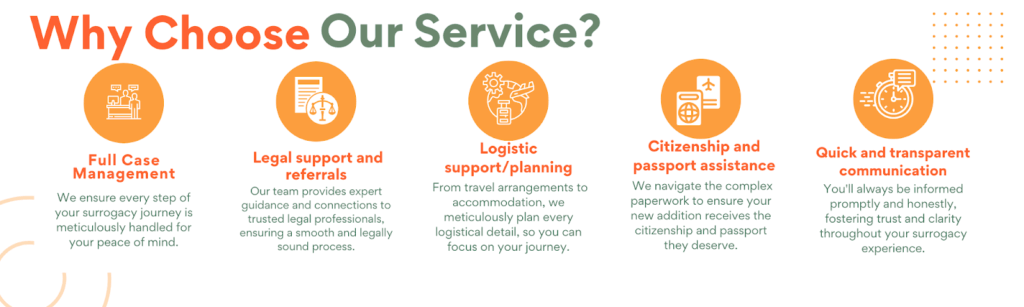
💫 Why Intended Parents Choose Complete Surrogacy for a Safe, Smooth & Successful Surrogacy Journey:
🌍 Access to multiple surrogacy destinations with 15+ years of international experience
🏥 Partnerships with top-tier fertility clinics and agencies, backed by references from past clients
👩🦱 Diverse egg donor options: Asian, Caucasian, African, Oriental, and more
💸 Transparent and affordable pricing—direct payments with no extra agency fees
🔒 No hidden costs—all charges are agreed upon upfront
🤝 Dedicated case manager for personalized support
FAQs for Altruistic Surrogacy in India for UK OCIs
What defines altruistic surrogacy in India?
Altruistic surrogacy involves a voluntary arrangement where a woman carries a child for intended parents without financial compensation beyond medical expenses. In India, this model emphasizes ethical collaboration, requiring the surrogate to be a close relative with prior parenting experience.
How does the Surrogacy (Regulation) Act, 2021 protect participants?
The Act prohibits commercial surrogacy while ensuring safeguards like mandatory medical/psychological screenings, legal contracts, and court-approved parentage orders. It also restricts eligibility to married couples or single women facing infertility, prioritizing ethical practices.
What eligibility criteria apply to UK citizens with OCI cards?
Eligible individuals must provide proof of infertility, marriage certificates (if applicable), and valid OCI documentation. Single women must submit additional medical certifications. All applicants undergo background checks to comply with Indian and UK laws.
How do UK citizens start the surrogacy process in India?
Begin by consulting certified fertility clinics specializing in international surrogacy. Clinics assist with medical evaluations, legal clearances, and matching with a surrogate. Partnering with experienced agencies ensures compliance with both countries’ regulations.
What factors should guide clinic selection?
Prioritize clinics accredited by the Indian Council of Medical Research (ICMR) with proven success in cross-border surrogacy. Review their ethical standards, transparency in costs, and post-birth support services, including passport/visa assistance for the newborn.
What costs should UK citizens anticipate?
Expenses include IVF treatments, legal fees, prenatal care, and administrative costs (e.g., DNA testing for citizenship). While altruistic surrogacy avoids commercial fees, budget ₹12–18 lakhs ($14,500–$22,000) depending on medical complexity.
How are surrogate mothers matched with intended parents?
Clinics facilitate matches based on medical compatibility, shared values, and legal readiness. Surrogates undergo thorough health evaluations, and both parties sign agreements outlining responsibilities, communication boundaries, and post-birth protocols.
What ethical guidelines shape altruistic surrogacy?
The process prohibits exploitation by requiring surrogates to participate voluntarily, often within familial networks. Clinics must ensure informed consent, psychological counseling, and equitable healthcare access for surrogates throughout the pregnancy.
Why partner with licensed agencies?
Licensed agencies streamline coordination between medical teams, legal advisors, and immigration authorities. They mitigate risks like contractual disputes or delays in obtaining birth certificates, ensuring a secure journey for all parties.
How to handle legal processes efficiently?
Work with lawyers specializing in international surrogacy to draft enforceable contracts and secure parental orders from Indian courts. Post-birth, promptly apply for the child’s UK citizenship and passport to avoid bureaucratic hurdles.

Author Bio: Neelam Chhagani is an International Surrogacy Expert with 15 years of experience in the fertility and surrogacy domain. As the founder of IVF Conceptions and Complete Surrogacy, she has guided over 4,000 intended parents worldwide on their surrogacy journey to parenthood. Recognized as a trusted authority, she specializes in holistic infertility solutions and third-party reproduction consulting.
Holding an MA in Counselling Psychology and a PGD in Mental Health, Neelam is a proud member of the European Fertility Society (EFS) and the European Society of Human Reproduction and Embryology (ESHRE). She is also a leading surrogacy blogger, providing valuable insights into ethical and practical surrogacy solutions.
Since 2010, committed to supporting ALL family types, Neelam has been passionate about helping intended parents grow their families with compassion, integrity, and a focus on secure and affordable surrogacy options Globally.
Learn more about Neelam:
https://www.ivfconceptions.com/neelam-chhagani-surrogacy-consultant/
https://www.linkedin.com/in/neelam-chhagani-92892229/















I was introduced to Neelam by a friend who worked with Neelam for surrogacy. Neelam is absolutely wonderful. I am a single male and the journey to fatherhood is not that easy. Neelam connected me to a program ideal for my circumstances. She was with me throughout the pregnancy providing advice and guidance along the way. I am so grateful I found her and am thrilled today that I have a beautiful daughter. I highly recommend Neelam to anyone who is on a journey to become a parent. Having a child has changed my world for the better. I wish others success with their own journey and recommend you connect with Neelam to find a path that is best for you.
SA (USA)