

How to verify a surrogacy agency before signing any contract is one of the most critical steps intended parents must take to ensure a safe and ethical journey. With varying legal standards and surrogacy practices across countries, it’s important to carefully check an agency’s reputation, transparency, and professionalism before committing.
This includes reviewing their legal compliance, success rates, surrogate screening process, client testimonials, and cost breakdowns. By thoroughly evaluating these factors, parents can protect themselves from scams, hidden fees, and low-quality services—ensuring a trustworthy and smooth surrogacy experience from start to finish.
📞 Get in Touch for a Free Surrogacy Consultation
📱 +91-8800481100 (WhatsApp | LINE | Viber)
📧 neelam@ivfconceptions.com

Key Takeaways
- Verifying a surrogacy agency starts with checking business legitimacy and history.
- Surrogacy agency verification includes examining online reputation, credentials, and partnerships.
- Finding a trustworthy surrogacy agency requires a detailed review of fees, services, and contract terms.
- Legal review by a reproductive law attorney is essential to protect rights and finances before signing.
- Region matters—U.S. rules differ from Canada and other countries; verify local legal requirements.
Why verifying a surrogacy agency matters for intended parents and surrogates
Verifying an agency before you sign brings clarity where uncertainty can hurt. A strong surrogacy agency reputation reduces the chances of hidden fees, surprise legal gaps, and poor medical screening. For both intended parents and surrogates, that clarity protects money, health, and emotional well-being.
Financial harm is common when oversight is weak. Unclear fee structures, undisclosed rematch fees, and charges for extended services can arise with agencies that lack transparent billing. Stories of sudden closures with non-refunded deposits show why the surrogacy agency verification process matters for anyone investing time and funds.
Legal risk increases when agencies mix roles or fail to ensure independent counsel. Surrogates may not get separate legal advice paid by intended parents. Intended parents can face unclear paths to parentage orders. Careful review of contracts and the steps to vet a surrogacy agency can reveal these gaps.
Poor medical screening raises safety issues. Agencies without strong clinic partnerships or rigorous psychological and background checks put participants at greater risk of failed transfers, unexpected health complications, or last-minute withdrawals. Choosing a reputable surrogacy agency helps ensure clinics follow evidence-based screening and reporting.
Reputation and fraud risks are real. Some firms appear briefly, collect fees, then dissolve, leaving families and surrogates with unresolved claims. Checking an agency’s track record and public reviews is a practical part of the surrogacy agency verification process that can expose unstable operators.
Emotional toll grows when communication is inconsistent. Rotating staff, weak case management, and limited counseling can leave both parties isolated during stressful moments. Agencies that prioritize ongoing support and licensed mental health access lower emotional strain and improve outcomes.

Risks summarized:
- Financial risk: hidden fees, non-refundable deposits, unclear escrow handling.
- Legal risk: conflicted representation, pressure to sign, unclear parentage procedures.
- Medical risk: weak screening, poor clinic matches, inadequate follow-up.
- Reputation risk: transient operators, allegations of mismanagement or fraud.
- Emotional risk: poor communication, lack of counseling, and inconsistent case management.
The benefits of choosing a reputable agency are tangible and measurable. Transparent, itemized fee schedules and explicit rematch policies protect budgets. Clear escrow and payment practices reduce disputes. Strong legal safeguards—such as ensuring independent counsel for surrogates paid by intended parents—limit conflicts and clarify parentage.
Medical and psychological safety improves with reputable partners. Thorough background checks, routine clinic audits, and documented success metrics make outcomes more predictable. Dedicated case managers, 24/7 support lines, and licensed mental health resources ease stress for all involved.
Reputable agencies deliver stronger matches and broader referral networks. Established relationships with clinics, attorneys, and social workers shorten timelines and raise the chance of successful transfers. These advantages show why taking the steps to vet a surrogacy agency is a key investment.
Practical takeaway: prioritize agencies that publish a clear fee schedule, explain rematch policies, maintain steady communication, and guarantee access to independent legal counsel and mental health support. These criteria form the backbone of choosing a reputable surrogacy agency and guide an effective surrogacy agency verification process.
How to Verify a Surrogacy Agency Before Signing Any Contract
Before committing, it’s essential to thoroughly vet a surrogacy agency. This step protects your time, finances, and emotional well-being. Start by gathering necessary documents, posing specific questions, and creating a detailed folder. This folder will be your guide during the Surrogacy contract review and decision-making.

Confirm business legitimacy and history
Begin by checking public records. Look up the agency’s status on state business registration and the Better Business Bureau. Ensure they have a physical address, not just a PO box. Also, verify their business classification, licenses, and any complaints.
Explore the agency’s history and its track record. Opt for agencies with a proven, long-term success. Request references from both intended parents and surrogates. It’s important to verify these conversations directly.
Review online presence and reputation
Examine the agency’s website for detailed process descriptions, team bios, and service details. A clear, modern website helps alleviate uncertainty. Also, look for compensation outlines, FAQs, and information on post-contract support.
Search for reviews and complaints on Google, Facebook, and specialized groups. Patterns in feedback can reveal a lot. Social media activity and staff engagement are also indicators of authenticity.
Request written references and ask for phone conversations with former clients. Combine these personal accounts with online feedback for a complete background check.
Verify credentials, partnerships, and success data
Ensure the Surrogacy agency has named clinic and physician partnerships. Request specific metrics like transfer pregnancy rates and average time-to-match. Also, inquire about the number of cycles they manage annually.
Verify staff qualifications, including case managers and licensed mental health professionals. Confirm if they have access to reproductive law attorneys. Determine if legal counsel is in-house or a partner.
Ask about adherence to ASRM guidelines and state-specific rules. Request written policies on screening, medical protocols, and informed consent. Include these in your background check folder.
Action step: compile a detailed folder with all necessary documents, client testimonials, clinic partner names, staff bios, and success metrics. Use this folder for thorough background checks or legal reviews before signing any contract.
Surrogacy agency verification process: legal, financial, and screening due diligence
Before you sign any Surrogacy agreement, it’s vital to understand three key areas: legal protection, financial clarity, and thorough screening. Each step is designed to reduce risks and safeguard your rights. Use a detailed checklist to ensure no detail is overlooked during the surrogacy agency due diligence.
Contract review and legal protection
Every agreement is legally binding. It’s essential to have a reproductive attorney review the contract independently. The review should cover all aspects, including fees, service scope, and dispute resolution procedures.
Ask about the preparation of parentage orders and if the agency uses standard templates from reputable firms. Request written amendments for any verbal promises. Ensure the surrogate has separate counsel, paid by the intended parents, to avoid conflicts.
Financial transparency and escrow handling
Request a detailed fee schedule that outlines what the agency fee covers and what it excludes. Confirm the payment schedule and any additional charges for extensions or rematch situations.
Verify the identity of the escrow holder and request the escrow agreement in writing. Check the bank or trustee’s contact details and confirm their legitimacy. Proper escrow handling prevents misdirected funds and reduces the risk of unpaid providers or non-refunded deposits.
Medical, psychological, and background screening standards
Ensure medical clearance is conducted at a qualified IVF clinic. Confirm that licensed mental health professionals perform psychosocial evaluations. Ask about the agency’s acceptance rules and typical rejection rate.
Request details on criminal background checks and how results are shared. Verify the agency’s recommendations for insurance or life coverage. Confirm pre-screen items such as obstetric history and substance use review to ensure safety and compatibility.
| Verification Area | Key Questions to Ask | Documents to Request |
|---|---|---|
| Legal review | Who reviews contracts? Are surrogate and parents represented separately? What is dispute resolution? | Full agency agreement, independent attorney opinion, written amendments |
| Financial practices | How are fees broken down? Who holds escrow? What are refund/rematch policies? | Itemized fee schedule, escrow agreement, bank/escrow contact info |
| Medical screening | Which IVF clinics perform clearance? What medical criteria apply? How are complications handled? | Clinic clearance forms, medical acceptance criteria, insurance recommendations |
| Psychosocial checks | Who conducts evaluations? What is the rejection rate? Are assessments shared? | List of licensed evaluators, screening protocol, summary of screening criteria |
| Background screening | Are criminal checks required? Are references verified? How recent are checks? | Background check provider details, consent forms, screening timeline |
Red flags to watch and practical steps to vet a surrogacy agency
Before committing time or money, take a moment to spot warning signs and confirm strengths. This short guide lists common red flags and green flags. It also gives a clear vetting checklist you can use right away when vetting surrogacy agencies.

Common red flags and what they mean
A minimal or inconsistent online presence often means poor organization or limited transparency. Vague answers about fees, rematch charges, or refusal to provide an itemized cost list suggest hidden expenses and weak financial controls. Poor communication—frequent staff changes, unanswered emails, or shifting case managers—signals unreliable client support.
Refusal to explain legal support or to recommend independent reproductive law attorneys raises legal risk for surrogates and intended parents. Skipping thorough medical, psychological, or background screening is a safety concern. Sudden business closures, public allegations, or repeated complaints on forums point to serious operational or ethical problems.
Green flags that indicate a reliable agency
Transparent, itemized fee schedules and clear rematch and refund policies show financial responsibility. Agencies that list established clinic and attorney partnerships, share documented success statistics, and provide references demonstrate accountability. A dedicated case manager, stable staff, and accessible support (including emergency contacts) reflect strong client care.
Robust screening protocols with documented rejection and quit rates, clinic-based medical evaluations, and licensed mental health professionals on the team all indicate high surrogacy agency qualifications. Access to peer support networks for surrogates and intended parents adds emotional and community backing.
Practical vetting checklist and next steps
Use this checklist as a decision gate when evaluating tips for choosing a surrogate agency and when forming questions to ask surrogacy agencies.
- Verify business registration, years in operation, and physical address.
- Ask for clinic and attorney partner names; call partners to confirm relationships.
- Request an itemized fee breakdown and written escrow details; get rematch and refund policies in writing.
- Obtain a sample contract and have a reproductive law attorney review it before signing.
- Ask about screening protocols, surrogate rejection rates, quit rates, and pregnancy/success statistics for embryo transfers.
- Request written references; speak with at least two former surrogates and two intended parents to confirm experiences.
- Trust instincts: if answers are evasive, insist on clarifications in writing; preserve deposits per contract terms if you decide to walk away.
When vetting surrogacy agencies, keep surrogacy agency qualifications and transparency at the top of your list. If an agency cannot provide clear documentation or fails on several checklist items, consider moving on. These practical steps should help you narrow choices and protect your family, finances, and health.
More Resources to Read:
Surrogacy Guide for Surrogate Mothers
Surrogacy Guide for Intended Parents
How does the surrogacy process work
Conclusion
Choosing a reliable surrogacy agency involves several key steps. First, verify the agency’s legitimacy and history. Next, check their online reputation and the quality of their clinic and attorney partnerships. Success data is also essential. These steps are critical for ensuring your health, legal rights, finances, and emotional well-being are protected.
It’s vital to have a reproductive law attorney review the contract thoroughly. Ensure the agency practices transparent escrow and fee structures. Also, confirm that medical care is provided by licensed professionals and that psychological screenings are conducted. These measures safeguard all parties involved and uphold medical and legal standards throughout the process.
Be cautious of red flags such as unclear finances, poor communication, or inadequate screening. Look for green flags like transparent fee schedules, strong partnerships with clinics and attorneys, and consistent case management. Keep detailed records of all agreements and communications in a due diligence folder for future reference.
This journey is life-changing, so take your time and ask questions. Seek independent legal counsel and trust your instincts when selecting a surrogacy agency. Create or download a due diligence folder with all relevant documents. Consult a reproductive law specialist before signing any contract to ensure you’re making the right decision.
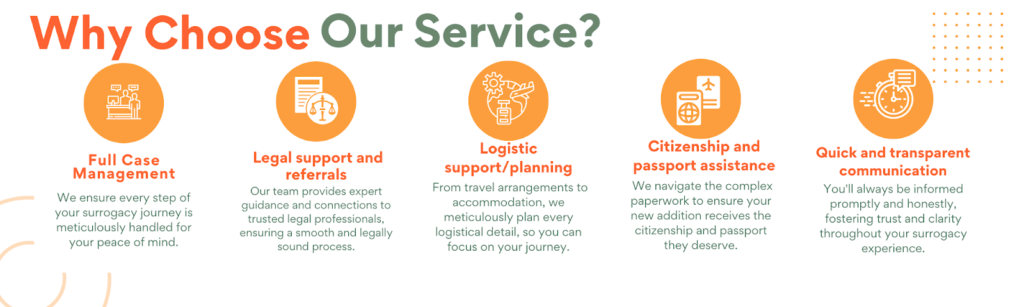
💫 Why Intended Parents Choose Complete Surrogacy for a Safe, Smooth & Successful Surrogacy Journey:
🌍 Access to multiple surrogacy destinations with 15+ years of international experience
🏥 Partnerships with top-tier fertility clinics and agencies, backed by references from past clients
👩🦱 Diverse egg donor options: Asian, Caucasian, African, Oriental, and more
💸 Transparent and affordable pricing—direct payments with no extra agency fees
🔒 No hidden costs—all charges are agreed upon upfront
🤝 Dedicated case manager for personalized support
📲 Fast, honest, and clear communication throughout
📑 Full legal support for visas, documentation, and baby exit processes
🚚 Assistance with frozen sperm/embryo shipment logistics
FAQ-How to Verify a Surrogacy Agency Before Signing Any Contract
What is the purpose of verifying a surrogacy agency before signing any contract?
Verifying a surrogacy agency is essential to protect your rights and well-being. It ensures legal, medical, financial, and emotional safety. A thorough check helps avoid hidden fees, inadequate legal support, poor medical screening, and fraud. It also helps find agencies with clear escrow practices, clinic partnerships, and licensed mental-health support.
What basic business legitimacy checks should I perform first?
First, confirm the agency’s state business registration and physical address. Check the Better Business Bureau and state consumer protection records. Ask about the agency’s history and request proof of business classification and licensing.
How should I evaluate an agency’s online presence and reputation?
Examine the agency’s website for detailed process descriptions and staff bios. Check Google, Facebook, Reddit, and specialist community groups for reviews and complaints. Look for consistent, authentic social media activity and staff engagement.
What credentials, partnerships, and success data should I request?
Ask for the names of partner fertility clinics and reproductive law attorneys. Request documented pregnancy or transfer rates and average time-to-match. Also, inquire about surrogate rejection and quit rates, and staff qualifications.
What legal protections must be clarified before signing a surrogacy agency agreement?
Every agreement should detail fees, rematch policies, contract duration, and dispute resolution. Ensure surrogates have independent legal counsel. Confirm who drafts and files parentage orders.
How do I verify financial transparency and escrow handling?
Request an itemized fee schedule and payment timelines. Ask for the escrow or trust agreement and the name of the escrow bank or third-party administrator. Clarify rematch fees, refund policies, and procedures for contract extensions or additional cycles.
What medical, psychological, and background screening standards should I expect?
Confirm that medical screening and IVF clearances are done by qualified fertility clinics. Ensure psychological evaluations are conducted by licensed mental-health professionals. Ask for the agency’s surrogate acceptance criteria and criminal-background check policy.
What are the most common red flags to watch for?
Red flags include a minimal or inconsistent online presence, vague answers about fees or rematch policies. Be wary of agencies that refuse to provide itemized costs or show reluctance to confirm independent legal counsel for surrogates.
What green flags indicate a reputable surrogacy agency?
Green flags include transparent, itemized fee schedules with clear rematch/refund policies. Look for documented partnerships with reputable IVF clinics and reproductive law attorneys. Verify success statistics and willingness to share references.
What practical checklist should I use when vetting agencies?
Verify business registration, physical address, and years in operation. Request partner clinic and attorney names and call to confirm. Obtain an itemized fee breakdown, escrow details, rematch/refund policies, and a sample contract.
How should I handle sample contracts and verbal promises?
Always request a full written sample contract and never rely on verbal promises. Require that any clarifications or promises be added to the agreement in writing before signing. Have a reproductive law attorney review the contract and advise on clauses such as rematch fees, automatic renewals, dispute resolution, and liability limits.
When should I walk away from an agency?
Walk away if the agency cannot provide clear documentation for multiple checklist items, refuses independent legal counsel for the surrogate, hides fee details or escrow practices, shows inconsistent or evasive communication, or has credible allegations of fraud or sudden closures.
What immediate steps can I take today to start verification?
Create a due diligence folder and request the agency’s business registration, itemized fee schedule, escrow agreement, sample contract, clinic and attorney partner names, staff bios, and screening protocol. Schedule calls with referenced clinics, attorneys, and former clients.
How does region matter—should I consider cross-border differences?
Yes. U.S. regulations make it relatively easy to open an agency, increasing variability in standards; state laws and parentage procedures differ. Cross-border arrangements (for example, with Canadian models) follow different legal and regulatory frameworks, so verify region-specific licensing, clinic standards, and escrow practices.
What concrete harms can thorough verification prevent?
Verification can prevent financial loss from hidden fees or nonrefunded deposits, legal harms from inadequate representation or unclear parentage orders, medical risks from insufficient screening or weak clinic partnerships, reputational or fraud exposure from unstable agencies, and emotional distress from poor communication or lack of support.
Who should I consult to review agency contracts and legal questions?
Consult a reproductive law attorney experienced in surrogacy and parentage matters in your state. Look for firms or attorneys who specialize in assisted reproduction and surrogacy (for example, recognized reproductive law practices), and confirm they will review agency, surrogate, and provider agreements. Independent legal counsel for the surrogate, paid by intended parents, is a best practice.
How important is escrow, and who should hold the funds?
Escrow is vital. Funds should be held by a reputable third-party escrow company or trust with a documented agreement outlining disbursements. Verify the escrow bank, request contact details, and confirm how payments to clinics, surrogates, and attorneys will be made. Avoid agencies that demand opaque or sole control over client funds without independent oversight.
What documentation should I keep in my due diligence folder?
Store business registration records, agency fee schedules, escrow/trust agreements, sample contracts, clinic and attorney contact information, staff bios and credentials, screening protocols and rejection rates, written references and interview notes with former clients, and copies of all correspondence. Keep signed contracts and escrow receipts in a secure, backed-up location.

Author Bio: Neelam Chhagani is an International Surrogacy Expert with 15 years of experience in the fertility and surrogacy domain. As the founder of IVF Conceptions and Complete Surrogacy, she has guided over 4,000 intended parents worldwide on their surrogacy journey to parenthood. Recognized as a trusted authority, she specializes in holistic infertility solutions and third-party reproduction consulting.
Holding an MA in Counselling Psychology and a PGD in Mental Health, Neelam is a proud member of the European Fertility Society (EFS) and the European Society of Human Reproduction and Embryology (ESHRE). She is also a leading surrogacy blogger, providing valuable insights into ethical and practical surrogacy solutions.
Since 2010, committed to supporting ALL family types, Neelam has been passionate about helping intended parents grow their families with compassion, integrity, and a focus on secure and affordable surrogacy options Globally.
Learn more about Neelam:
https://www.ivfconceptions.com/neelam-chhagani-surrogacy-consultant/
https://www.linkedin.com/in/neelam-chhagani-92892229/















I was introduced to Neelam by a friend who worked with Neelam for surrogacy. Neelam is absolutely wonderful. I am a single male and the journey to fatherhood is not that easy. Neelam connected me to a program ideal for my circumstances. She was with me throughout the pregnancy providing advice and guidance along the way. I am so grateful I found her and am thrilled today that I have a beautiful daughter. I highly recommend Neelam to anyone who is on a journey to become a parent. Having a child has changed my world for the better. I wish others success with their own journey and recommend you connect with Neelam to find a path that is best for you.
SA (USA)