

Did you know that around 5,000 babies are born annually through surrogacy worldwide? Yet, many parents face challenges in understanding the complex laws surrounding surrogacy citizenship. Obtaining U.S. citizenship and passports for Surrogacy babies is a complex journey. It involves legal complexities and specific documentation needs. Parents must grasp these rules to ensure their newborns are recognized as U.S. citizens.
The process of securing U.S. citizenship for babies born via international surrogacy depends on several factors. These include genetic connections and legal parentage. Parents need to work with experienced immigration attorneys. This article aims to guide you through the necessary steps to obtain U.S. citizenship and passports for children born through international surrogacy.
Key Takeaways
- Understanding the importance of surrogacy citizenship laws is critical for intended parents.
- Legal parentage and genetic connections are key in the citizenship process.
- Working with an immigration attorney can help navigate the complexities.
- Proper documentation is essential for obtaining U.S. citizenship and passports for surrogacy babies.
- Being aware of local surrogacy regulations can help avoid common pitfalls.
📞Get in Touch for a Free Surrogacy Consultation
📱 +91-8800481100 (WhatsApp | LINE | Viber)
📧 neelam@ivfconceptions.com

Why Intended Parents Use International Surrogacy?
Intended parents are increasingly turning to international surrogacy to grow their families. Legal, medical, and financial factors play a significant role in their choices. The main reason for international surrogacy often lies in the varying laws and regulations across borders. Countries with more favorable legal frameworks can simplify the surrogacy process.
Cost is another critical factor. Many find that a surrogacy program abroad is more budget-friendly than domestic options. This cost advantage, combined with legal benefits, makes international surrogacy a compelling choice.
Medical reasons also drive the decision to seek surrogacy abroad. Some individuals face health issues that prevent them from carrying a pregnancy safely. Seeking a surrogate in another country offers a solution. It provides access to compassionate and experienced surrogates, helping to fulfill their dream of parenthood.
In conclusion, diverse reasons for international surrogacy influence the choices of prospective parents. Legal environments, financial considerations, and personal health challenges all contribute to the decision to explore International surrogacy Countries.
Understanding Surrogacy and Citizenship Laws
Surrogacy is a complex process, requiring clarity around the different types and their legal implications. An overview of surrogacy types reveals two primary forms: gestational and traditional. Understanding these distinctions is essential for intended parents as they navigate their options and the legal aspects of international surrogacy.
Overview of Surrogacy Types
In gestational vs. traditional surrogacy, the differences can significantly impact parental rights and citizenship eligibility. Gestational surrogacy involves the surrogate carrying an embryo that is created through in vitro fertilization (IVF). This embryo may involve the intended parents’ genetic material or donor gametes. On the contrary, traditional surrogacy uses the surrogate’s own egg for conception, establishing her as the biological mother of the child.
These distinctions are critical as they influence not only emotional and ethical considerations but also the legal ramifications concerning citizenship laws. For example, many countries require genetic ties for citizenship eligibility, complicating the process for children born via traditional surrogacy arrangements.
International Variations in Surrogacy Laws
When exploring international surrogacy regulations, intended parents must acknowledge the varying surrogacy laws globally. Some countries have robust frameworks that protect all parties involved, such as Canada and the United Kingdom, which offer legal clarity for surrogacy arrangements. Others, like India and Thailand, have recently tightened their laws, which may limit the options available to intended parents.
Understanding these legal aspects of international surrogacy is vital. Parents should familiarize themselves with local surrogacy laws and any restrictions to safeguard their arrangements and protect their child’s rights. The evolving landscape of surrogacy laws highlights the need for informed decision-making in this sensitive journey.
How babies born via surrogacy abroad get citizenship & passports
Understanding the legal steps to get citizenship for surrogacy babies born abroad is essential. Birthright citizenship through surrogacy depends on genetic and legal ties with the parents. Intended parents must follow both local laws where the surrogacy takes place and U.S. rules on parental rights.
After the birth, parents need to visit their local U.S. embassy. There, they should register the birth and apply for a Consular Report of Birth Abroad (CRBA). This document is key to securing citizenship for babies born through international surrogacy. Important documents include the surrogacy agreement, medical records, and proof of parentage, which help strengthen the citizenship application.
Showing a genetic link to the child can make the citizenship process easier. While not required for all, a biological connection can simplify the application. Also, grasping the complexities of international surrogacy ensures parents meet all the necessary criteria for a successful citizenship application.
| Step | Description | Documents Required |
|---|---|---|
| 1 | Birth Registration | Original birth certificate |
| 2 | Consular Report Application | CRBA application form |
| 3 | Legal Documentation Submission | Surrogacy agreement, medical records |
| 4 | Follow up with the Embassy | Identification documents |
Key Requirements for U.S. Citizenship
Understanding the requirements for U.S. citizenship is critical in the surrogacy citizenship process. Parents must navigate complex legalities related to genetic connections and gestational connections to ensure their child obtains the necessary citizenship.
Genetic and Gestational Connections
The U.S. government mandates proof of genetic or gestational connections for citizenship eligibility. This requires that at least one parent is the genetic mother or father. In cases of gestational surrogacy, the legal mother must be legitimately connected to the child. Commonly accepted documentation includes:
- DNA tests to confirm genetic ties
- Hospital records indicating the birth mother
- Legal surrogacy agreements outlining the relationships
Failure to provide clear evidence of these connections can complicate or even obstruct the surrogacy citizenship process. Parents should prepare thorough documentation to support their claims.
Legal Parentage and Residency Requirements
Legal parentage is established through a valid surrogacy agreement, which must comply with the local laws where the surrogacy took place. Meeting residency requirements for citizenship is also vital, as parents are required to demonstrate that they resided in the U.S. before the child’s birth. If parents are legally married, they should present proof of their commitment to parenting. Documentation needed includes:
- Copies of marriage certificates
- Evidence showing the couple’s continuous residency
- Official documentation from the surrogacy process
Maintaining clear and organized records enhances the chances of a smooth application process for citizenship. Understanding these legal frameworks can support the security of surrogacy parental rights.
Surrogacy Program Considerations
Choosing the right country for international surrogacy is key. The location greatly affects the surrogacy’s legal and personal aspects. Factors like local regulations and the treatment of surrogates are critical.
Choosing the Right Country for Surrogacy
Intended parents must weigh several factors before making a decision:
- Surrogacy rights: It’s important to know the rights of surrogates to ensure ethical treatment.
- Costs and accessibility: Prices and availability of services vary by region.
- Success rates: Researching clinics’ past success in surrogacy is vital.
Evaluating Legal Frameworks of Surrogacy Countries
Surrogacy laws vary by country. Some nations protect intended parents well while treating surrogates fairly. Understanding these laws helps parents:
- Legitimacy of agreements: Some places legally recognize surrogacy agreements, making parental rights clearer.
- Pathways to citizenship: Knowing international laws can ease the citizenship process for children born abroad.
- Potential challenges: Identifying legal hurdles early can help manage risks in the surrogacy process.
Documentary Evidence Needed for Citizenship Applications
Establishing parentage for a child born via surrogacy requires navigating complex documentation. A thorough collection of legal documents is essential for a successful citizenship application. These documents not only support the child’s citizenship claim but also confirm the surrogacy arrangement to the authorities.
Required Legal Documents and Certificates
To streamline the citizenship application process, specific legal documents for surrogacy are necessary. Key items include:
- Surrogacy birth certificates detailing the child’s and the surrogate’s information.
- Signed surrogacy agreements outlining the legal ties between the intended parents and the surrogate.
- Proof of citizenship for the intended parents, such as passports or naturalization certificates.
- Any additional documents the embassy might require to verify the parent-child relationship.
These documents are critical for establishing a child’s right to U.S. citizenship. They must be presented accurately to prevent delays or misunderstandings.
Importance of DNA Testing
DNA testing for citizenship offers vital genetic proof for surrogacy arrangements. It confirms the biological connection between the child and the intended parents. U.S. authorities often require this genetic evidence to clarify parentage. Certified laboratories perform the analysis, ensuring the results are reliable and accepted by immigration authorities.
A definitive DNA test can greatly speed up the citizenship application process. It is a vital step for intended parents seeking their child’s citizenship rights.
Obtaining Passports for Surrogacy Babies
After securing citizenship for the surrogacy baby, parents can focus on obtaining the necessary travel documents. A U.S. passport for children is essential for travel, allowing families to enter the United States legally. The process to apply for a passport includes completing the surrogacy baby passport application, gathering required documents, and ensuring that all legal guardians consent to the issuance of the passport.
Application Process for U.S. Passports
The application process typically involves several key steps:
- Completing the passport application form (Form DS-11).
- Providing a Consular Report of Birth Abroad (CRBA) or proof of U.S. citizenship.
- Submit passport photographs according to the specified guidelines.
- Ensuring consent from all legal guardians for the passport to be issued.
Consular Report of Birth Abroad (CRBA) Requirements
The CRBA process is a vital step in registering a foreign birth for children born via surrogacy. This document certifies the child’s U.S. citizenship. To apply for a CRBA, it is necessary to provide:
- Evidence of U.S. citizenship of the parents.
- Proof of genetic or gestational ties, if applicable.
- Any additional documents requested by the U.S. consulate or embassy.
Prompt action during the CRBA process is advisable to avoid any unnecessary delays in the issuance of the passport. This ensures families can travel without complications.
| Document | Purpose | Required for Passport Application |
|---|---|---|
| Passport Application Form (DS-11) | Initiates the passport request. | Yes |
| Consular Report of Birth Abroad (CRBA) | Certifies U.S. citizenship for the child. | Yes |
| Passport Photographs | Serves as the child’s identification. | Yes |
| Legal Guardians’ Consents | Ensures all parties authorize the passport application. | Yes |
Challenges and Common Issues Faced
The path of international surrogacy is often fraught with obstacles for intended parents. These hurdles include legal and bureaucratic complexities, leading to stress and delays. It’s vital to grasp and tackle these issues to ensure smooth navigation of citizenship and parental rights. Below, we outline key areas where parents may encounter difficulties.
Legal Hurdles in International Surrogacy
Intended parents often face legal hurdles in surrogacy due to differences in laws between the surrogacy destination and the U.S. These legislative disparities can complicate claims to citizenship and parental rights, potentially triggering legal battles. Disputes over the enforcement of surrogacy agreements can also arise, requiring legal intervention. To avoid these risks, it’s wise for parents to seek advice from experts in surrogacy law.
Overcoming Bureaucratic Obstacles
Surrogacy’s bureaucratic processes can extend the time needed for citizenship and passport applications. Parents must be ready for inquiries from U.S. embassies or consulates by having all necessary documents in hand. Prompt responses to any requests can help avoid bureaucratic delays. Overcoming these challenges requires careful planning and the guidance of experienced legal professionals to navigate surrogacy’s government processes smoothly.
| Challenge Type | Description | Potential Solutions |
|---|---|---|
| Legal Hurdles | Divergent laws between surrogacy countries and the U.S. | Consultation with specialized legal professionals |
| Litigation Risks | Disputes regarding parental rights | Thorough review of surrogacy agreements |
| Bureaucratic Delays | Lengthy application processes for citizenship and passports | Ensuring all necessary documents are prepared |
Additional Resources to Read:
Why Intended Parents Should Use A Surrogacy Agency
What Does A Surrogacy Agency Do?
How to Find the Best Surrogacy Agency For You
How Do You Find an LGBT Surrogacy Agency?
Conclusion
The surrogacy citizenship process for babies born abroad is complex, involving legal, emotional, and procedural aspects. Intended parents must navigate legal frameworks, gather necessary documents, and establish genetic or gestational connections. This understanding is key for a smooth transition into parenthood.
Understanding the legal impacts of international surrogacy on citizenship is vital. Preparation and adherence to legal guidelines are essential. By staying informed and proactive, intended parents can overcome challenges. Collaboration with experienced professionals can also help navigate the process.
Given the changing landscape of international surrogacy, vigilance and expert advice are critical. Attention to the surrogacy citizenship process ensures a seamless experience. This way, intended parents can welcome their new family members without complications.
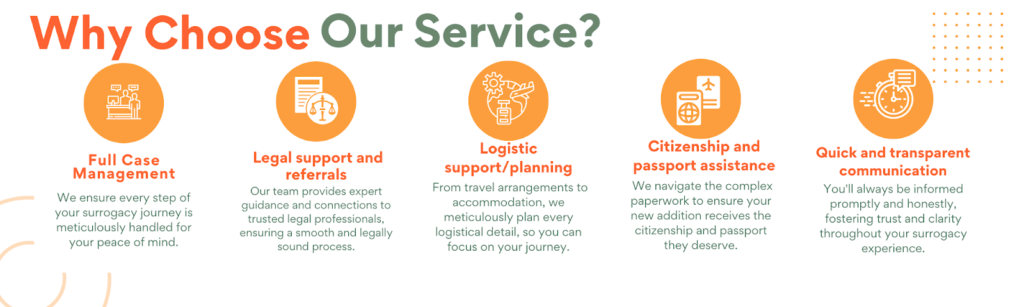
💫 Why Intended Parents Choose Complete Surrogacy for a Safe, Smooth & Successful Surrogacy Journey:
🌍 Access to multiple surrogacy destinations with 15+ years of international experience
🏥 Partnerships with top-tier fertility clinics and agencies, backed by references from past clients
👩🦱 Diverse egg donor options: Asian, Caucasian, African, Oriental, and more
💸 Transparent and affordable pricing—direct payments with no extra agency fees
🔒 No hidden costs—all charges are agreed upon upfront
🤝 Dedicated case manager for personalized support
📲 Fast, honest, and clear communication throughout
📑 Full legal support for visas, documentation, and baby exit processes
🚚 Assistance with frozen sperm/embryo shipment logistics
FAQ-How do babies born via surrogacy abroad get citizenship & passports
How do I know if my surrogate baby will receive U.S. citizenship?
To ensure your baby born via surrogacy receives U.S. citizenship, you must show a genetic or gestational link to the child. You also need to meet all legal parentage requirements. Start by getting a Consular Report of Birth Abroad (CRBA) from the U.S. embassy after birth.
What are the most important documents needed for citizenship applications?
Key documents for citizenship applications include the child’s birth certificate and surrogacy agreements. You also need proof of citizenship for both parents. Any additional certifications that prove the child’s relationship with the parents are also required.
What is the role of DNA testing in establishing citizenship?
DNA testing is essential to confirm the genetic connection between the child and the intended parents. U.S. authorities often require DNA analysis from certified labs. This can speed up the citizenship application process.
Are there specific countries that are more favorable for surrogacy?
Some countries, like Canada and the U.K., have laws that protect surrogacy rights. It’s important to research each country’s laws, costs, and ethical considerations before making a decision.
What is the process for obtaining a U.S. passport for my surrogate baby?
To get a U.S. passport, complete the application form and submit the CRBA or proof of U.S. citizenship. You’ll also need passport photos. Consent from all legal guardians is required to proceed.
What challenges might I face during international surrogacy?
Intended parents may face legal challenges due to different laws in the country of surrogacy and the U.S. Bureaucratic delays in processing citizenship and passport applications are also common. It’s wise to consult with legal experts familiar with surrogacy and immigration laws to overcome these hurdles.
How long does the citizenship process typically take?
The time to secure citizenship varies widely. It depends on the documentation, the country of surrogacy’s laws, and the U.S. consulate’s responsiveness. Preparing thoroughly can help avoid delays.
Can surrogacy babies have dual citizenship?
Dual citizenship for surrogacy babies depends on the laws of the surrogate’s country and the U.S. It’s important to research the nationality laws of the surrogate’s country to determine if dual citizenship is possible.
What should I do if my citizenship application is denied?
If your citizenship application is denied, understanding the reasons is critical. Seeking help from an experienced immigration attorney can address any issues. They can also guide the appeal process if needed.

Author Bio: Neelam Chhagani is an International Surrogacy Expert with 15 years of experience in the fertility and surrogacy domain. As the founder of IVF Conceptions and Complete Surrogacy, she has guided over 4,000 intended parents worldwide on their surrogacy journey to parenthood. Recognized as a trusted authority, she specializes in holistic infertility solutions and third-party reproduction consulting.
Holding an MA in Counselling Psychology and a PGD in Mental Health, Neelam is a proud member of the European Fertility Society (EFS) and the European Society of Human Reproduction and Embryology (ESHRE). She is also a leading surrogacy blogger, providing valuable insights into ethical and practical surrogacy solutions.
Since 2010, committed to supporting ALL family types, Neelam has been passionate about helping intended parents grow their families with compassion, integrity, and a focus on secure and affordable surrogacy options Globally.
Learn more about Neelam:
https://www.ivfconceptions.com/neelam-chhagani-surrogacy-consultant/
https://www.linkedin.com/in/neelam-chhagani-92892229/















I was introduced to Neelam by a friend who worked with Neelam for surrogacy. Neelam is absolutely wonderful. I am a single male and the journey to fatherhood is not that easy. Neelam connected me to a program ideal for my circumstances. She was with me throughout the pregnancy providing advice and guidance along the way. I am so grateful I found her and am thrilled today that I have a beautiful daughter. I highly recommend Neelam to anyone who is on a journey to become a parent. Having a child has changed my world for the better. I wish others success with their own journey and recommend you connect with Neelam to find a path that is best for you.
SA (USA)